


THE 13th Malaysia Plan (13MP, 2026–2030) sets an ambitious course for the country’s economic and social development over the next five years, with five interlinked priorities expected to shape the nation’s trajectory.
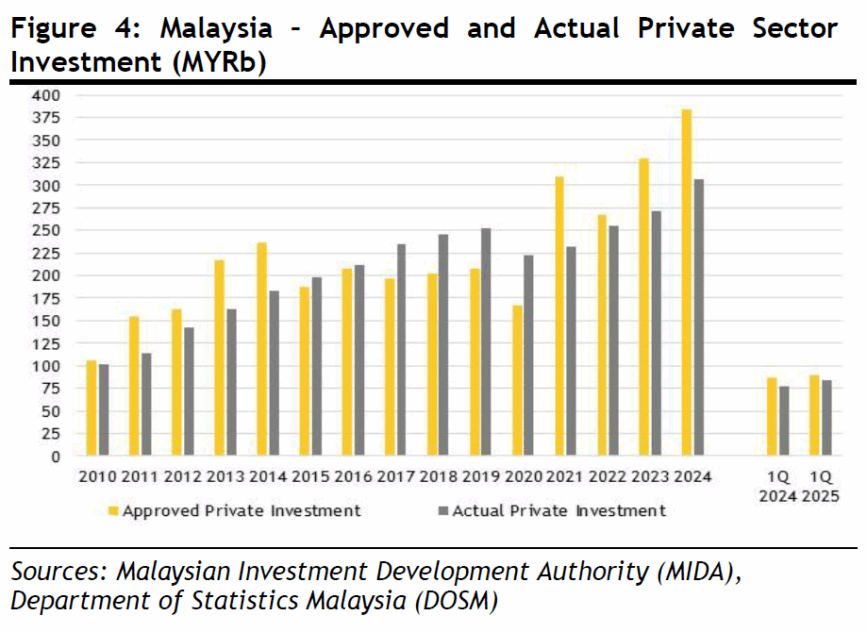
“A central pillar of the plan is the investment upcycle, with MYR611 bil in public sector-related investments earmarked to stimulate growth,” said Maybank.
This includes MYR430 bil in federal government development expenditure, MYR120 bil from government-linked investment companies, and MYR61 bil via public–private partnerships.
The spending will be channelled into major infrastructure projects, renewable energy, port expansions, housing, healthcare, and education.
Key catalysts such as the Johor–Singapore Special Economic Zone and a forthcoming New Investment Incentives Framework are expected to drive inflows, pushing the investment-to-GDP ratio to a targeted 23.4% by 2030.
Raising workers’ and households’ incomes is another major focus. The government aims to increase the share of employee compensation in GDP from 33.6% to 40%, boost median monthly wages to MYR3,500, and lift mean household income to MYR12,000 by 2030.
Initiatives to achieve this include a two-tier minimum wage system offering higher rates for graduates and semi-skilled workers, scaling up the Progressive Wage Policy, encouraging living wage adoption, and creating 1.2 million skilled jobs while reducing foreign worker reliance to just 10% of the labour force.
Fiscal consolidation is also a priority, with plans to cut the budget deficit below 3% of GDP and cap federal debt at 60% by 2030.
Subsidy rationalisation will begin with RON95 petrol in 2025 and extend to LPG, cooking oil, and sugar, alongside pension reforms and new revenue sources such as a carbon tax and global minimum tax.
Improved compliance through e-invoicing will further strengthen fiscal discipline.
The plan also targets annual labour productivity growth of 3.6%, greater government efficiency, and a doubling of R&D spending to 2.5% of GDP to foster innovation and competitiveness.
Finally, legislative reforms are on the horizon, with the Government Procurement Act set to enhance transparency in public spending and an Anti-Rent Seeking Law aimed at eliminating practices that inflate costs and undermine economic efficiency.
Together, these initiatives are intended to create a high-income, value-driven, and resilient Malaysian economy by 2030. —Aug 11, 2025
Main image: Tripadvisor