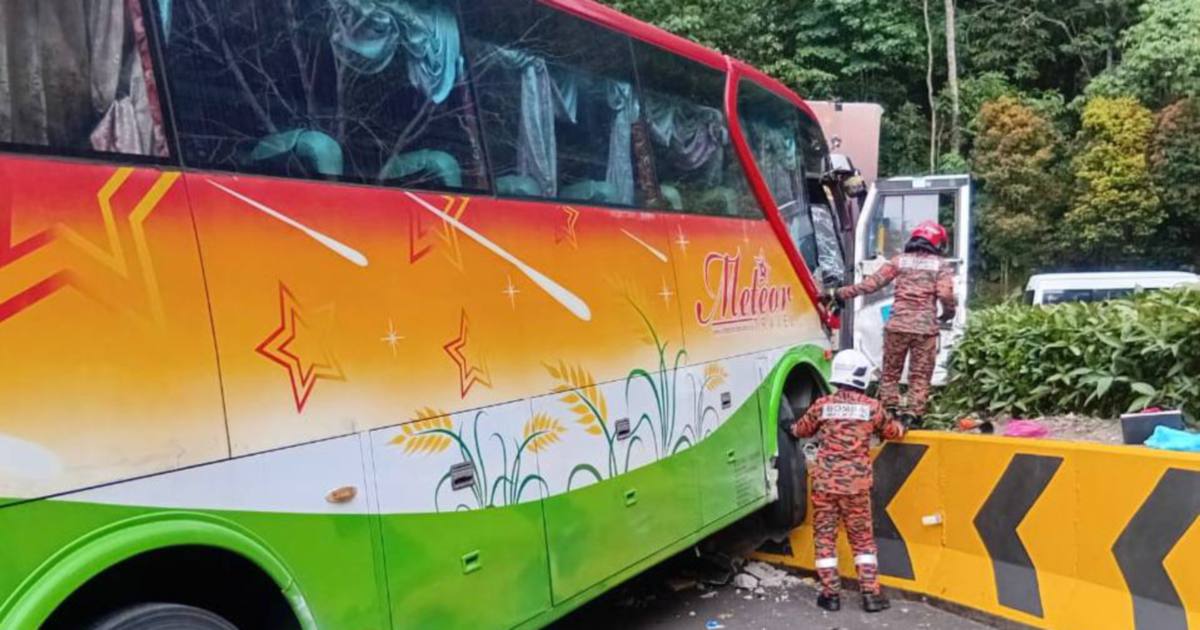
LAST Sunday, a tour bus carrying mostly Vietnamese nationals crashed into two cars while descending from Genting Highlands. Mercifully, no serious injuries were reported.
An average of 79,000 foreign and domestic visitors travel up to Genting Highlands daily, with 24% being tourists staying overnight and 76% being excursionists or day trippers.
Visitors either drive their own vehicles or use public transport such as taxis or e-hailing services, and in express or excursion buses. Where roads are steep and windy, the climb up is slow.
But just like walking down stairs which is less laborious and much faster, descending a mountain is speedy but a lot more dangerous, and that is when most accidents occur.
For vehicles, it is the over-use of the brakes to slow down instead of engaging lower gears, more so if the vehicle is heavy like buses.
The overheated brake drums will expand and their round shape distorted, resulting in brake fade when the linings are not able to grip the drums tightly.
When this happens, the driver will no longer be able to stop the bus on time and will crash into any vehicle or barrier ahead, or plunge into a ravine, as happened on Aug 21, 2014, killing 37 of the 53 passengers that were on board an express bus that departed from Genting Highlands.
Undoubtedly, the management of Genting Highlands and various authorities have taken all measures to prevent or reduce the risks of accidents on this stretch of road, which is a far cry from when it was first opened in 1965.
Initially, it was very winding and narrow, and helicopter rides from its Segambut helipad in Kuala Lumpur to the mountain top were popular.
Over the years, the road was continuously widened and straightened, in tandem with the expansion of entertainment and accommodation facilities.
With such a huge traffic along this mountain road, accidents are bound to happen. Apart from swift response from rescue teams, the Ministry of Tourism, Arts and Culture (MOTAC) must also be ready to manage the country’s tourism image whenever numerous foreign visitors are injured.
The Aug 7 incident in Bangkok is a good example when two innocent Malaysian tourists were set on fire by a deranged jobless man near a shopping centre.
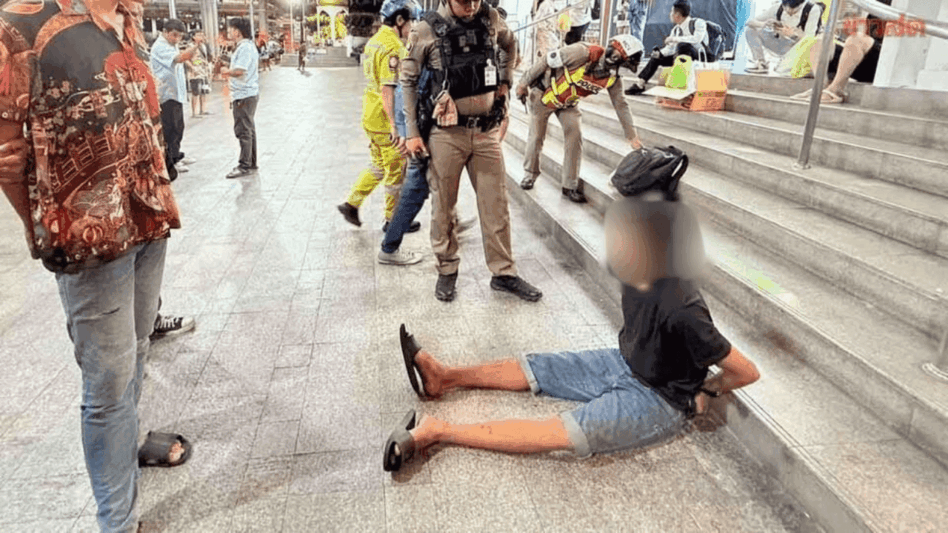
One sustained second-degree burns over 36% of her body, including her face, chest and arm, while her boyfriend suffered second-degree burns to his upper body.
On Aug 11, a newspaper reported with the heading “Families urge Thailand to transfer Malaysian burn victims”. They have requested the Thai authorities to allow the victims to be transferred to Malaysia as soon as they are medically fit.
Understandably, fellow Malaysians can feel their plight, not only to ensure the victims receive proper treatment, but also get emotional support from family members, relatives and friends back home.
Such a thought would not sit well with Malaysians thinking of visiting Thailand. Last year, Malaysians were the second largest foreign visitors to Thailand with 4.95 million, far ahead of third place India with 2.13 million.
Earlier on Aug 9, a newspaper reported that “Thai Tourism Minister Sorawong expresses regret over assault on two Malaysian tourists in Bangkok”, giving the impression that they get only sympathies while letting the law run its course, which is the norm in Malaysia.
However, the latest report by Bernama paints a different picture with the heading “Thailand pledges full care for Malaysian tourists burnt in Bangkok”.
Permanent Secretary of the Tourism and Sports Ministry, Natreeya Taweewong confirmed the ministry’s commitment to assisting the victims until their safe return.
She said “The ministry will also provide assistance under the Thai government’s compensation measures, including medical expenses and emotional distress compensation to both victims.”
Medical costs will be reimbursed up to 500,000 baht (RM65,000), while emotional distress compensation is set at 50,000 baht per person. Additional aid may be considered based on medical assessments and the victims’ evolving needs.
The ministry is coordinating with relevant agencies to ensure comprehensive medical and psychological care. The request for patients’ transfer to Malaysia was considered, but doctors advise against travel at this stage.
The Thai authorities proved they could handle the incident professionally, and would have been even better if the announcement was made on the onset.
The aid is likely to be used as a benchmark for accidents and incidents in ASEAN. Any country in the region that leaves unfortunate foreign tourists to fend for themselves will generate a negative impact on its tourism industry.
Let us hope MOTAC is ready for such an eventuality and not be caught off guard, which may affect the success of VM2026.
Lest we forget, once negativity sets in, it is difficult to remove. Therefore, our response must not only be appropriate, but also swift.
It is a vital part of the contingency plans of any organisation or country. ‒ Aug 12, 2025
YS Chan is master trainer for Mesra Malaysia and Travel and Tours Enhancement Course and an Asean Tourism Master Trainer. He is also a tourism and transport business consultant.
The views expressed are solely of the author and do not necessarily reflect those of Focus Malaysia.
Main image: NST