
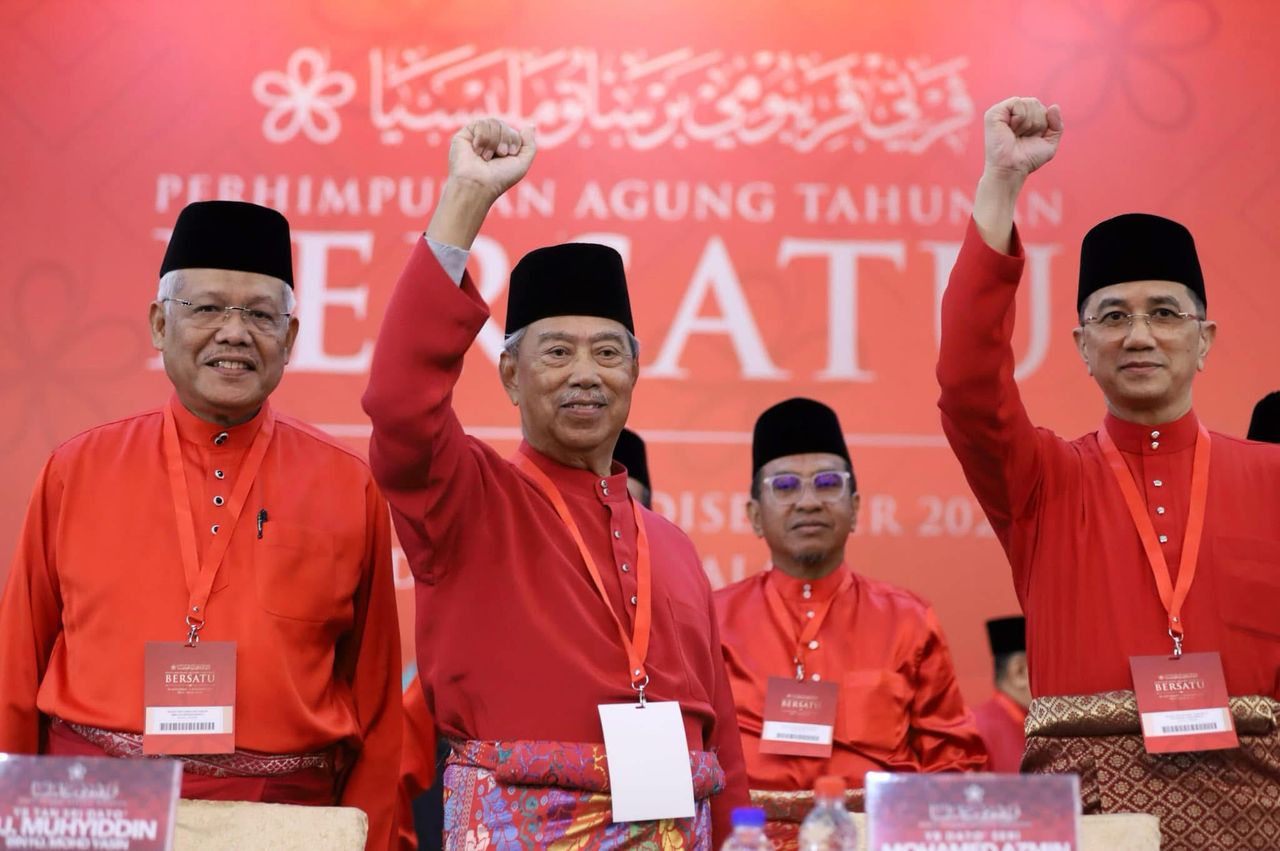
IT WAS widely expected that Bersatu president Tan Sri Muhyiddin Yassin would emerge as the party’s nominee for the post of Malaysia’s 11th Prime Minister (PM).
During the party’s two-day annual general meeting (AGM) in Shah Alam over the weekends (Sept 6-7), a wide spectrum of domestic, regional and international issues was debated.
What was otherwise a routine AGM turned more dramatic when a few voices of discontent against Muhyiddin were raised. Yet these were swiftly drowned out by louder, more resounding support for his leadership.
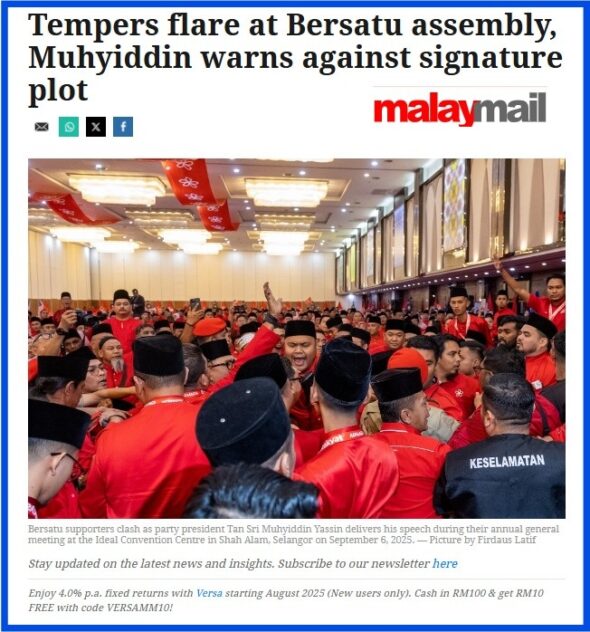
By the end of the AGM, delegates stood firmly behind three resolutions: (i) endorsing the president’s policy speech’ (ii) re-affirming Muhyiddin’s leadership; and (iii) nominating him as Bersatu’s candidate for the PM’s post.
Even before the AGM, speculation was rife that Datuk Seri Hamzah Zainudin, Bersatu’s deputy president, might be favoured by certain factions as the prime ministerial choice.
However, the two-day meeting ended with a clear consensus – Muhyiddin would be the party’s candidate. Hamzah himself had no hesitation in endorsing his president.
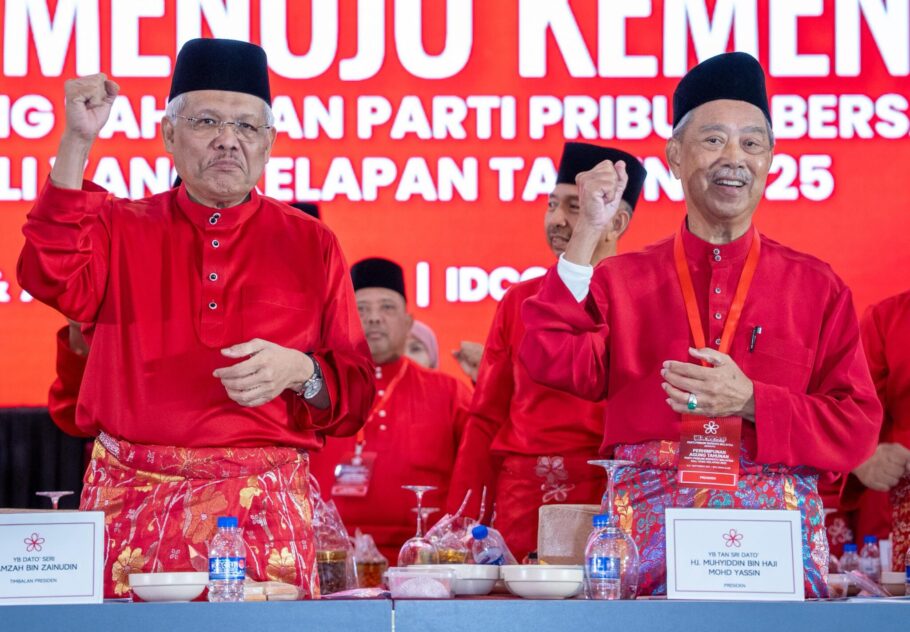
This gesture of solidarity projected unity rather than rivalry with both Muhyiddin and Hamzah coming together to speak with one voice: the fight for a better Malaysia.
Muhyiddin is pragmatic choice
Muhyiddin’s nomination also fits neatly with PAS’s earlier stance. While PAS is the strongest party within the Perikatan Nasional (PN) opposition coalition in terms of electoral numbers, its leadership chose not to push for the premiership.
Acknowledging their lack of federal governance experience, PAS leaders decided to leave the prime ministerial post to Bersatu.
This pragmatic move avoided internal contestation, thus reinforcing PN’s coherence. Thus, Muhyiddin’s candidacy not only solidifies Bersatu’s leadership role within PN but also reflects the coalition’s strategy of balancing influence with competence.
For Bersatu, nominating Muhyiddin was both logical and strategic. His long career as a federal minister and later as prime minister gives him credibility as the most experienced candidate to lead the country. Hamzah, himself the former home minister, wisely chose not to challenge this reality.
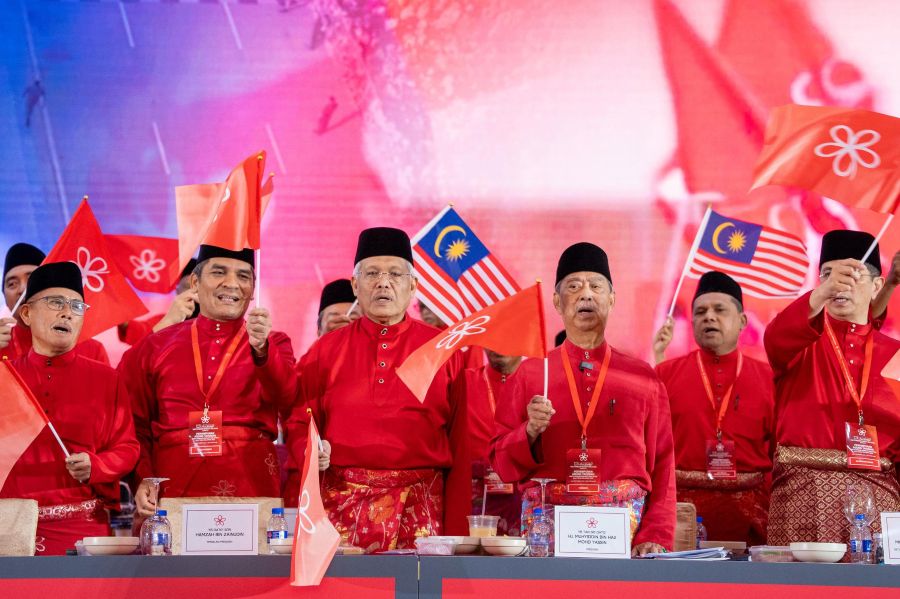
The decision to close ranks despite some murmurs of dissent strengthens Bersatu’s image of discipline and readiness to govern.
Yet Muhyiddin’s candidacy does not come without controversy. Detractors are quick to point to the corruption charges pending against him.
These cases, however, must be seen within the broader context of Malaysian politics where charges are often wielded as weapons to cripple opponents.
Political persecution
In my view, the allegations against Muhyiddin are politically motivated – a deliberate attempt by the Madani government of to weaken the opposition. The pattern of selective prosecution cannot be ignored.
If the Madani government is genuinely committed to eradicating corruption, then why has there been no accountability in glaring scandals such as the Sabah mining fiasco which allegedly involves state ministers? Such double standards undermine the government’s moral authority.
Corruption cannot be eliminated when justice is applied unevenly. Targeting opposition leaders while shielding allies exposes the hypocrisy of those in power.
It is important to stress that Muhyiddin – though charged – has not been convicted. In the eyes of the law, he remains innocent until proven guilty.
History also offers perspective. Prime Minister Datuk Seri Anwar Ibrahim himself was once convicted, only to later receive a royal pardon.
Whether that pardon exempted him from the five-year ban on contesting elections is now a matter before the courts. If Anwar could rise again despite conviction, it would be unjust to deny Muhyiddin the same presumption of fairness before judgment.
Muhyiddin’s nomination signals several things. Firstly, Bersatu has shown that it values unity over division. Despite earlier whispers about Hamzah, the party rallied firmly around its president.
Secondly, PAS’s deference underscores PN’s internal stability – a coalition willing to prioritize strategy over ego.
Thirdly, the episode highlights the continuing problem of selective prosecution in Malaysia where corruption charges are often deployed to undermine political opponents rather than uphold justice.
As things stand, Muhyiddin is Bersatu’s undisputed choice for Malaysia’s 11th PM. His experience, resilience and ability to command party unity position him as a formidable candidate.
Whether Malaysians will accept him given the on-going legal challenges remains to be seen.
But one thing is clear: the Madani government’s double standards in dealing with corruption have already eroded public confidence.
If justice continues to be applied selectively, more Malaysians may come to view Muhyiddin not as a tainted politician but as a victim of political persecution. – Sept 8, 2025
Former DAP stalwart and Penang deputy chief minister II Prof Ramasamy Palanisamy is chairman of the United Rights of Malaysian Party (Urimai) interim council.
The views expressed are solely of the author and do not necessarily reflect those of Focus Malaysia.
Main image: Utusan Malaysia