

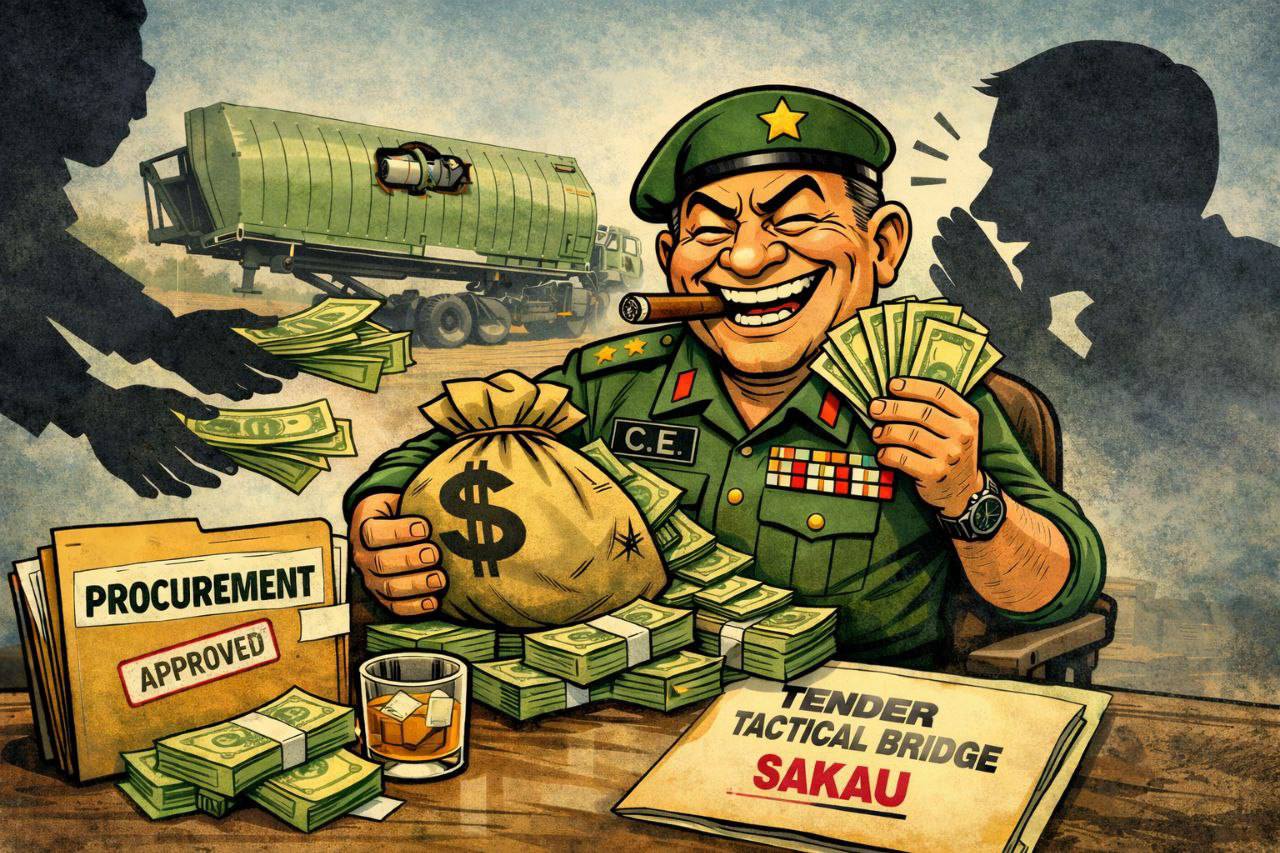
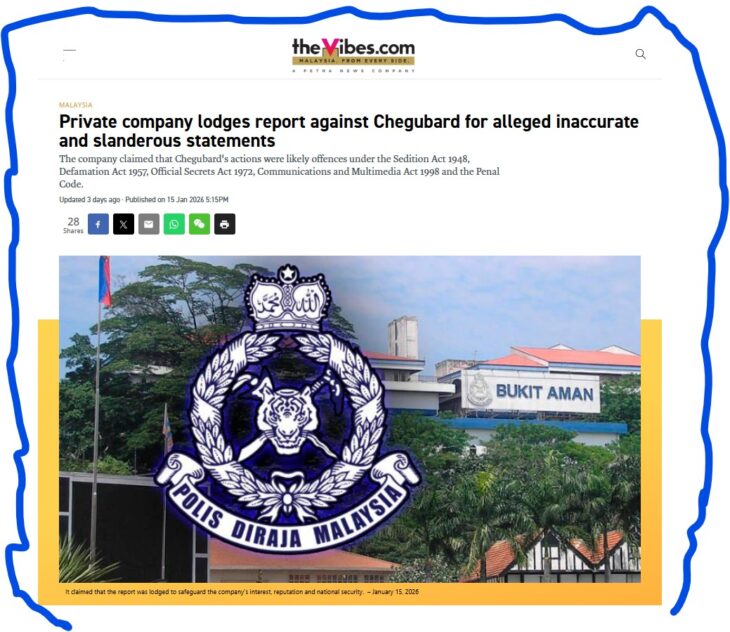
A POLICE report lodged in Shah Alam recently against an Opposition political activist has reignited a familiar debate: how should “whistleblowers” balance blowing the lid on alleged corruption and compromising national security?
The report was lodged by a defence company against Bersatu Port Dickson division head and digital influencer Badrul Hisham Shaharin a.k.a. Chegubard over a posting on his social media platform and also statements allegedly made on Episode 44 of his podcast Khabarnya.
The company claimed that Chegubard had spread false and slanderous information, revealed confidential documents and information which were false, slanderous and could threaten national security.
Nobody is denying that corruption in defence contracts is serious. Historically, the track record of our defence procurement leaves much to be desired.
One just needs to look at the recent controversy about the army bribery cartel, the Littoral Combat Ship (LCS) scandal and purchase of the Scorpene submarine in the early 2000s.
Oversight was weak and billions of ringgit went up in smoke from the leakages.
But whistleblowing does not mean throwing confidential defence material onto Facebook and a podcast.
National security is no laughing matter and involves national sovereignty. Sensitive information like military capability, operational readiness and the safety of personnel is not something that one casually shares on social media.
This is not about defending powerful companies or shielding corrupt officials. It is about recognising that there is a responsible way to expose wrongdoing and an irresponsible one.
Responsible whistleblowing follows a discipline that uses internal reporting channels, including Parliamentary oversight where available. It discloses only what is necessary to prove wrongdoing. It protects technical and operational details that could be misused.
This is exactly the lesson the world learned from Julian Assange and WikiLeaks. WikiLeaks argued it was exposing corruption and abuse.

Yet even many of its supporters later conceded that the mass release of unredacted military and diplomatic files crossed a line. Governments did not pursue Assange because they feared transparency.
They pursued him because sensitive defence and intelligence material was dumped without discipline, hence putting operations and people at risk.
Exposing corruption and protecting national security are not competing goals. They are inseparable.
When one compromises sensitive defence information to make a point, one weakens the very country one claims to be protecting. That is one line we should never cross. – Jan 19, 2026
Main image credit: Che GuBard/Facebook