
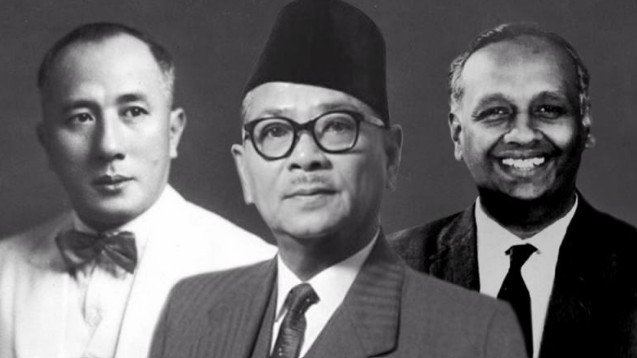
If the Chinese Indian forefathers in pre-Merdeka Malaya had insisted on equality and zero special privileges, the Malay leaders back then would never have agreed to Chinese Indian migrants being granted citizenship.
Such vital trade-off a.k.a. social contract still holds true 70 years later as “the shrinking 30% non-Bumiputera Malaysians” aspire to abort the unwritten bargain of granting citizenship to the former’s forefathers in exchange for special Bumiputra privileges as accorded by Article 153 of the Federal Constitution.
But while they could be right, “these 30% Chinese Indians conveniently forgot that for this to actually happen, the Federal Constitution has to be (first) amended”, according to socio-political activist Adrian Lim Chee En.
“And amending the Federal Constitution to abolish or change the position of these special privileges requires the 70% Bumiputera to agree,” reckoned the digital creator known for his progressive advocacy in a recent Facebook rant.
“The 30% Chinese Indians can shout and scream all day about inequality but as long as the 70% Bumiputera don’t agree, these 30% Chinese Indians can continue to fly kite.”
So this begs the question. Do the 30% Chinese Indians actually think that by shouting, screaming and demanding for equality, the 70% would just sit idly and do nothing?
Or will the 70% hit back harder and effect a total opposite intended outcome?
Bitter pill to swallow
In Lim’s contention, many of the 30% non-Bumiputera seem to have conveniently forgotten that their numbers are shrinking day by day as the Bumiputera birth rate outnumbers theirs “because they live in an echo chamber”.
“The echo chamber where they wake up, go to school or work, have meals, scroll social media, socialise, do sports and gather among the same 30% non-Bumiputera every single day,” observed the former student activist and founder of the coalition Mahasiswa Ganyang Akta Hasutan (a student movement advocating for the repeal of the Sedition Act 1948).
Malaysia’s population: 33 million; non-Bumiputera: 10 million (30%); Bumiputera: 23 million (70%).
Here is a reality check! 10 people are involved in fight. Three of this 10 thinks they have the numbers and goes to challenge the other seven. Which group do you think will win? The three or the seven?
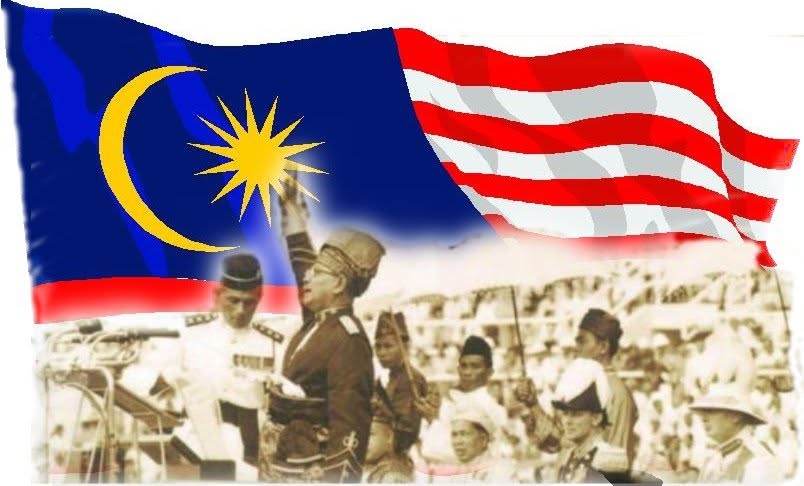
Therefore, in the pursuit of a win-win co-existence formula for all Malaysians, “we must first admit that Malaysia was founded upon unequal policies”, according to Lim.
“During the campaign for independence, the Malays were extremely hesitant to grant Chinese Indian migrants citizenship. And this hesitation was not unfounded,” insisted the lawyer by training.
Why in the world would the 3+ million Malays back then – after being colonised for centuries by the Portuguese, Dutch, British, Japanese and then the British again – suddenly agree to 3 million Chinese Indian migrants being granted citizenship??
Who in the world would agree to that? Absolutely nobody!!! But the 3+ million Malays back then agreed for the 3 million migrant Chinese Indians be granted citizenship for the sake of independence.
The leaders of the Malay. Chinese, Indian and various other communities realised that the only way to ever gain independence was to first reach a compromise among themselves and then push for independence as a united front.
But Lim reminded that a compromise does not mean “everyone will win everything”.
A compromise means everyone will gain something but at the same time, everyone will also lose something.
The Chinese Indians who cannot go back to China or India will gain citizenship as Malayans but do not receive equal treatment.
The Malays who used to own 100% of Malaya will gain a country to self-govern but lose ownership from 100% to 50%. – June 16, 2026
Post-script: The poster has most recently answered critics who accused him of “jilat Melayu (bootlicking the Malays)” or “selling out the Chinese” presumably in relation to his above social contract views.
The Malays aren’t racists. The Malays aren’t rejecting the Chinese Indians,” he defended philosophically.
“The Malays are rejecting the efforts to change or distort whatever was agreed in 1957. The Malays just want status quo which means honouring what was agreed by our forefathers when Malaysia declared independence in 1957.
This is like two parties coming to an agreement to sell and buy a house in 1957. Malays agree to sell the house at RM10, Chinese agreed to buy the house at RM10.
(But) 60 years later, the children of the Chinese felt that RM10 is too expensive and demand to reduce to RM5. The Malays said no and are contractually not wrong because the sum that was agreed in 1957 has all along been RM10!
Main image credit: Malaysiakini