

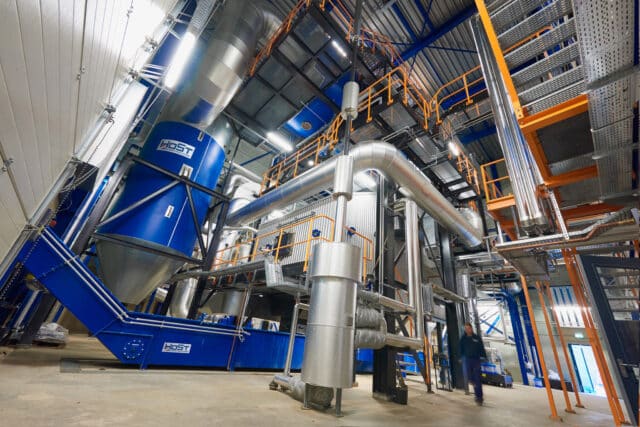
MALAYSIA’S monthly fuel subsidy bill has surpassed RM7 billion, driven by supply disruptions through the Strait of Hormuz and the government’s effort to cap retail fuel prices as the B15 biodiesel mandate comes into force.
For manufacturers and industrial users still running on fossil fuels for heat and steam, those numbers signal something more than a passing crisis.
In fact, the pressure is building on the Malaysian manufacturing industry is structural rather than cyclical, according to Adli Amirullah who is chief economist at Wawasanex, an economic research and advisory firm.
“This structural problem is far from a temporary one. As Malaysia uses fossil fuels for more than 91% of its energy needs, the exposure to global price swings is broad and deep,” he cautioned.

“For energy-intensive industries like food processing, ceramics, rubber and textiles, energy sits right at the heart of the business model. Manufacturers who have no alternative energy strategy are essentially absorbing that global risk with no buffer.”
‘Massive palm bioenergy potential’
That exposure, argued Adli, will only intensify. As it is, Malaysia’s domestic energy consumption will continue to grow, driven by industrial expansion, urbanisation and population growth against a resource base that is fixed and finite.
Budget 2026 compounds that pressure further. A carbon tax came into effect this year, initially targeting high-emission sectors, a measure that directly raises the financial cost of fossil fuel dependence for energy-intensive manufacturers.
The scale of the untapped domestic alternative is striking. A 2023 research paper found that Malaysia’s annual palm bioenergy potential could theoretically fulfil up to 64% of the country’s primary energy supply.
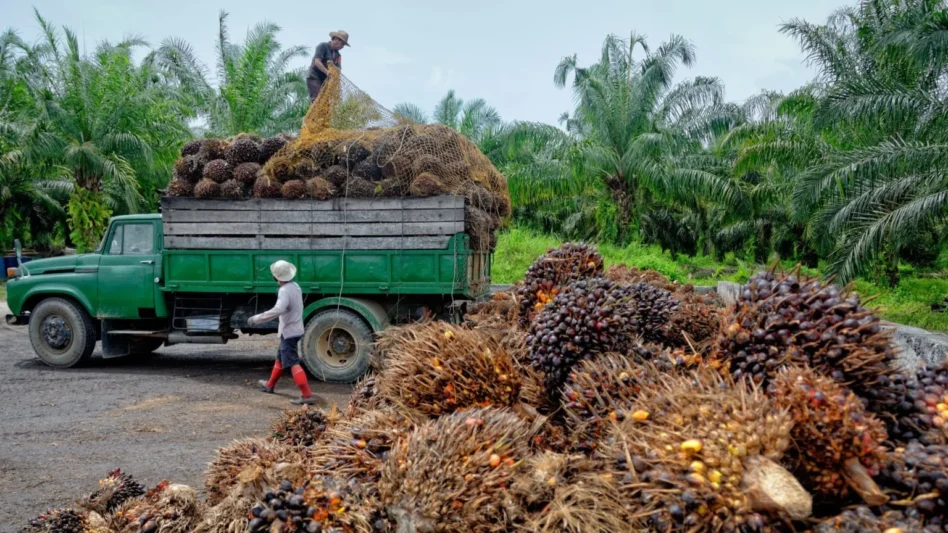
“That is not a marginal figure,” insisted Adli says. “It tells you how significant our domestic energy potential actually is, and how much of it remains untapped.”
Adli is deliberate about framing the biomass opportunity in economic rather than environmental terms and more specifically as an energy security question.
“Before we even get to the question of attractiveness, I think the more urgent conversation is energy security,” he contended.
“Can Malaysia produce enough of its own energy to keep its economy running if external supply chains get severely disrupted? That’s the question we should be stress-testing now. Because the geopolitical environment we are operating in is genuinely unpredictable.”
National competitiveness at stake
For industrial applications specifically, biomass steam addresses a practical need that other clean energy alternatives do not fully cover.
Unlike solar or hydrogen, biomass can deliver consistent heat and steam, the energy form that food processing, rubber, ceramics, paper manufacturing and palm oil processing all depend on.
Companies such as Wasco Greenergy Bhd are powering the transition away from fossil fuels through advanced industrial steam turbine generator systems and biomass steam energy systems.
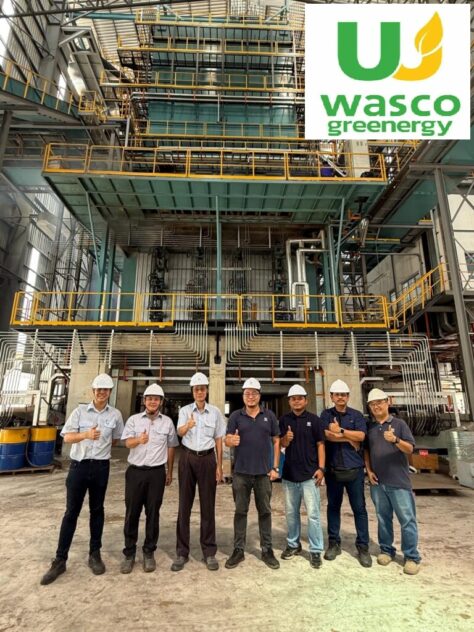
As manufacturers increasingly pursue lower-carbon operations, the segment is positioned to benefit directly as industrial adoption accelerates.
The conversion is already underway at scale. Last year, Japanese petrochemical manufacturer Kaneka Malaysia committed to a RM31 mil biomass steam plant in Gebeng, Pahang under a 20-year Steam Supply and Purchase Agreement to replace natural gas with biomass-generated steam (operations targeted for this year).
The competitive stakes extend beyond energy cost alone. Under the New Industrial Master Plan 2030, Malaysia is targeting high-value foreign direct investment (FDIs) in sectors such as semiconductors and advanced materials.
In this regard, industrial energy stability is no longer just an operational concern but a national competitiveness requirement, according to Adli.
“These investors don’t make location decisions lightly,” he stressed. “Energy cost and reliability sit right at the centre of their decision making. Energy diversification is not just a sustainability checkbox. It’s a fundamental competitiveness requirement.”

Barrier to entry
Despite the scale of the opportunity, Adli identifies two persistent barriers to wider biomass adoption at the industrial level.
As most manufacturing facilities were built around conventional fossil fuel systems, the transition to biomass requires equipment modifications, operational testing and additional capital outlay.
Industrial players are also held back by a lack of long-term data on how sustained biomass use affects machinery performance over time.
The result is a stand-off that neither side can break alone.
“Biomass producers are waiting for demand signals before they scale up and invest further in R&D,” asserted Adli. “Both sides are waiting for the other to move first, and nothing will happen.”

His proposed solution is a tri-funding model with shared incentives across three parties.
What I would really like to see is a tri-funding approach where the government, industrial users and biomass producers come to the table together with shared commitment and shared skin in the game,” he envisages.
“The government provides the policy framework and co-funding to de-risk early adoption while industrial users commit to piloting biomass as part of their energy mix and provide real operational data.
On their part, biomass producers are expected to use that stability to accelerate innovation and R&D (research & development).
Together, that structure creates the conditions for biomass to mature quickly into a credible, bankable and practical solution.
Looking ahead, Adli expects the economics to shift regardless.
“The economics of locally sourced alternatives like biomass will improve not because biomass suddenly becomes cheaper in isolation but because the relative cost of staying dependent on fossil fuels keeps going up,” he added. – June 20, 2026
Main image credit: HoST Energy Systems