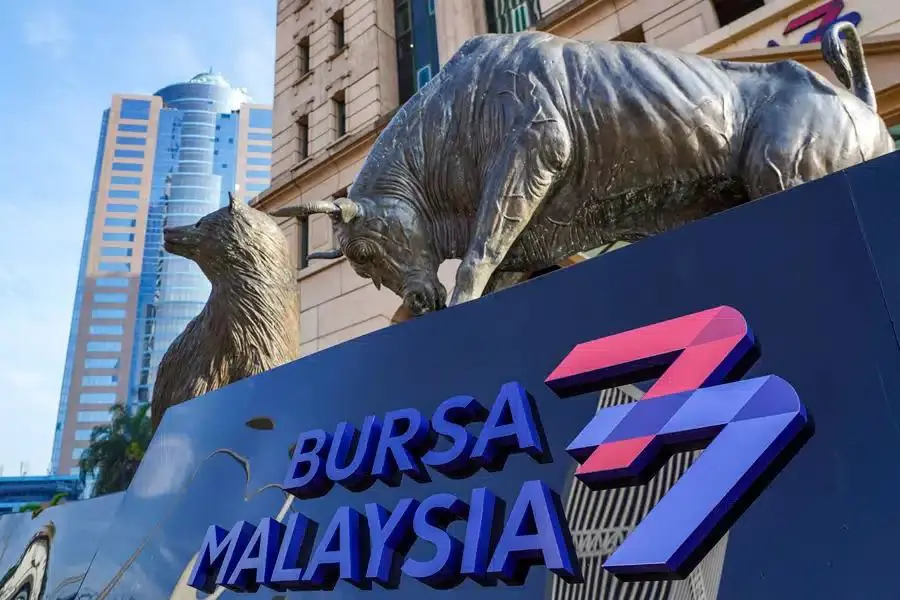

SINCE returning to Bursa Malaysia in October 2012, Astro Malaysia Holdings Bhd’s fortunes have taken a dramatic turn.
The pay-TV operator’s share price reached a high of RM3.68 in June 2014 but has since fallen steadily, recently touching a record low of RM0.06.
The media group has struggled to adapt to the rapidly evolving entertainment landscape.
The rise of high-speed internet and digital platforms has transformed viewing habits, with consumers increasingly turning to free or subscription-based streaming services such as YouTube and Netflix for content.
Astro’s challenges have intensified in recent years. The company recently lost the rights to broadcast the FIFA World Cup, as escalating content acquisition costs and widespread piracy made it increasingly difficult to generate sufficient returns from the tournament.
Adding to the pressure, state broadcaster RTM is expected to stop carrying its TV1, TV2 and TV Okey channels on Astro beginning July 1, 2026, following a disagreement over carriage fees.
Beyond content-related issues, Astro continues to bear substantial fixed operating expenses, including satellite and transponder costs payable to MEASAT.
These financial commitments have weighed on the group’s profitability and, in turn, its ability to sustain dividend payouts at previous levels. Despite these headwinds, Astro remains a profitable company.
With its market capitalisation having shrunk to approximately RM300 mil from a peak of around RM18 bil, some market observers believe the company could emerge as a potential merger and acquisition target.
Its significantly lower valuation, coupled with an established subscriber base and existing infrastructure, may prove attractive to interested parties seeking opportunities in the media and telecommunications space.
To recall, Astro reported 1QFY27 profit of RM1.6m.The market has long speculated about a potential merger between Maxis and Astro due to the common shareholder.
However, this may no longer be an impetus, following the passing of the common major shareholder, Tan Sri T. Ananda Krishnan.
On another note, we observed that the Co-Marketing Agreement (CMA) between Astro and Maxis remains active, strictly to serve the existing CMA based of subscribers.
We view that this further diffuses the possibility of a merger between Maxis and Astro from a strategic point-of-view. Maxis’ current bundling proposition for content includes only Sooka which is rather limited.
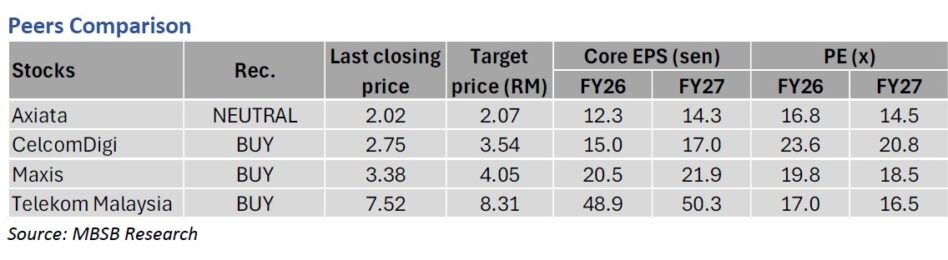
Meanwhile, we view that there is more strategic value to be gained for an amalgamation between Astro and Telekom Malaysia (TM). This was mainly due to the former’s stronghold on the home fibre business.
Nonetheless, we understand that Astro has stopped new sales and subscriber acquisitions for Astro Fibre effective 1 February 2026, following a strategic review of its businesses.
On another note, we view that there is little M&A appetite for TM as the group continues to focus on its capital spending into fibre expansion and 5G backhaul under access as well as renewed dividend commitment when the group upgraded its dividend policy to a minimum payout of 75% of PATAMI which is payable on a quarterly basis. —June 23, 2026
Main image: Getty Images