

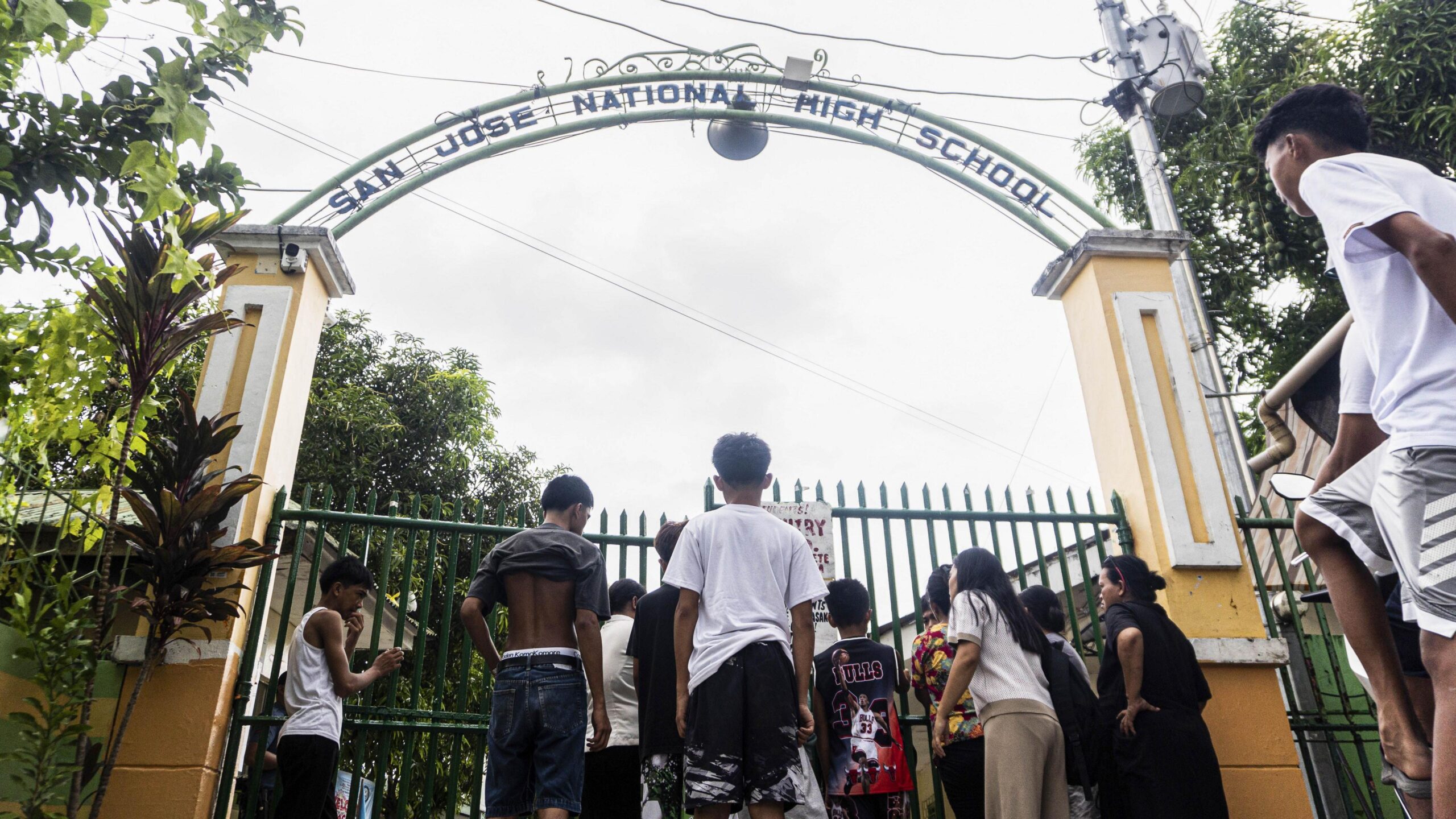
THE recent school shooting at San Jose National High School in Tacloban City has shocked the Philippines and the wider region. Three students lost their lives, others were injured, and an entire school community has been left traumatised.
School shootings remain exceptionally rare in Southeast Asia, making the tragedy particularly difficult to comprehend.
As investigations continue, public debate has centred on possible contributing factors, including bullying, access to firearms, social media influences and the backgrounds of those involved.
Such reactions are understandable. Whenever a tragedy of this magnitude occurs, people search for answers. They want to understand what happened and, more importantly, how similar incidents can be prevented in the future.
The challenge is that acts of extreme violence rarely have a single cause.

From a criminological perspective, serious violence typically emerges from a complex interaction of individual experiences, family circumstances, peer relationships, school environments and broader social influences.
Tragedies of this nature are often preceded by multiple warning signs and missed opportunities for intervention rather than one isolated trigger.
Among the issues raised in the aftermath of the Tacloban shooting is the possibility that bullying may have played a role. If these allegations are substantiated, they deserve careful attention. However, it is important to approach the issue with nuance.
Bullying does not excuse violence. Nothing justifies the taking of innocent lives. At the same time, bullying should not be dismissed as irrelevant simply because it does not excuse the crime.
For too long, bullying has often been treated as an unfortunate but unavoidable part of growing up. Victims are frequently told to ignore it, develop resilience or simply move on.
Yet decades of research have shown that persistent bullying can have profound psychological consequences, including anxiety, depression, social isolation, self-harm, school avoidance and diminished self-worth.
This is why bullying should be viewed not merely as a disciplinary issue but also as a child protection issue.
One of the most troubling aspects of many bullying cases is that warning signs are often visible long before a crisis emerges.
Victims may withdraw socially, experience declining academic performance, avoid school or exhibit signs of emotional distress. Yet these indicators are not always recognised or acted upon.
Some students may fear reporting bullying because they believe nothing will change. Others worry that speaking up may worsen the situation.
This highlights a challenge faced by many educational institutions. The goal should not simply be responding to incidents after they occur but identifying risks before they escalate.
In recent years, there has been a welcome emphasis on student wellbeing, mental health support and rehabilitation. These are important developments. However, support and accountability should not be viewed as competing priorities.

Students who engage in bullying must understand that their actions have consequences. Harmful behaviour cannot be normalised, minimised or repeatedly excused. At the same time, accountability should not be confused with punishment alone.
The objective is not to shame or stigmatise young people. Rather, it is to help them recognise the impact of their actions, take responsibility and change their behaviour.
Genuine remorse and meaningful behavioural change are often more effective than punishment imposed without reflection or understanding.
Schools therefore have a critical role to play. Effective anti-bullying strategies should extend beyond disciplinary measures to include counselling services, peer support programmes, digital literacy education and early intervention mechanisms.
Victims need to feel heard, believed and protected. Equally, students who engage in harmful behaviour should be given opportunities to understand the consequences of their actions and make positive changes.
The Tacloban tragedy also highlights another reality of modern adolescence. Young people no longer live separate online and offline lives. Their friendships, conflicts and identities increasingly unfold across digital platforms.
Cyberbullying, online humiliation, exposure to harmful content and participation in toxic online communities can intensify existing vulnerabilities.
While technology is rarely the sole cause of violence, it can amplify underlying problems and should not be ignored in discussions about school safety.
At the same time, it would be a mistake to focus exclusively on social media or digital platforms.
Such explanations often divert attention from more difficult but necessary conversations about school climate, peer relationships, mental health support and institutional responses to student distress.
Ultimately, the most important questions are not simply what happened but whether it could have been prevented.

Were concerns reported? Were complaints taken seriously? Were vulnerable students identified and supported? Were there opportunities for intervention before the situation escalated?
These are the questions that deserve careful examination.
The lesson from Tacloban is not that schools need to become fortresses, nor that harsher punishment alone will prevent future tragedies. Rather, it is a reminder that school safety begins long before a weapon enters a classroom.
It begins with creating environments where students feel safe, respected and supported. It begins with taking bullying seriously. It begins with recognising warning signs and responding before a crisis occurs.
If there is one lesson to emerge from this tragedy, it is that warning signs should never be ignored. By the time violence erupts, the opportunity for early intervention has already passed. ‒ June 25, 2026
The author is a Criminologist and Senior Lecturer at the Faculty of Law, Universiti Malaya.
The views expressed are solely of the author and do not necessarily reflect those of Focus Malaysia.
Main image: inquirer.net