
DESPITE global edible oil inventories starting the year about 4% above expectations, market fundamentals suggest supply will remain relatively tight throughout 2026.
The conflict in the Middle East has also boosted demand for edible oils, as stronger biodiesel consumption and higher blending mandates in Indonesia and Malaysia continue to support usage.
Demand is expected to remain firm, particularly if elevated crude oil and energy prices persist.
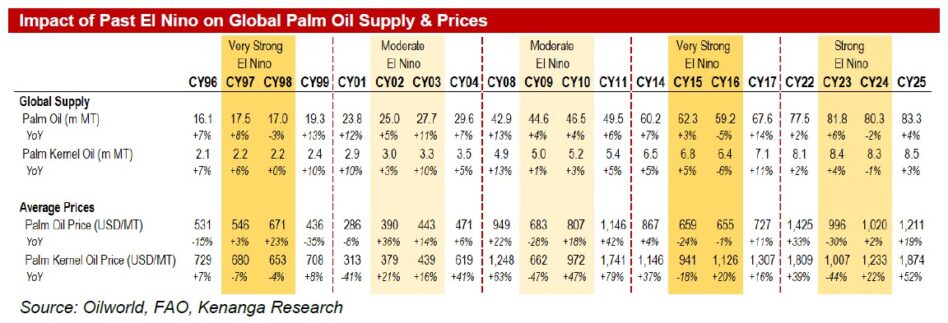
Historically, severe El Niño episodes have reduced global palm oil production by between 2% and 5% year-on-year.
Even so, crude palm oil (CPO) prices have shown the ability to climb during less intense El Niño conditions.
“Reflecting these market dynamics, on 12 June we revised our CPO price forecasts upward, raising the average estimate for 2026 from RM4,250 to RM4,400 per metric tonne, while the 2027 forecast was increased from RM4,200 to RM4,450 per metric tonne,” said Kenanga.
Essentially, instead of CPO prices moderating in the second half of 2026, after a strong quarter two of 2026, Kenanga now expects CPO price to stay elevated in the second half and peak around the first half of 2027 on the back of a very strong El Nino hitting SE Asia in the latter half of this calendar year.
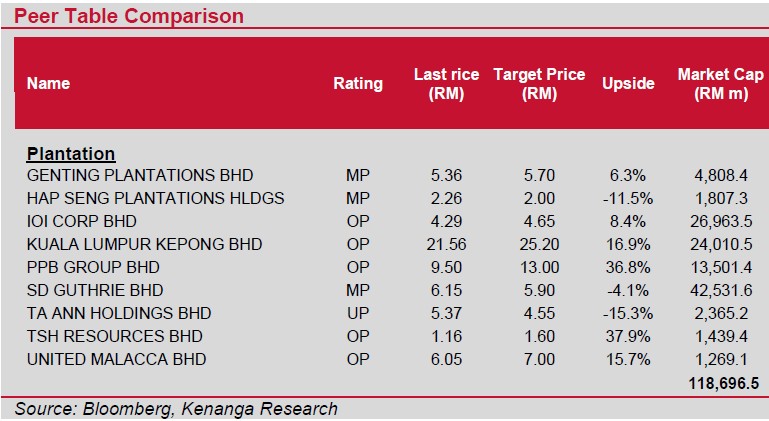
All in, Kenanga stays Overweight as they believe the plantation sector’s valuations are still not demanding considering the defensive demand for edible oil, asset-rich balance sheet with palm oil prices staying elevated (or rising higher).
This is thanks to the global edible oil supply still looking tight despite better-than-expected opening inventory for 2026 as edible oil consumption is still on the rise.
Bio-diesel admixture and demand has also risen, spurred on by the Gulf conflict.
Also note that El Nino has already been declared by NOAA and the likelihood of a very strong El Nino has risen to 63%, hence palm oil supply may be affected in 2027 which gives limited room to accommodate poor harvest of other oil crops.
Cost is further rising due to higher fertiliser and transport costs but PK prices are still elevated, while fertiliser prices have slipped with many planters already locked in stocks for their entire 2026 requirements.—July 7, 2026
Main image: cloetta.fi