

THE Strait of Hormuz has once again emerged as a focal point of geopolitical tensions, with reports indicating a sharp decline in vessel traffic through the strategic waterway as concerns over potential supply disruptions pushed oil prices higher.
The conflict between the United States and Iran has intensified after Washington carried out another round of strikes on Iranian targets.
The US has also confirmed that its naval blockade on ships travelling to and from Iranian ports is now operational.
According to media reports, the region is currently patrolled by more than 20 US Navy warships, supported by hundreds of military aircraft.
Amid the escalating tensions, Brent crude climbed to US$87.49 per barrel after surging more than 9% earlier, as investors priced in the growing risks to shipping routes and global energy supplies linked to the Strait of Hormuz.
Meanwhile, reports said President Donald Trump has abandoned the previously proposed 20% transit fee for vessels passing through the Strait of Hormuz.
Instead, the US is pursuing trade and investment agreements with Gulf nations, while keeping its naval blockade on Iranian ports in place.
Despite the weaker regional risk backdrop, the FBM KLCI was resilient yesterday, ending 21.50 points higher or +1.27% to 1,719.94 at midday, supported by banking, plantation and commodity heavyweights.
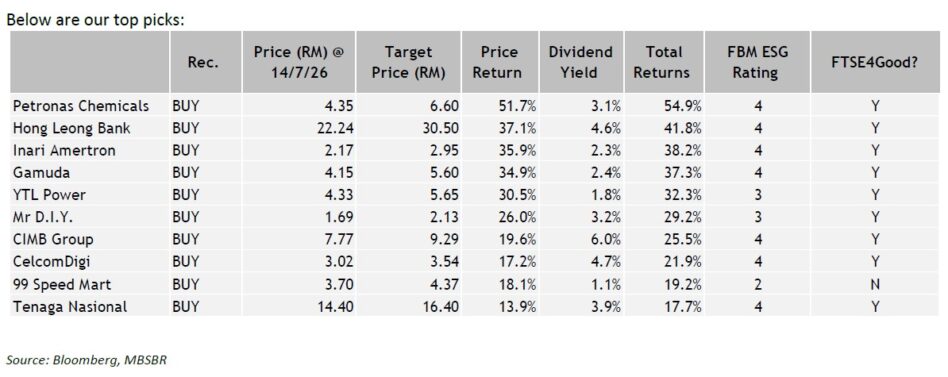
“In our 2HCY26 outlook, we assumed Brent crude would normalise into the USD80–90/bbl range in 2HCY26, after earlier spikes during the conflict period,” said MBSB Research.
With Brent now reported at USD87.49/bbl, the price is still within that range but moving toward the upper end.
If the conflict worsens and Brent breaks decisively above USD90/bbl, the market may begin to price a more disruptive inflation shock.
At current juncture, we believe that this latest round of escalation may not last as we believe that the US does not have escalation capabilities.
“We expect that the renewed conflict may last another 3-4 weeks at most before there may be another round of ceasefire or de-escalation at the very least,” said MBSB.
The FBM KLCI’s move above 1,700, while its peers in ASEAN and the US also ended higher. For example, US Dow Jones and Nasdaq rose +0.02% and +0.90% respectively yesterday.
The fact that FBM KLCI’s rally appears supported by selected heavyweights, not just by commodity-linked names, but also banks and utilities which reinforce our view that markets may be pricing in a short re-escalation rather than a full restart of the war.—July 15, 2026
Main image: oilandgasmiddleeast.com