
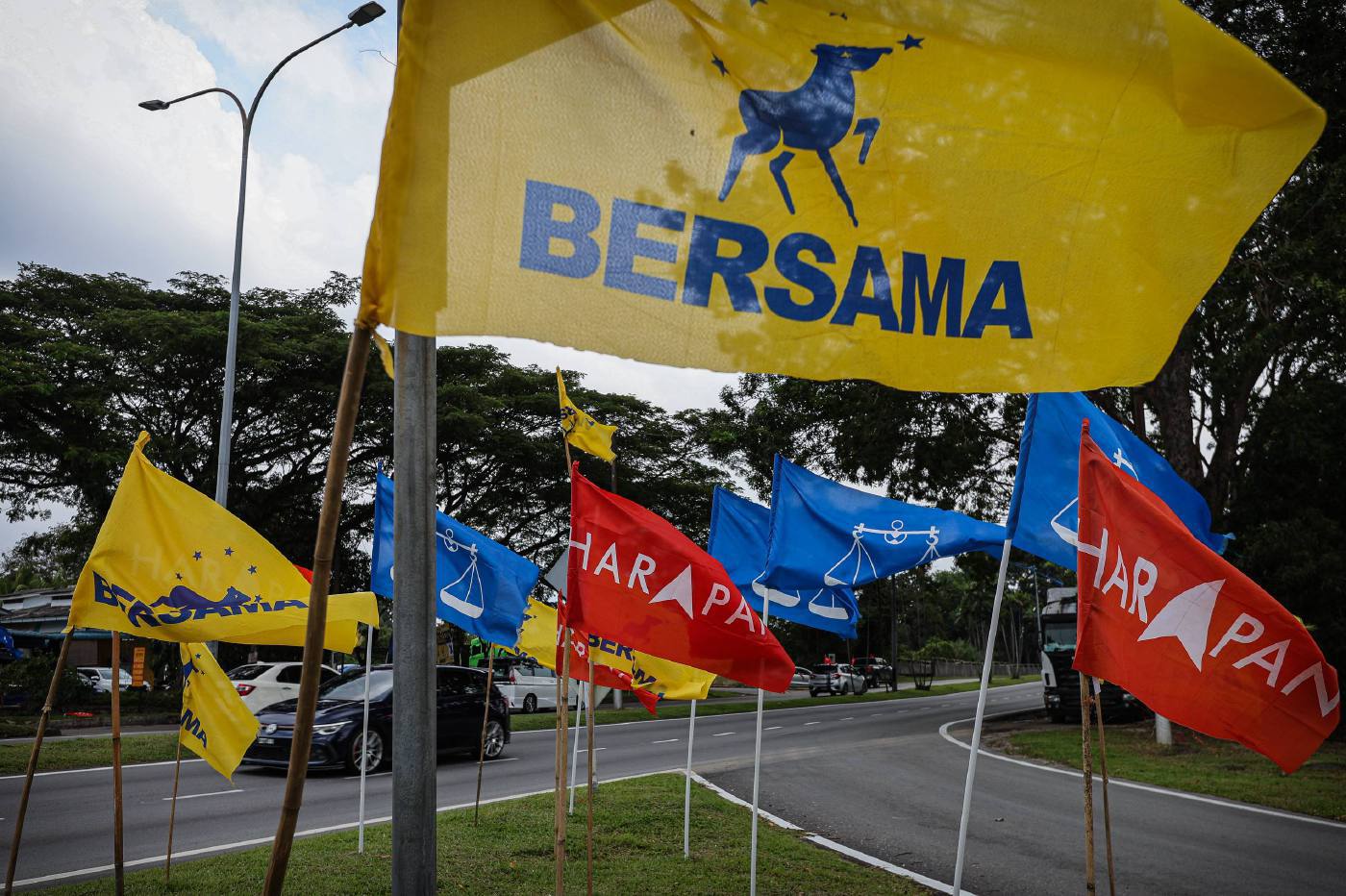
BERSAMA’S disappointing showing in the recent Johor election should serve as more than an electoral setback. It should prompt the fledgling party to reassess its strategy if it hopes to become a credible third force before the next general election.
Although few expected Bersama to win a seat, all 15 of its candidates lost their deposits after polling between 3‒6% of the vote.
The result was sobering for a party that had positioned itself as an alternative for voters dissatisfied with the MADANI government but unconvinced by Perikatan Nasional.
Being a new party alone does not explain the outcome. Malaysian voters have shown they are willing to support new political movements when they offer compelling leadership, credible policies and a message that resonates.
MUDA, for example, was registered in 2021 and won a seat under the Pakatan Harapan banner in the 2022 Johor election.
Johor suggests Bersama’s greatest challenge was not its age but its campaign strategy.
Rather than consistently focusing on issues that mattered most to Johoreans, such as the cost of living, jobs, wages and housing affordability, parts of the campaign appeared distracted by issues that generated headlines but had limited local resonance.
One example was Bersama candidate Boo Wei Han’s emphasis on pig farming in Perling. The issue failed to gain significant traction among voters, and he eventually secured only 4.4% of the vote.
Politics is ultimately about understanding voters’ priorities. On that score, Bersama struggled to connect.
Leadership also shaped public perceptions.
The party remains closely associated with its president, Datuk Seri Rafizi Ramli, whose reputation before GE15 was built on data-driven proposals and ambitious policy ideas. Many voters expected that reputation to translate into effective governance.
His tenure as economy minister, however, attracted criticism over issues such as the rollout of PADU, while several public remarks and unfulfilled pre-election pledges continued to feature in political debate.
Fairly or otherwise, these developments appear to have affected public perceptions of his effectiveness.
Whether justified or not, elections are often shaped as much by perception as by policy. Voters generally look for leaders who project competence, credibility and the ability to unite rather than divide.
If Bersama intends to establish itself as a long-term political force, it may need to broaden its leadership profile instead of relying too heavily on a single personality.
A stronger leadership team with diverse strengths would help demonstrate that the party offers more than one prominent figure.
The challenge is also broader than leadership alone.
Malaysia’s political landscape is evolving, and voters increasingly expect practical solutions to everyday concerns rather than endless political confrontation.
Parties that remain focused on bread-and-butter issues while demonstrating competence are more likely to earn public confidence.
A credible third force would benefit Malaysia’s democracy by giving voters a genuine alternative beyond the existing political blocs.
However, credibility cannot be built on dissatisfaction alone. It must be earned through clear policies, disciplined campaigning and leadership that inspires confidence.
Johor’s election should therefore be seen not simply as a defeat, but as an opportunity for Bersama to regroup, reconnect with voters and refine its strategy before GE16. ‒ July 16, 2026
Thomas Victor
Kluang
The views expressed are solely of the author and do not necessarily reflect those of Focus Malaysia.
Main image: NST