

WE have declared war on drugs, smoking, cybercrime and online scams.
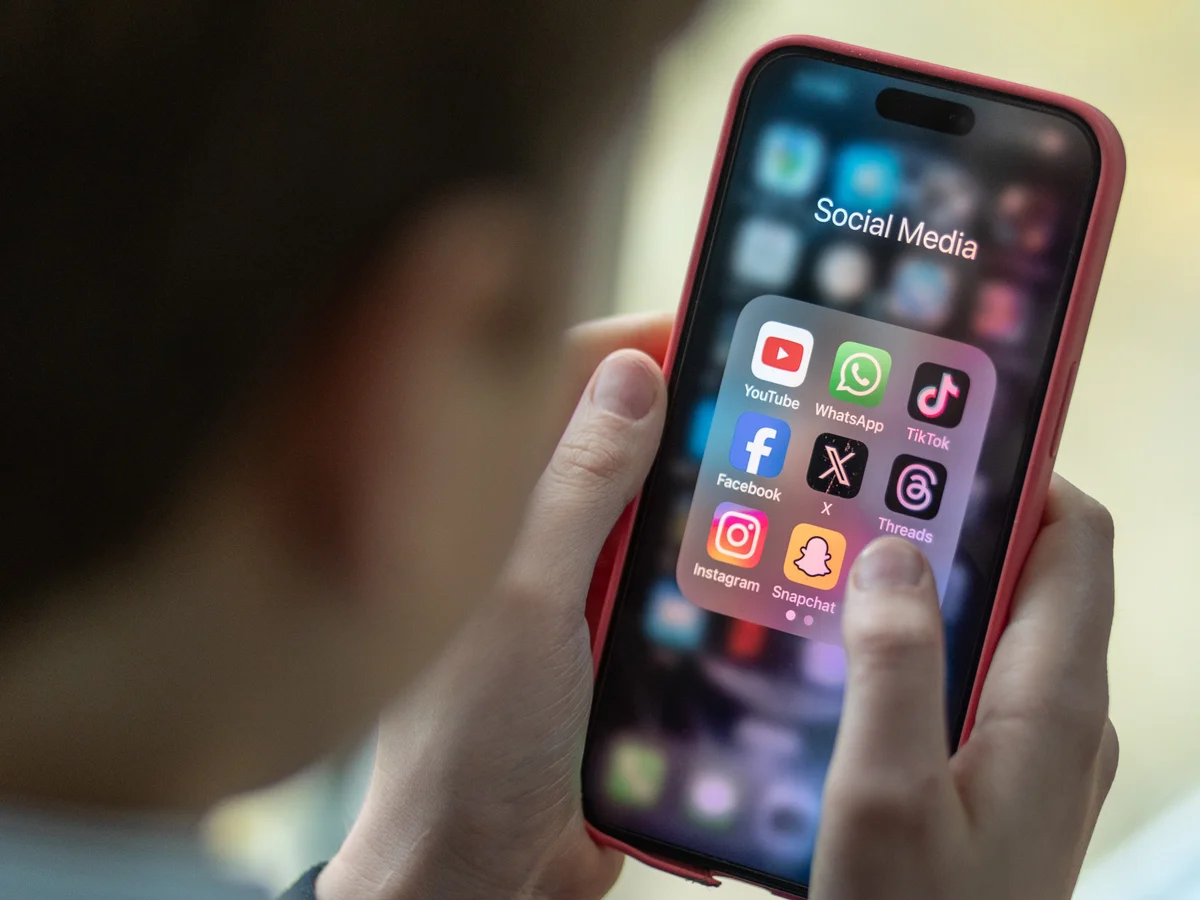
Yet one of the greatest threats to our children’s well-being sits quietly in their pockets, vibrating with notifications, glowing through the night and demanding their attention one swipe at a time. It’s called social media.
Facebook, Instagram, TikTok and YouTube have transformed the way we communicate. They connect us, entertain us and educate us. Used responsibly, they are powerful tools.
Here’s the uncomfortable question nobody wants to answer: when did we decide it was acceptable for platforms designed to maximise children’s attention to operate with so little accountability?
Around the world, governments are finally confronting that question.
Australia has introduced a ban on social media for children under 16. In the United States, courts are increasingly scrutinising whether the design of social media platforms, not merely the content posted on them, is contributing to harm among young users. The debate is no longer simply about free speech. It’s about corporate responsibility.
Malaysia cannot afford to watch from the sidelines.
We have one of the highest internet penetration rates in Southeast Asia. Our children are growing up in a world of infinite scrolling, autoplay videos and algorithms that often know their preferences better than their parents do.
These are not accidental features. They are carefully engineered to maximise engagement because attention drives advertising revenue.
When profit depends on capturing attention, children inevitably become part of the business model.
Teachers report shrinking attention spans. Mental health professionals are seeing more young people struggling with anxiety, depression, sleep deprivation and the pressure of constant comparison.
Online predators, sextortion and scams add yet another layer of risk for children who are still learning to navigate the digital world.
Our response, however, has largely been reactive. We launch awareness campaigns after tragedy strikes. We issue guidelines after harmful content has already spread.
Too often, responsibility falls almost entirely on parents while billion-dollar technology companies escape meaningful accountability.
Parents cannot solve this problem alone. They cannot compete with algorithms refined by some of the world’s largest companies or engineering teams dedicated to keeping users engaged. Schools cannot fix a problem that was designed into the technology itself.
What Malaysia needs is a Digital Child Safety Act that places responsibility where it belongs.
Such legislation should require robust age verification, make private accounts the default for minors, restrict targeted advertising to children, mandate the rapid removal of harmful content, require independent safety audits and impose meaningful financial penalties on platforms that repeatedly fail to protect young users.
If we regulate banks to protect people’s money, we can regulate technology companies to protect our children’s well-being.
Legislation alone, however, is not enough. Digital literacy should become as fundamental as reading and writing. Children need to understand how algorithms shape what they see, how misinformation spreads and how online predators operate.
Parents also need practical guidance, not simply advice to “take away the phone”, but the knowledge to help their children navigate an increasingly complex digital world.
We’ve faced similar challenges before. Seat belt laws, anti-smoking campaigns and road safety regulations all attracted criticism when they were introduced. Today, few would question the lives they have saved.
Protecting children online deserves the same determination.
The digital economy is important, but technological progress cannot come at the expense of our children’s mental and emotional well-being. Technology should serve people, not manipulate them.
History will not judge us by how quickly we embraced innovation. It will judge us by whether we protected the most vulnerable while doing so.
Our children are citizens to be nurtured, not consumers to be monetised.
If Big Tech profits from their attention, it must also accept responsibility for their safety. ‒ July 20, 2026
KT Maran is a Focus Malaysia viewer.
The views expressed are solely of the author and do not necessarily reflect those of Focus Malaysia.
Main image: Getty Images/Matt Cardy