
RENEWED tensions between the United States and Iran have significantly disrupted shipping through the Strait of Hormuz, wiping out much of the recovery in vessel movements seen after the interim agreement reached in June.
At the same time, the Red Sea has become another flashpoint. The Houthis have announced a naval blockade targeting Saudi Arabia in response to the recent escalation surrounding the attack on Sanaa International Airport.
These developments carry major implications for global trade and energy markets.
Bab el-Mandeb, located at the southern entrance to the Red Sea, is a vital maritime chokepoint that connects Gulf oil and gas exports to the Suez Canal and the SUMED pipeline, making any disruption there a serious concern for international shipping.
About 8.8 mil bbl/d of crude oil and petroleum products passed through the strait in 2023, before earlier Houthi attacks reduced flows to 4.8 mil bbl/d in 2024 as vessels diverted around the Cape of Good Hope.
The route has become more important as Saudi Arabia uses the East-West Pipeline and Yanbu terminal to bypass Hormuz disruption.
The wider conflict could also complicate US-Iran negotiations, as US has threatened to hold Tehran responsible for Houthi actions.
For now, the impact is mainly higher insurance costs, vessel rerouting and delivery delays, but any damage to Yanbu or the pipeline could turn the disruption into a physical supply shock.
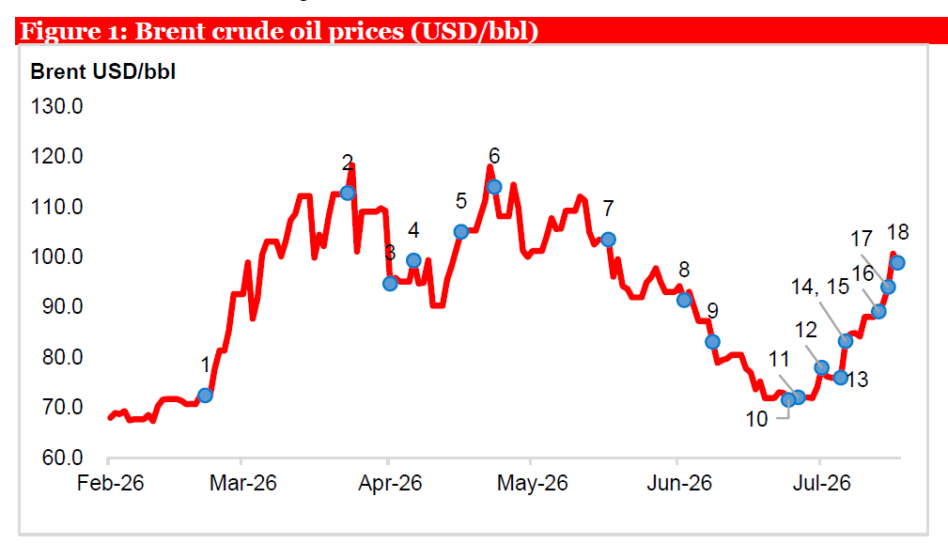
While China’s lower oil import has helped to ease the pressure on global supply shortage, possibly due to the drawdown of its strategic reserves, the current relief with prices retracing below USD100/bbl may well be a temporary reprieve if global demand picks up in the second half of 2026.
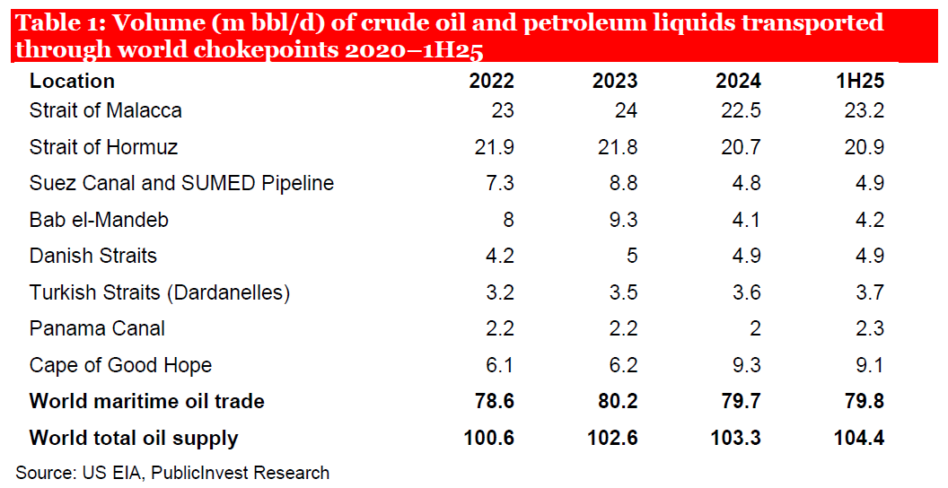
Saudi Arabia has limited alternatives if both Hormuz and Bab el-Mandeb are disrupted.
Tankers could sail north through the Suez Canal and then around the Cape to reach Asian buyers, but this could extend a typical voyage from about 19 days to 48 days and add around USD2.5 mil in fuel and canal costs per shipment.
Fully laden VLCCs also face Suez draft restrictions and may require partial unloading or use of the capacity-constrained SUMED pipeline.
Hence, a prolonged Red Sea blockade would weaken the effectiveness of Saudi Arabia’s main Hormuz bypass and increase the risk of delayed or curtailed exports.—July 27, 2026
Main image: goldmansachs.com