


ARTIFICIAL intelligence (AI) is no longer a futuristic technology reserved for scientists or tech companies.
It has quietly become part of everyday life, from voice assistants such as Siri and Alexa to personalised recommendations on YouTube and Netflix. Increasingly, it is also finding its way into classrooms, educational apps and even children’s toys.
This naturally raises an important question: Are children too young to use AI?
The answer is no, but they do need guidance.
Many parents and educators are understandably cautious about exposing children to AI. However, the reality is that most children are already using it, often without realising it.
Every time they ask a smart speaker a question, watch videos recommended by an algorithm or use a learning app that adapts to their ability, they are interacting with AI.
The real question, therefore, is not whether children are too young for AI. It is whether they understand the technology they are using, and whether the adults around them are equipped to guide them.
Curiosity is children’s greatest advantage

Children are naturally curious. They ask questions, experiment and enjoy discovering how things work. These qualities make them well suited to learning about AI from an early age.
That does not mean introducing complex concepts such as neural networks or deep learning to five-year-olds.
Instead, it means helping children understand simple ideas such as patterns, decision-making and how computers learn from examples through games, stories and interactive activities.
Tools such as Scratch and Google’s Teachable Machine already allow children to explore these ideas in an engaging and age-appropriate way. Besides introducing AI concepts, they also strengthen problem-solving, logical thinking and digital literacy.
AI literacy builds critical thinking
One of the greatest benefits of teaching children about AI is that it encourages critical thinking.
AI systems are powerful, but they are not perfect. They can make mistakes, reinforce biases and sometimes generate inaccurate information. Children who understand this are less likely to accept everything they see online at face value.
In today’s digital environment, where deepfakes, misinformation and algorithm-driven content are becoming increasingly common, this awareness is invaluable.
Instead of passively consuming online content, children begin asking important questions. Why was this video recommended to me? How does this app know what I like? Can I trust what this chatbot is telling me?
Those questions represent an important step towards becoming informed and responsible digital citizens.
The risks cannot be ignored
While early exposure to AI offers many benefits, it also comes with genuine concerns.
Privacy remains one of the biggest challenges. Many AI-powered platforms collect personal data, often in ways that children and even parents may not fully understand.
Without proper safeguards, children may unknowingly share information that could be used to build detailed digital profiles.
There are also concerns about excessive screen time and the growing tendency to replace human interaction with technology. AI-powered toys and virtual assistants can be useful learning tools, but they should complement, not replace, conversations with parents, teachers and friends.
Likewise, adaptive learning platforms should support classroom teaching rather than substitute it.
These risks highlight why adult involvement remains essential. Parents and educators should understand the technologies children are using, choose age-appropriate platforms and discuss both the opportunities and limitations of AI with them.
Schools have an important role
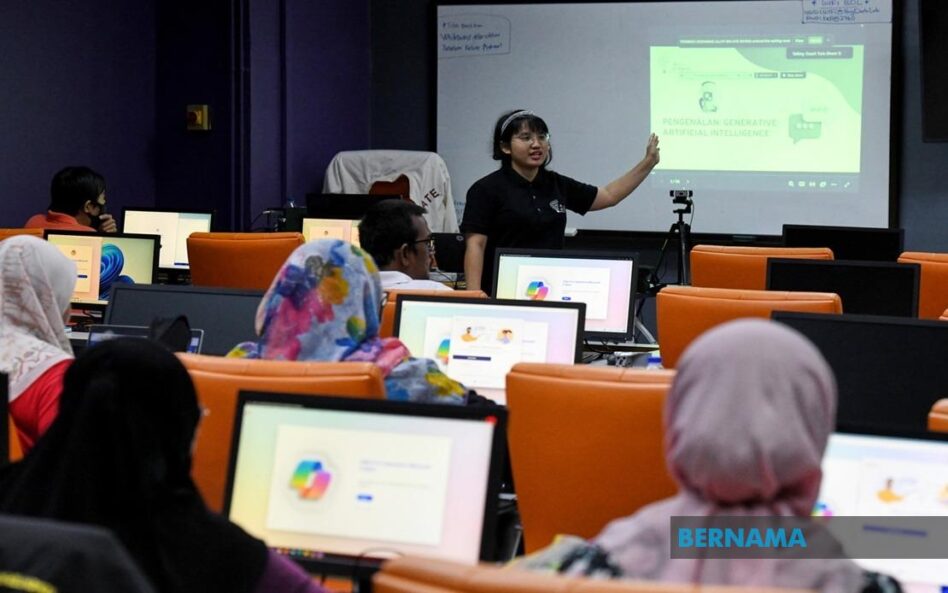
Schools also have an important responsibility as AI becomes more deeply integrated into education.
Using AI in classrooms is no longer enough. Students should also learn how AI works, where its limitations lie and what ethical questions it raises.
Some schools have already begun introducing AI literacy through discussions about algorithmic bias, data privacy and responsible use of technology. These are valuable skills for a future in which AI will influence careers, education and everyday life.
Done well, AI education can spark curiosity, strengthen interest in science and technology, and equip students with the knowledge needed to navigate an increasingly digital world.
Guidance matters more than age
The question is not whether children are old enough to use AI. It is whether AI is being introduced in ways that match their age, maturity and understanding.
Younger children can learn through play and exploration, while older students can begin experimenting with coding, AI design and discussions about ethics. The approach should evolve as children grow.
AI is here to stay, and it will continue shaping the lives of today’s children. Rather than shielding them from it, we should help them understand it.
With informed adults, age-appropriate learning and an emphasis on ethics, creativity and critical thinking, children can become more than passive users of AI.
They can become thoughtful, responsible and confident participants in the technological future that awaits them. ‒ Aug 4, 2026
The author is a Professor at the College of Computing and Informatics, Universiti Tenaga Nasional (UNITEN).
The views expressed are solely of the author and do not necessarily reflect those of Focus Malaysia.
Main image: Pexels/Alex Green