


THE Trump administration is preparing a proposal to bar imports of newly introduced Chinese optical transceivers into the United States.
The measure, which is expected to be released by the Federal Communications Commission (FCC) later this year, targets a key component used in high-speed fibre-optic networks.
Optical transceivers play a vital role in AI data centres and hyperscale cloud infrastructure by enabling rapid data transmission.
Kenanga believes the bigger investment implication extends beyond optical transceiver manufacturers to the broader contract manufacturing ecosystem.
Should Western optical vendors gain market share as a result of the proposed restrictions, they would likely require additional manufacturing capacity, creating opportunities for their production partners.
Southeast Asia is well positioned to benefit from this shift. In recent years, major US optical companies have already been relocating parts of their manufacturing footprint to the region.
Lumentum has established Thailand as its principal manufacturing hub in Southeast Asia, while Coherent has expanded its production operations in Malaysia.
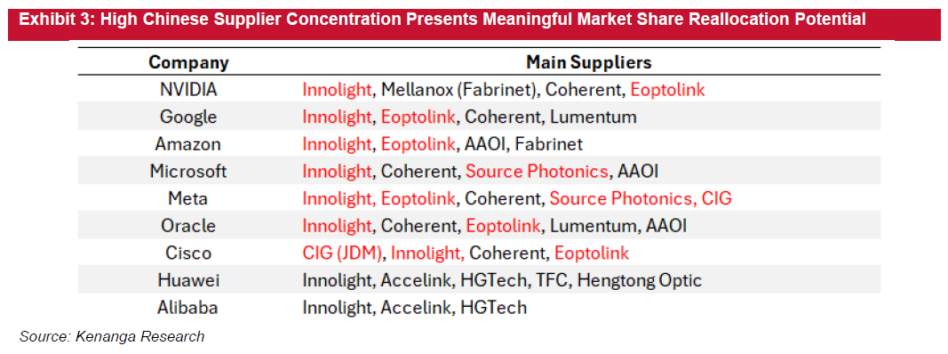
If implemented, the proposed import restrictions are likely to accelerate this supply chain realignment, reinforcing Southeast Asia’s role as a preferred manufacturing base for AI networking and optical communication products.
NATGATE and INARI has exposure to leading U.S. optical customers.
“Under our coverage, we see this development as incrementally positive for NATGATE should the proposed restrictions eventually be implemented,” said Kenanga.
During their recent site visit, management highlighted the company’s continued investment in expanding its optical manufacturing capabilities, including advanced SMT, TOSA/ROSA/TROSA assembly, chip-on-carrier, chip-on-substrate, fibre attach and optical engine manufacturing.
“Importantly, we believe the ongoing capacity expansion suggests a certain level of customer commitments is already in place, thereby reducing utilisation risk,” said Kenanga.
NATGATE is also an established manufacturing partner to several leading US optical networking companies.
Should these customers gain incremental market share as procurement gradually shifts away from Chinese suppliers, NATGATE could see a corresponding increase in manufacturing volumes and capacity utilisation.
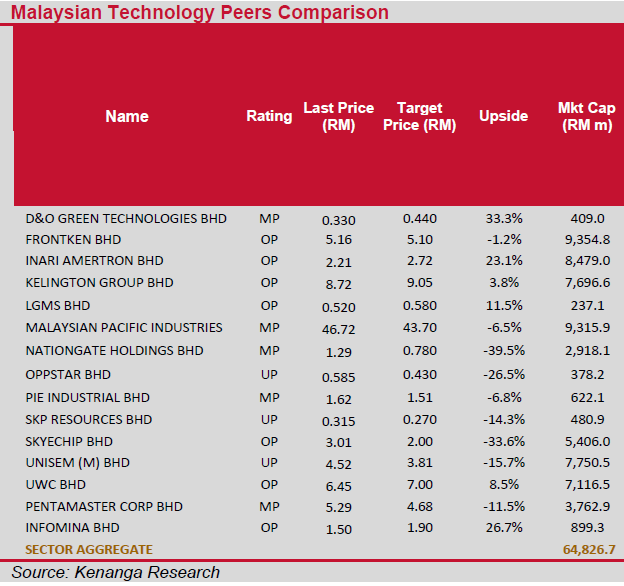
INARI, meanwhile, could also benefit through its optoelectronics segment, which accounted for approximately 36% of group revenue in quarter three financial year 2026.
Its exposure to Broadcom, a key supplier of optical and networking semiconductor solutions, as well as the Customer L, should provide further leverage to sustained growth in high-speed optical connectivity and any policy-driven supply-chain realignment.
Malaysia continues to strengthen its position as a trusted manufacturing hub for AI networking and optical communications, supported by an established semiconductor ecosystem and growing optical manufacturing capabilities.—Aug 5, 2026
Main image: equaloptics.com