
ACCORDING to the Cambridge Dictionary, the idiom ‘to swallow a camel and strain at a gnat’ means to obsess over tiny, unimportant details or minor rules while completely ignoring massive, serious or important matters at hand.
That seems very much to be the case surrounding the building of a vernacular school in a highly-populated Selangor district.
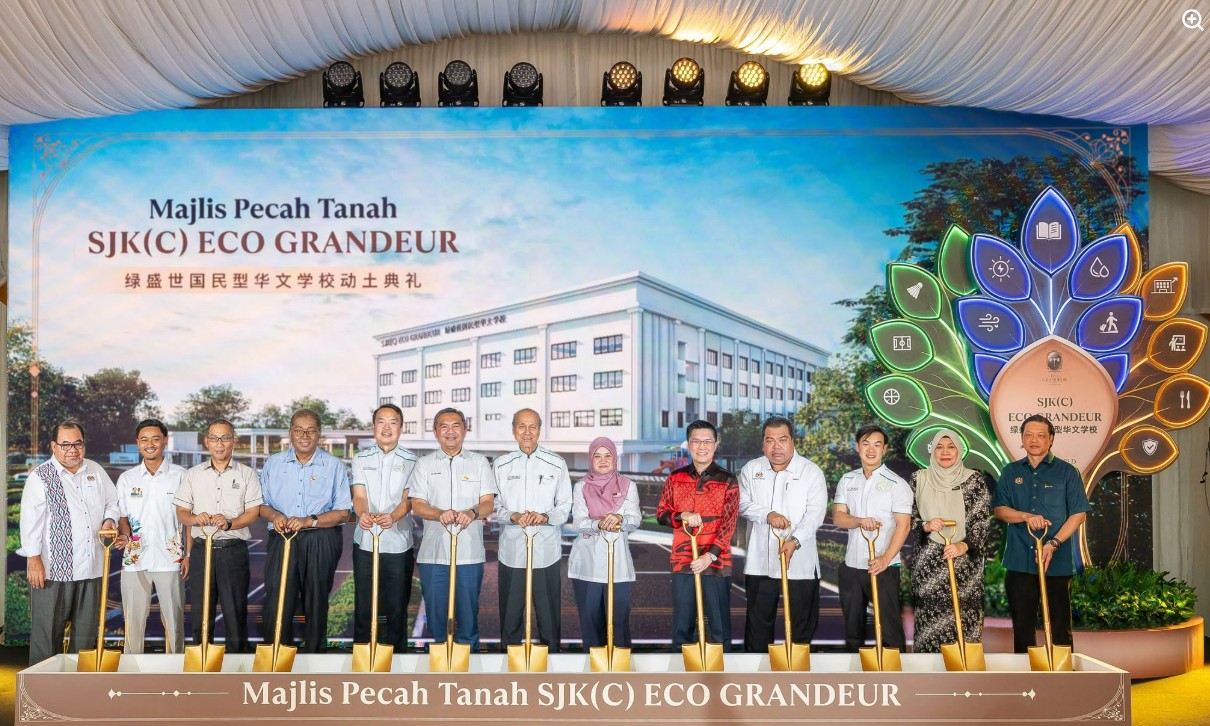
The dust has barely settled on the groundbreaking ceremony of the SJK(C) Eco Grandeur – the first Chinese national-type primary school in Puncak Alam – when social media erupted into a storm of discontent.

Critics and some local Malay parents have voiced outrage online because Puncak Alam and the Saujana Utama area are predominantly Malay Bumiputera residential zones.
As it is, existing national primary schools a.k.a. Sekolah Kebangsaan (SK) in the area are heavily congested, thus forcing some to run double sessions to accommodate thousands of pupils.
Henceforth, dissatisfied netizens questioned why a Chinese vernacular school – where the local Chinese demographic is relatively low – was prioritised over building a much-needed national school (SK).
Thankfully, there is always two sides to a coin which is so evident in recent times with many Malaysians keen to offer a different perspective on this political hot potato.
One netizen who is unable to contain his spite was Threader @alimran_asqalani who questioned Malay parents grousing about the existence of SJKCs over SKs when they are “stingy” in making even the smallest PIBG (Parents Teachers’ Association) contributions.

In a lengthy tirade, this irate commenter claimed that in many instances it was the teachers at SKs who have to fork out from their own pockets to organise events for their pupils.
Instead of gratitude, these teachers are treated like slaves by ungrateful parents, he hissed. The damning verdict was that toilets in some SKs resembled “drug addict cesspools” due to this attitude.

He went on to chide such people for having an entitled attitude in expecting everything to be provided for free by the government.

To emphasise the point, the poster included a link to a clip explaining the historical roots of Chinese schools in Malaysia and that many are dependent on private funding to survive. But they are not only surviving but are thriving!

This sentiment about misplaced priorities was further echoed by Threader @angus_lii1 who observed that while the Chinese set aside funds to build schools, the Malays are “still wary if education can secure the future of their children who would eventually end up being RXZ members (a polite way of referring to the notorious Mat Rempit).

The comments also reflected the admiration many had for the Chinese community in prioritising education of future generations.

Speaking from experience, one parent whose child was at a SJKC was amazed at the speed in which the school could raise funds. With many willing donors, it was even possible for collections to go beyond RM100K!
Compare and contrast that with the SMK (secondary national school) experience her child is now going through – “burnt hall, broken toilets, etc remained unrepaired for months” even for a school within the Putrajaya administrative capital.

Summing it up nicely was one commenter’s succinct observation that the Chinese community know precisely where money should be funnelled towards.

That indeed is the crux of the matter. The need to prioritise quality education for Malaysian children is more important than playing the race card all the time.
If the local community along with private entities are willing to dip their hands into their collective pockets to facilitate better education, why not? – Aug 11, 2026