
IN the name of patriotism and the “law,” quite a number of shops in the Kuala Lumpur city centre were penalised for having only mandarin hanzi on their signage.
Nevermind the fact that these restaurants serve pork, are non halal and that any god fearing malay muslims will not be patronising it.
While that topic had been blown out of proportion by our local authorities, everyone appears to be quite blind where shop signage in Burmese is concerned.
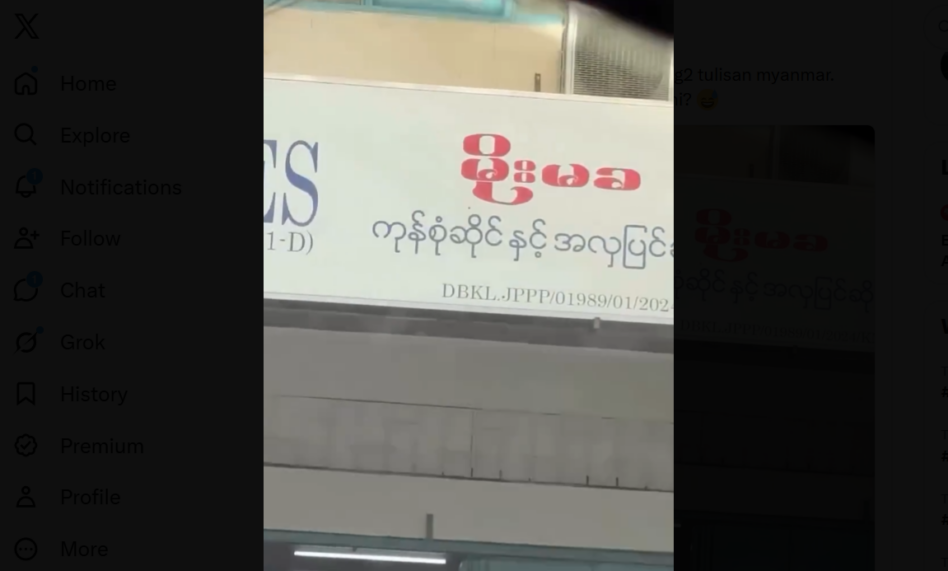
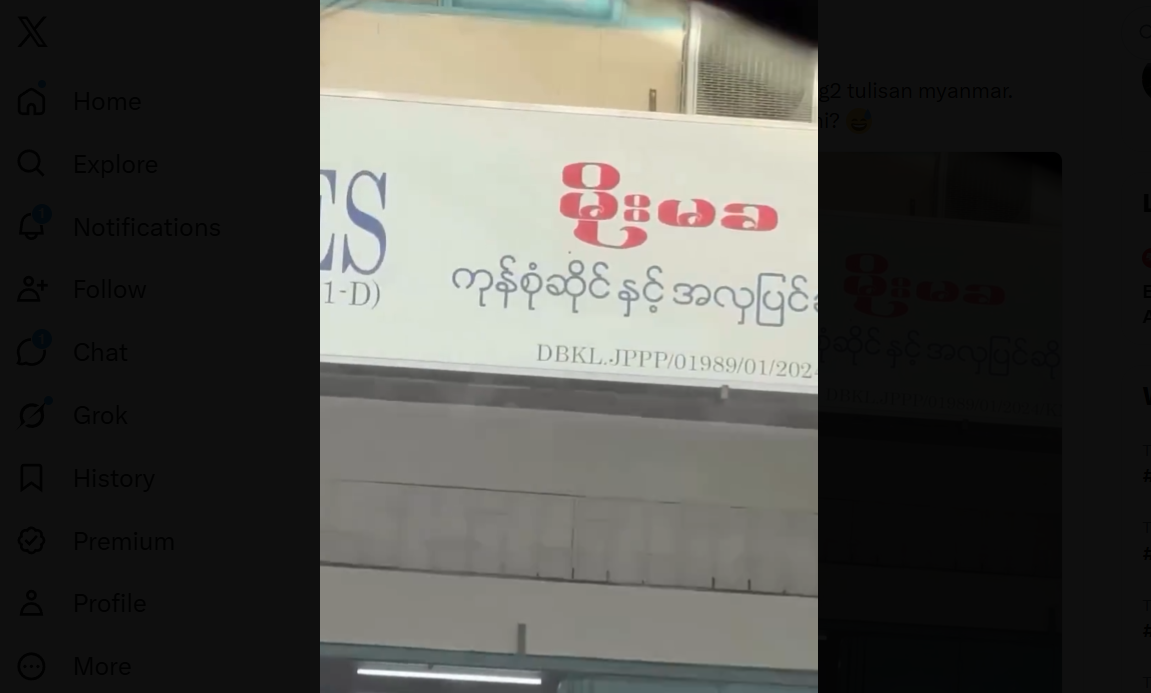
According to netizen @kamaghul in a post on X, a shop could be seen operating smoothly with its signage in Burmese, unchallenged by anyone.
On hindsight, it is obvious that the shop is catering to the foreigners, likely the Rohingya. Regardless, the law is still the law.
In the video, an observer could be seen complaining about the rising number of foreign people in the country.
Warga asing siap ada kedai and signboard terang2 tulisan myanmar. Macam mana DBKL luluskan pulak lesen kedai ni? 😅 pic.twitter.com/76qEioPeUj
— kamaghul deghaman (@kamaghul) August 22, 2026
The fact that the signage was written in Burmese reflects the changing demographics too.
In the comment section, netizen @MrMiie lamented that those shops are surely owned by the locals.

Also, @bp_lisa4945 thinks this is a sign that the foreigners will soon control the country.

@MdShaidik added that such signboards are already present in Taman Desa.

Then there was @Callmegrey_7799 pointing out how the municipal council was very efficient at disturbing those local businesses.

But is the signage in Burmese really illegal? According to the blog umake.my, it is actually fine as long as the signage follows the correct format.
Note that the Bahasa Malaysia text must be 30% larger than text in any other language, and placed in a prominent position— top left or centre.
Also, the business activity description must appear in Bahasa Malaysia and be larger than the business name.
umake.my illustrates this clearly in a photo for reference.

Strange to say, but the signboard in the post was actually in compliance with the law.
However, the fact that it is written in Burmese to cater to the foreign community speaks volumes about the migrant problem that continues to grow unchallenged in Malaysia.—Aug 23, 2026
Main image: @kamaghul (X)