


ACCORDING to Mirriam-Webster dictionary, a “slap in the face” is a common idiom that means a surprising and sharp insult, rebuff or rejection.
It describes an unexpected action or remark that shocks and upsets a person because it shows a clear lack of respect or support.
This was clearly what the daughter of an iCIMB staff was feeling, looking at her dad’s token long-service appreciation award after 36-long-years of loyal service.

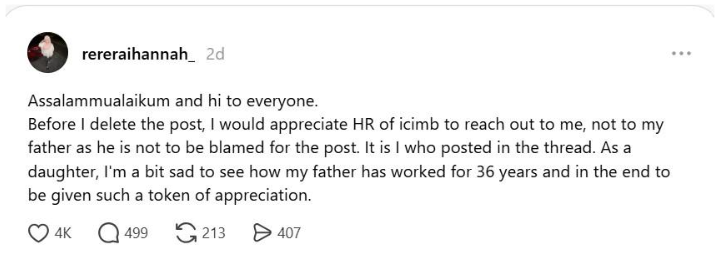
Reaching out to iCIMB’s Human Resource Department, this put-off young lady urged the bank to show their appreciation for long-serving staff with more than just a certificate of appreciation.
Even civil servants get treated better, nevermind staff of multi-billion ringgit companies, she groused.
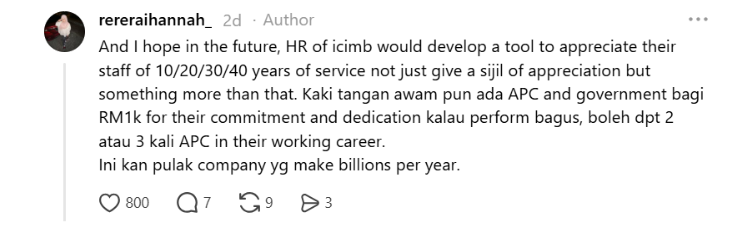
The aim of putting her grievances on social media was the hope it would kick-start companies to value long-serving staff, even if those workers do not hold high positions backed by degrees.
“If indeed a person didn’t perform or wasn’t dedicated, why keep him for more than 30 years?” was the entirely reasonable query here.

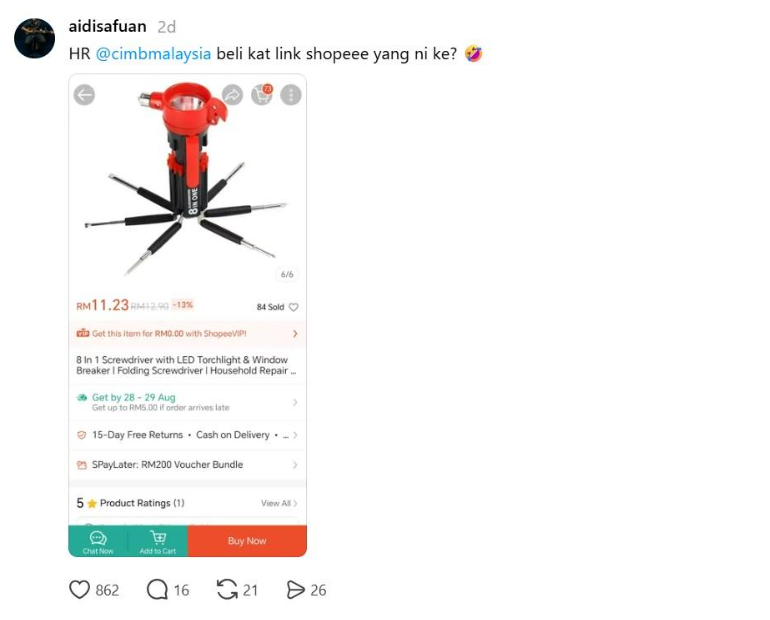
To add insult to injury, apparently a less-than-premium gift of a tool set was the reward for nearly four decades of toil.
However, this Threader’s decision to go public with her grievances regarding her father’s perceived shoddy treatment was not met with universal approval.
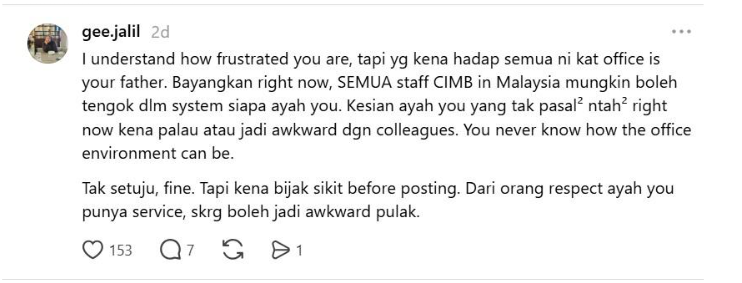
One office-culture expert warned that the Threader’s dad was now at risk of being ostracised at work due to this post.
His colleagues could work out his identity with just a few clicks on the keyboard, potentially making life at work extremely awkward.

Disgruntled, disappointed or even disgusted, the poster had no right to disparage a place that is a rice bowl for others, countered this commenter.

A couple of pragmatic voices counselled that the corporate world was a dangerous environment where loud complaints on social media was not looked kindly upon.

The reality of the situation was made clear for the aggrieved daughter – her actions may have negative repercussions for her father who like all bank staff are tied to the company’s Social Media Policy. This could impact his tenure at the bank if he is not yet retired.
Editor’s Note: The poster has made it clear that the post was by her not her father.
It was also suggested that the tool set was a mere door gift while the actual reward for long-service was probably cash that has been deposited into the recipients’ account.
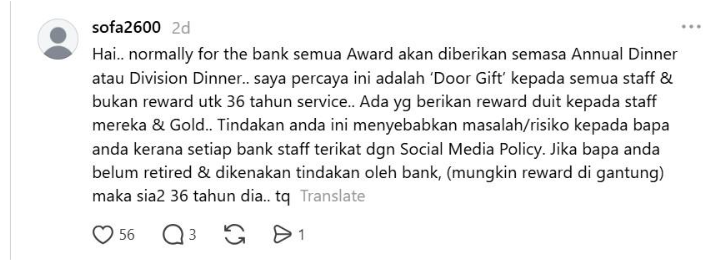
The decision to paint the financial institution in a less-than-positive light was also viewed as unwise. Weren’t the big fat bonuses paid out by banks annually as a sign of their appreciation? “Think before viralling” seems to be the message here.

Though this observer was in agreement with many of the points raised by other commenters, the reality of the situation was that a mere e-mail directly to the bank would have come to nothing.
It is only when the carefully cultivated brand is under threat because an issue has gone viral will the power brokers be jolted into action.
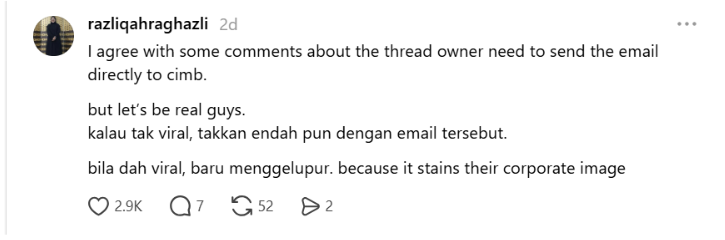
As can be seen from the many comments above, social media is very much a double-edged sword.
On the one hand, it can be used to highlight legitimate grievances that may have been ignored or buried under a bureaucratic web. Never under-estimate the power of keyboard warriors in bringing an issue to the fore.
On the other, a viralled post may give an organisation an undeserved reputation leading to a staff getting punished for dragging its name through the proverbial mud.
It is a fine line between right and wrong. –Aug 30, 2026
Main image: rereraihannah (threads)