

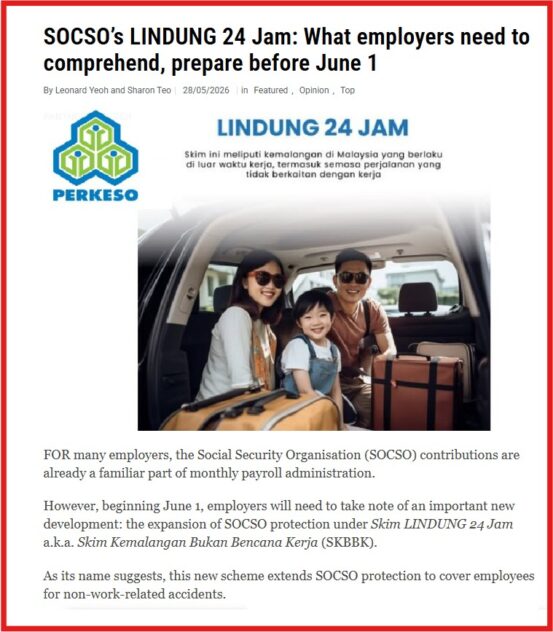
FOLLOWING the implementation of SOCSO LINDUNG 24 Jam a.k.a. Skim Kemalangan Bukan Bencana Kerja (SKBBK), employers should note a policy update.
The scheme was initially introduced as a mandatory employee-borne contribution for employees covered under the Employees’ Social Security Act 1969.
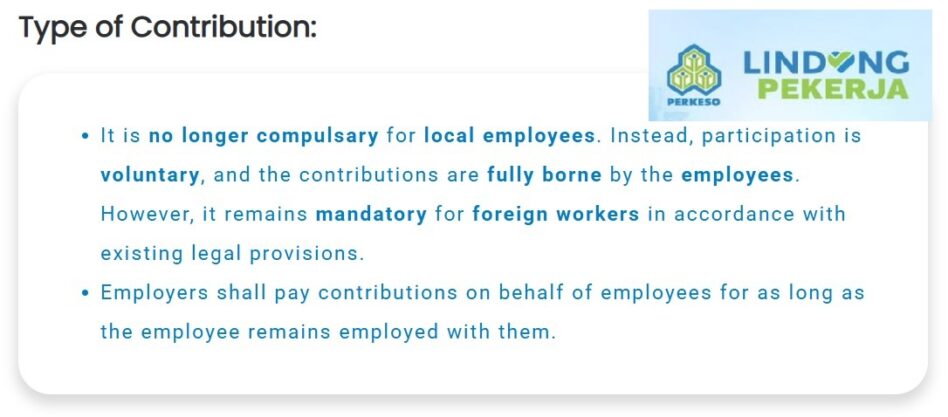
That position has since been revised: LINDUNG 24 Jam is now voluntary for local employees while remaining mandatory for foreign workers in accordance with existing legal provisions.
Employers must therefore manage a dual-track framework where local employees may choose whether to remain in the scheme while foreign workers continue to be covered on a mandatory basis.
What has changed?
The key change is not the purpose of the scheme but the basis of participation for local employees.
PERKESO’s earlier FAQ (frequently asked questions) stated that contributions were mandatory for all employees under the Employees’ Social Security Act 1969.
However, PERKESO’s current official page now reflects the revised position: participation is no longer compulsory for local employees but is voluntary and fully borne by employees. The mandatory position remains for foreign workers.
Employers with both local and foreign employees will therefore need to manage voluntary and mandatory participation within the same HR (human resource) and payroll framework, including employee records, payroll settings and internal communications.

What remains the same?
The purpose and scope of LINDUNG 24 Jam remain unchanged. The scheme continues to provide round-the-clock protection for eligible employees, including accidents outside working hours and not directly related to employment.
The contribution structure also remains as previously described: fully borne by employees, beginning at a Phase 1 rate of 0.75% and subject to the RM6,000 wage ceiling.
Employers continue to play a central administrative role where the scheme applies as contributions are paid through employers for as long as the employee remains employed.
Following the policy revision, PERKESO has introduced an online opt-out mechanism for local employees who do not wish to continue contributing. Local employees who wish to opt out must complete a liability release declaration online.
Although the declaration may be completed by the employee, employees are required to inform HR or their employer, as contribution payments are implemented through employers. Once the opt-out declaration is received, deductions should stop unless the employee subsequently rejoins the scheme.
Employees should understand the consequences of opting out. Based on the reported PERKESO position, once the liability release declaration is completed, PERKESO and the employer will not be responsible under the scheme for accidents, injuries or deaths occurring outside working hours.
Employers should communicate this carefully and neutrally without pressuring employees either way.
PERKESO has also stated that contributions already paid will not be refunded as protection had already taken effect during the relevant coverage period. Employees who opt out may still re-join the scheme later.
What should employers do now?
For employers, the practical implications go beyond a simple payroll update. HR and payroll teams should distinguish between foreign workers, local employees who remain in the scheme and local employees who opt out.
Employers should maintain proper records of employee declarations by ensuring deductions are made only where applicable and communicate clearly on the voluntary position for local employees, the mandatory position for foreign workers and the non-refundable nature of past contributions.
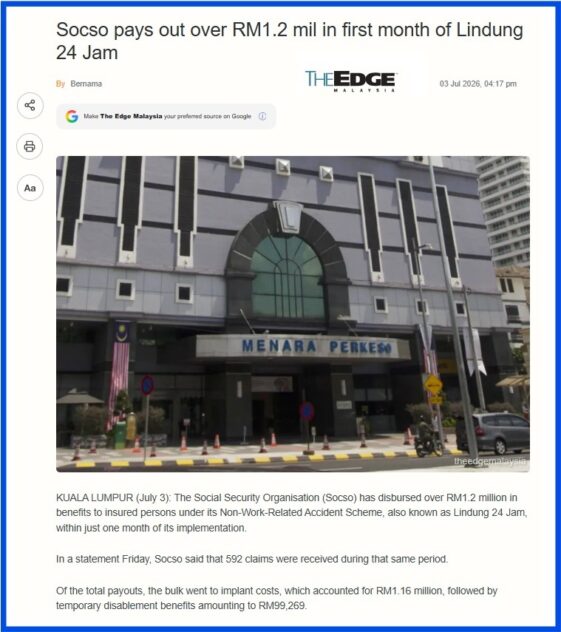
PERKESO’s reported first-month payout of over RM1.2 mil shows that the scheme is already in operation.
Employers should also be careful when relying on earlier materials as PERKESO’s earlier FAQ still reflects the previous mandatory position while PERKESO’s current official page reflects the revised position.
Employers should continue monitoring the latest PERKESO circulars and operational guidance.
In short, LINDUNG 24 Jam has moved from a blanket payroll implementation exercise to a more nuanced exercise involving employee choice, documentation and regulatory monitoring.
The scheme may now be voluntary for local employees but employer readiness remains mandatory. – Sept 1, 2026
Leonard Yeoh is the managing partner and Sharon Teo an associate of the law firm, Tay & Partners.
The views expressed are solely of the author and do not necessarily reflect those of Focus Malaysia.
Main image credit: Pertubuhan Keselamatan Sosial/Facebook