
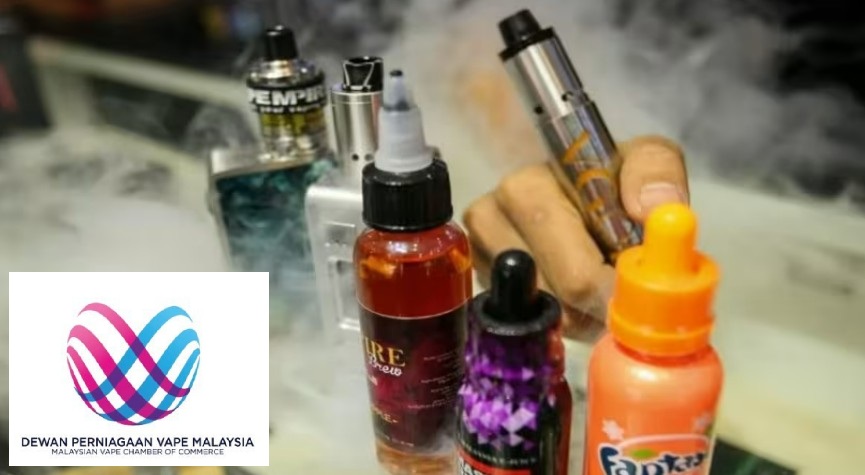
The government’s decision not to pursue an appeal concerning the legal status of nicotine in vape products should not result in the industry once again facing legal uncertainty.
The Malaysian Vape Chamber of Commerce (MVCC) stressed that once the government had chosen to establish a specific framework to regulate smoking products through the Control of Smoking Products for Public Health Act 2024 (Act 852), the issue of banning nicotine-containing vape products should not arise suddenly.
According to MVCC’s secretary-general Ridhwan Rosli, Act 852 was not hastily formulated or developed without taking into account the views of stakeholders.
It was the result of a lengthy legislative process involving the government, ministries, relevant agencies and various stakeholders, including the industry.
“Therefore, once the government has chosen to establish a specific framework to regulate smoking products, including vape products, we believe that Act 852 should continue to be implemented and enforced comprehensively,” justified Ridhwan.

“Any changes to this framework should be carefully considered to ensure that they don’t undermine the original objectives of the law.”
Authorities need to be tactful
In Ridhwan’s contention, the industry had from the outset expressed its willingness to be regulated and supported the implementation of Act 852.
Industry players had also made significant investments to meet compliance requirements, including those relating to products, packaging, labelling, registration and business operations.
“Industry players have made business decisions based on the regulatory framework established by the government. They have invested, adapted their operations and taken steps to comply with Act 852,” asserted Ridhwan.
“It is not reasonable for an industry that has taken steps to comply with the law to then bear the consequences of changes to the legal position. Behind every business are employees, distributors, retailers and families who depend on these sources of income.”
All in all, the industry advocacy group established in 2015 to support and represent the commercial interests of Malaysia’s electronic cigarette and vaping sector stressed that it does not reject regulation.
In fact, it supports an approach that places tobacco, vape, shisha and other smoking products under a clear and consistent regulatory framework.
“We aren’t asking for an exemption from the rules. If there are concerns relating to public health, product misuse or enforcement, these issues can be addressed through stronger enforcement or amendments to the regulations where necessary,” explained Ridhwan.
“However, undermining an entire industry that has taken steps to comply with the law is not an appropriate solution.”
MVCC further stressed that legal certainty is important to enable the local vape industry to continue operating responsibly and meeting governmental requirements.
“The regulatory framework has already been established whereby the industry has demonstrated its commitment to complying with it. What we hope for is for Act 852 to continue to be implemented with consistent enforcement together with improvements where necessary,” revealed Ridhwan.
“The government must take into account public health and enforcement considerations while at the same time ensure the sustainability aspect of an industry that has chosen to comply with the law.” – Sept 2, 2026