
MALAYSIA is entering an important political and economic period.
Recent state elections in Johor and Negeri Sembilan with the upcoming state polls in Melaka and the prospect of the 16th General Election (GE16) have inevitably intensified political debate.
As political parties prepare for these contests, Malaysians should demand something bigger than another competition over short-term promises. The question is not simply who can promise more today but what kind of economy Malaysians will hand to the next generation.
That question matters because Malaysia faces significant external and internal economic headwinds in the near future.
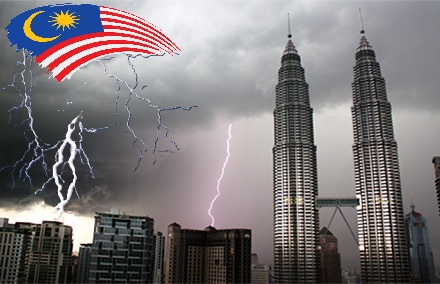
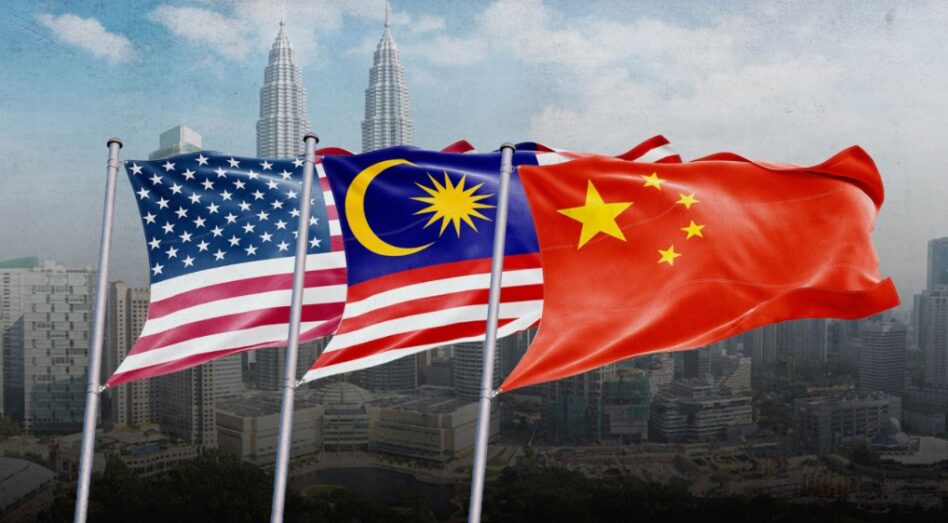
Externally, the global economy is becoming considerably less predictable. Protectionism is rising, supply chains are increasingly influenced by geopolitics, US-China strategic competition continues while conflicts in the Middle East have added uncertainty to energy and commodity markets.
Malaysia’s dependence on international trade means we cannot insulate ourselves from these developments.
Spiralling cost of living
At the same time, the artificial intelligence (AI) boom has created enormous opportunities for our electrical and electronics (E&E), semiconductor and data-centre industries.
But technological cycles can change rapidly. The International Monetary Fund (IMF) has identified escalating protectionism, global financial volatility and a possible correction in the global AI boom among the downside risks facing Malaysia.
Domestically, the picture is more encouraging but challenges remain. Malaysia’s economy expanded 6.0% in 2Q 2026, bringing the 1H 2026 growth to 5.7%.
But headline GDP growth does not tell the whole story. For most households, the cost of living remains the clearest measure of economic health and wage growth has not kept pace with prices.

A plate of nasi lemak now costs 81% more than it did a decade ago. Malaysia still needs to raise productivity and wages, strengthen fiscal resilience through disciplined and efficient use of public resources by reducing dependency on lower-skilled labour enabling home-grown companies move higher up in global value chains.
A competitive, high-growth economy that attracts long-term investment and rewards skill remains the clearest path to lifting household purchasing power.
The fundamental economic question is therefore no longer simply: how fast can Malaysia grow? It is: what kind of economy are we building, and for whom?
Malaysia has dreamed big before
There are lessons from our own history.
Malaysia’s transformation from a commodity-dependent economy into an important manufacturing and services centre did not happen by accident. Previous administrations articulated long-term ambitions and then built institutions and infrastructure around them.
Vision 2020 which was unveiled in 1991 was perhaps the clearest expression of this approach. Whatever one’s political views or assessment of whether every objective was achieved, Vision 2020 provided Malaysia with something valuable: a destination.

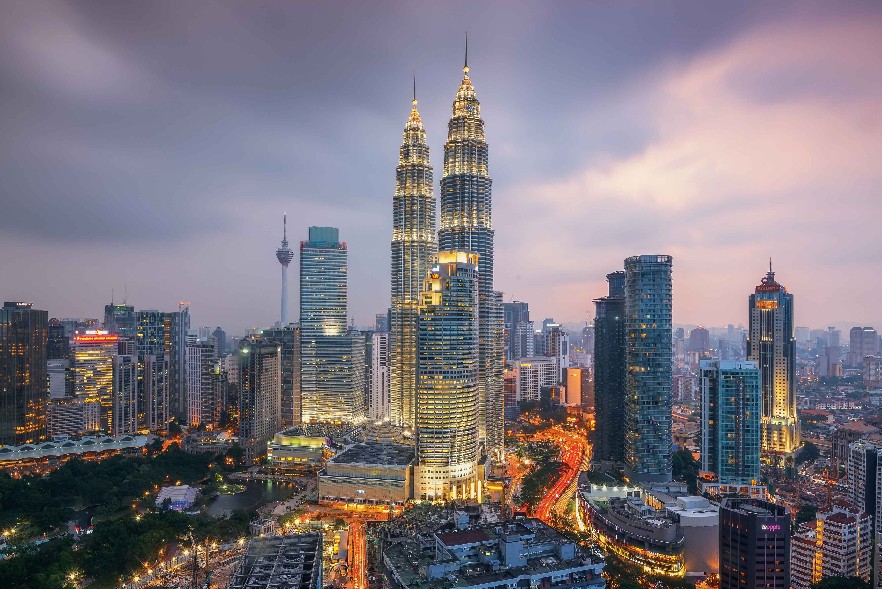
Projects such as the PETRONAS Twin Towers, Kuala Lumpur International Airport (KLIA), Putrajaya, Cyberjaya and the Multimedia Super Corridor were manifestations of a country thinking decades ahead.
Malaysians now in their forties and fifties came of age in that period alongside widening access to tertiary education and annual growth approaching 9% They know Malaysia can deliver sustained, high-value growth because they helped build it.
Cyberjaya and the Multimedia Super Corridor (MSC) are particularly instructive. They were conceived when the commercial internet was still relatively young based on the recognition that information technology would eventually become central to economic competitiveness.
Not every project was perfect, hence legitimate questions can be asked about costs and execution. But the underlying philosophy was important: Malaysia was building for the economy it wanted to become rather than merely managing the economy it already had.
When vision meets crisis
During the 1997-1998 Asian Financial Crisis (AFC), Malaysia’s economy contracted by about 6.7% in 1998. The ringgit depreciated sharply, equity markets fell and considerable stress emerged within the corporate and financial sectors.
Malaysia eventually adopted an unconventional response. In September 1998, the ringgit was fixed at RM3.80 to the greenback, selective capital controls were introduced, monetary and fiscal policies were loosened and financial and corporate restructuring accelerated.
Those policies were controversial internationally. Malaysia nevertheless recovered strongly.
Subsequent IMF assessments noted that the country’s 1999-2000 recovery was among the strongest of the Asian crisis economies while also recognising that sound macro-economic management, restructuring, strong initial conditions and improving external demand contributed significantly.
The lesson is not that Malaysia should re-create the policies of 1998.
View this post on Instagram
It is that economic leadership sometimes requires the confidence to respond to the circumstances of the day while keeping sight of a longer-term destination; the Vision.
As Malaysia moves towards GE16, the political debate cannot be confined to living costs, subsidies, taxes and short-term assistance.
These issues matter for they are how most households judge whether the economy is working but Malaysians should also ask a bigger question: where do we want our economy to be in 2040?
Malaysia does not lack plans. What it lacks is a singular, compelling and enduring national economic vision comparable in scale and longevity to Vision 2020.
A vision of that kind also has to rest on social cohesion. Malaysians schooled alongside Malay, Chinese and Indian classmates understand that a shared national identity and a common sense of opportunity have long underpinned our stability.
That stability is precisely what makes Malaysia attractive to long-term investors. Cohesion is not only a social good. It is an economic asset.

The symbols of our next transformation may instead be world-class Malaysian companies, advanced technology, highly skilled workers, higher productivity and better wages.
Achieving that requires the same willingness to think beyond the next Budget, the next election and the next economic cycle.
Our fundamentals are strong: a strategic location, a skilled and adaptable workforce and a track record of rapid development. Realising that potential is a shared task for government, business and civil society. Malaysia has done it before.
It is time to repeat that process. – Sept 15, 2026.
Fellow member of the Chartered Institute of Management Accountants (UK) and the Malaysian Institute of Accountants (MIA), Foo Lee Khean is an observer and commentator on subjects that matter most to Malaysians – from politics to the economy. He has served on the boards of several listed companies in Malaysia.
The views expressed are solely of the author and do not necessarily reflect those of Focus Malaysia.
Main image credit: New Mandala