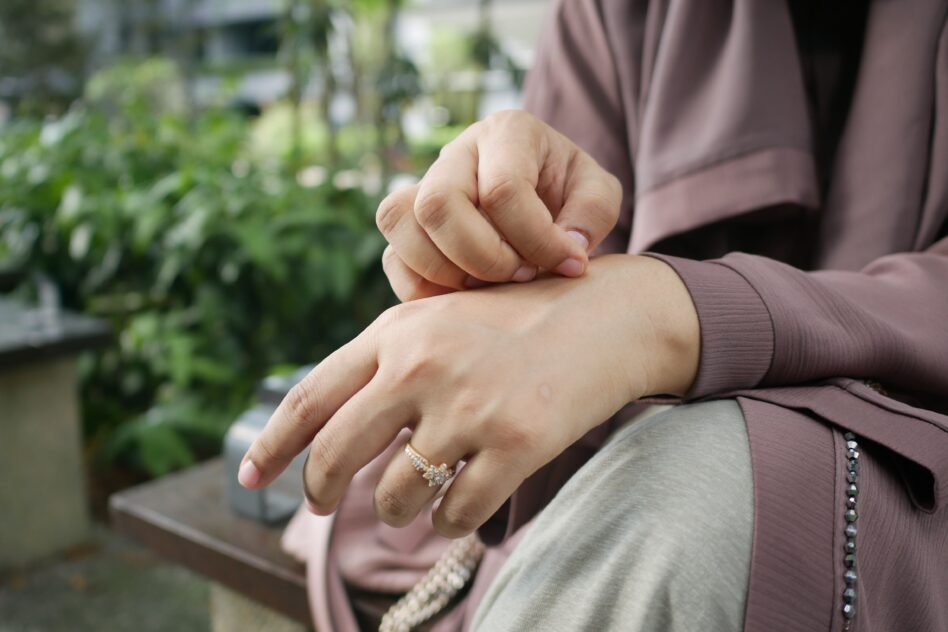


IN the middle of the night, an intensely itchy rash suddenly spreads across your body. By morning, it has disappeared. Then it returns days later.
That frustrating cycle is a familiar experience for many people living with chronic spontaneous urticaria (CSU), a condition whose unpredictable flare-ups often make diagnosis more difficult.
“Patients often tell me, ‘Doctor, the rash disappeared while I was waiting to see you, but I’m certain it will come back again,'” said consultant dermatologist and vice president of the Dermatological Society of Malaysia Dr Peter Ch’ng Wee Beng.
“For many people living with CSU, symptoms come and go unpredictably, making them difficult to capture during a consultation. Yet the impact extends far beyond the visible rash.”
More than “just a rash”
CSU is the most common form of chronic urticaria. It causes recurring itchy, raised wheals, with or without deeper swelling known as angioedema, for more than six weeks without an obvious external trigger.
Individual hives usually disappear within 24 hours, but new ones often appear elsewhere.
“Patients often find this pattern particularly unsettling because of its unpredictability,” Dr Ch’ng said.
CSU is estimated to affect around 1 to 2% of the population at some point, although prevalence varies between studies and regions.
Many Malaysians know the condition simply as gegata, the Cantonese term fung mok (风膜) or the Mandarin term xún má zhěn (荨麻疹). Others mistake it for eczema, psoriasis or an ordinary allergy.
“Getting the diagnosis right matters because similar-looking conditions can require very different treatment,” Dr Ch’ng said.
Some people also wonder whether haze triggers CSU. While haze can aggravate asthma, eczema and allergic rhinitis, Dr Ch’ng said there is currently no evidence that it directly triggers CSU, although stress associated with worsening air quality may contribute to flare-ups in some people.
The hidden burden
The condition can affect far more than the skin.
Dr Ch’ng recalled treating a young patient whose symptoms remained poorly controlled despite standard antihistamine treatment.
“He frequently missed classes, while his concentration and sleep were also affected,” he said.
A recent Malaysian study similarly found that more than 80% of patients with CSU reported moderate-to-severe itching and hives that disrupted work, social activities and daily functioning.
“Patients are constantly bracing for the next flare, and that uncertainty can create considerable anxiety,” Dr Ch’ng remarked.
Because hives often disappear before medical appointments, photographs can become one of the most useful diagnostic tools.
Dr Ch’ng encourages patients to photograph each flare and note whether the rash is raised or flat, smooth or rough, whether it disappears within 24 hours, whether it moves to different parts of the body, and whether it leaves bruising or pigmentation afterwards.
These details help doctors distinguish CSU from other skin conditions. Hives that are painful, scaly, persist in the same spot or leave lasting marks may point towards a different diagnosis and should be medically assessed.
Stop chasing the rash
One common mistake is repeatedly applying steroid cream to each new hive.
“Before the steroid cream is absorbed, the rash has often already appeared somewhere else,” Dr Ch’ng said.
“Chasing the rash with steroid cream is not the answer. Patients need treatment that works from within.”
He also cautioned against relying on repeated steroid injections as a long-term solution because prolonged systemic steroid use carries significant health risks.
International guidelines recommend modern second-generation H1 antihistamines as the first-line treatment for CSU. If symptoms remain uncontrolled, treatment should be stepped up under medical supervision according to established treatment pathways.
“Patients want clear skin. It is not enough to say the condition has improved by 50% when they still do not know when it will worsen. Clear, symptom-free skin is our target,” ,” Dr Ch’ng said.
Ahead of World Urticaria Day on Oct 1, Dr Ch’ng encourages Malaysians experiencing recurring hives for six weeks or longer to seek medical advice rather than simply living with the condition.
Keeping a record of when symptoms begin, how long each flare lasts, whether the rash migrates, what treatments have been tried and how the condition affects daily life can help guide diagnosis.
Any difficulty breathing or swallowing should always be treated as a medical emergency.
“Get the right diagnosis and start the right treatment as early as possible,” Dr Ch’ng said. ‒ Sept 24, 2026
Main image: Pexels/Towfiqu Barbhuiya