
ACCORDING to the Cambridge Dictionary, the phrase “when in Rome, do as the Romans do” means a person should adapt to the local customs, rules or behaviours of the place or situation he or she is visiting.
It advises a change in habits to match the people around you to better fit in.
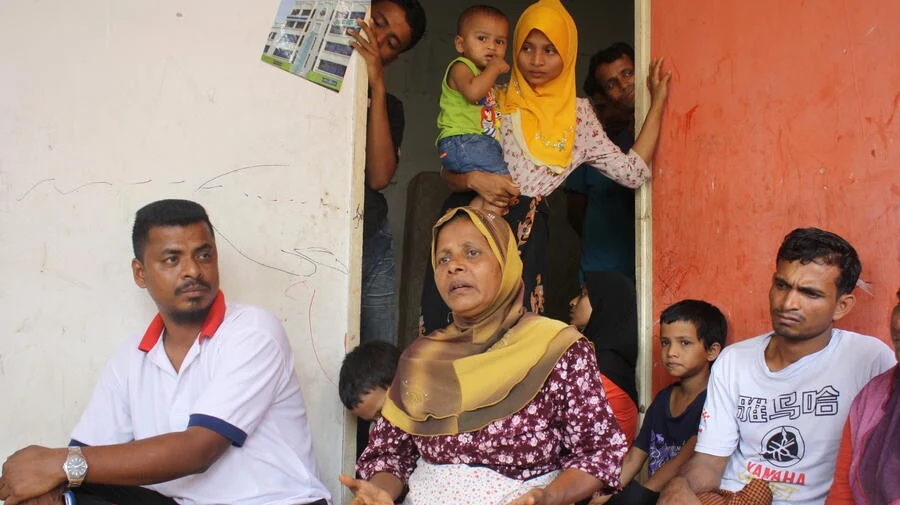
Perhaps it is this mindset that certain Rohingya refugees have adopted in their attempts to better fit in Malaysia.
Seeing how certain Malay-Muslim politicians and their social media herd behave towards local minority groups, it is little wonder why some Rohingya refugees may have thought it was a good idea to ape such attitudes and mannerisms.
This is when Threader •-• 李愉霖 (@lynnyu1987) recounted a recent incident in Wangsa Maju whereby she was bluntly told to “balik China” (literally, “go back to China”) by a very non-local, non-identity card-holding Rohingya man.
View on Threads
In expressing surprise at how her post has attracted so much attention and comments on “the immigration issue”, the semi-affronted poster admitted to finding it somewhat amusing to be labelled a “pendatang” (illegal alien) by an actual foreign interloper.
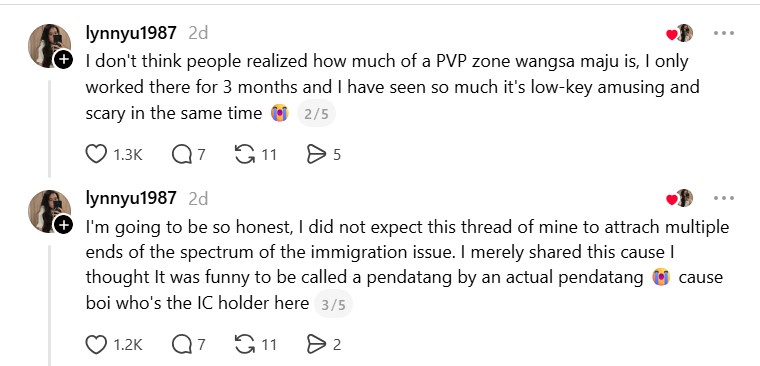
The poster also clarified that she did not take pictures of the offending individual though she actually regretted not doing so.
She was also at pains to stress that she “didn’t vote for them to be let into the country”, surmising that the reaction to this particular thread highlighted that “we’re not so different from them in mentality as a whole.”

The said post has generated 29.3K likes, 838 comments, 1.5K re-posts and 790 shares at the time of writing, an indication that the actions of this rightist Rohingya had struck a nerve among many Malaysians.
Highlighting “the stranger in a strange land” feeling that envelopes locals when in the vicinity of Wangsa Maju, this put-off citizen remarked that he, too, experienced the same racist warning.
However, there was the added irony of being told to “balik China” when he is a Malay!

One bold commenter was of the opinion that the Rohingya refugees had the mindset that since they were Muslim, they, too, were entitled to same privileges as the Bumiputera.

Recalling broaching the subject with a Chinese cab passenger, it was suggested that the local Chinese community would be greatly angered by the demands of the recently arrived Rohingya.
The reply was that it was “our own fault for being too kind in welcoming them in and now they are overstepping their boundaries”.

Unimpressed that some of these Rohingya refugees have started to behave like Malay Bumiputera, it was contended that they will “later start saying this land belongs to them”.

It was further contended that some Rohingya have been emboldened to behave in such a manner is because they see locals doing the same – making disparaging, racist remarks about local Chinese.
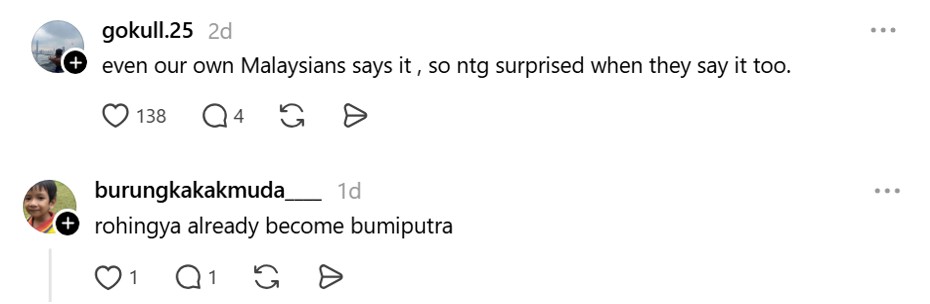
Another commenter simply called it for what she saw as “Rohingya already become Bumiputera.”
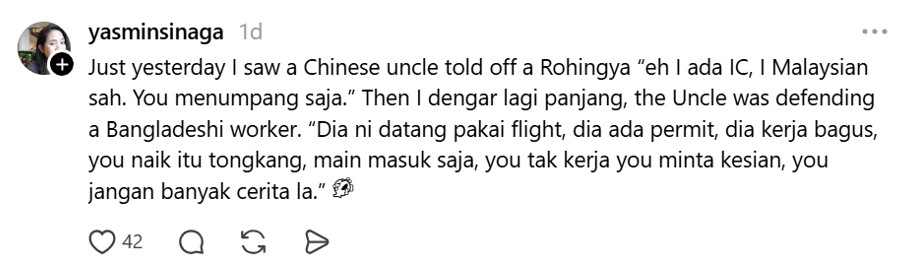
The anti-Rohingya sentiment was evident in a comment that recounted a Chinese Uncle telling a Rohingya off by stating that he possessed a valid identity card.
It was also contended that the Rohingyas should not “talk so much” when they were relying on charity compared to the Bangladeshi foreign worker who was in Malaysia with a valid permit.
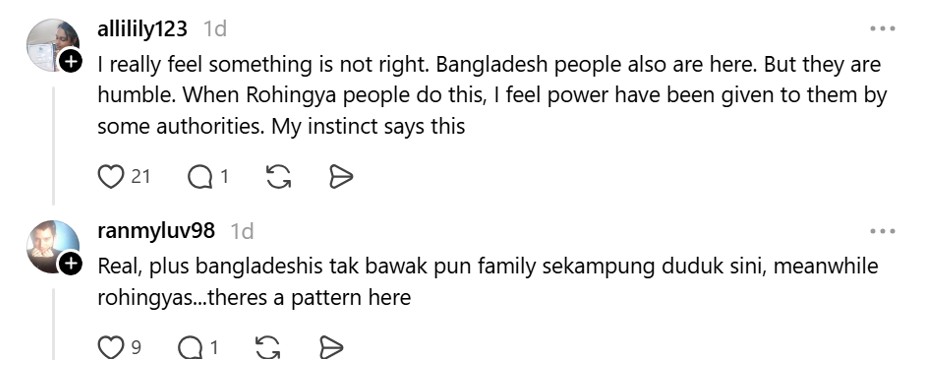
This comparison among migrants was also highlighted in another comment where it was felt that the Bangladeshis are “more humble” while the Rohingyas are emboldened by the authorities to behave in an entitled manner.
Another concerned netizen highlighted that the Bangladeshis did not bring their entire family along unlike the Rohingyas.
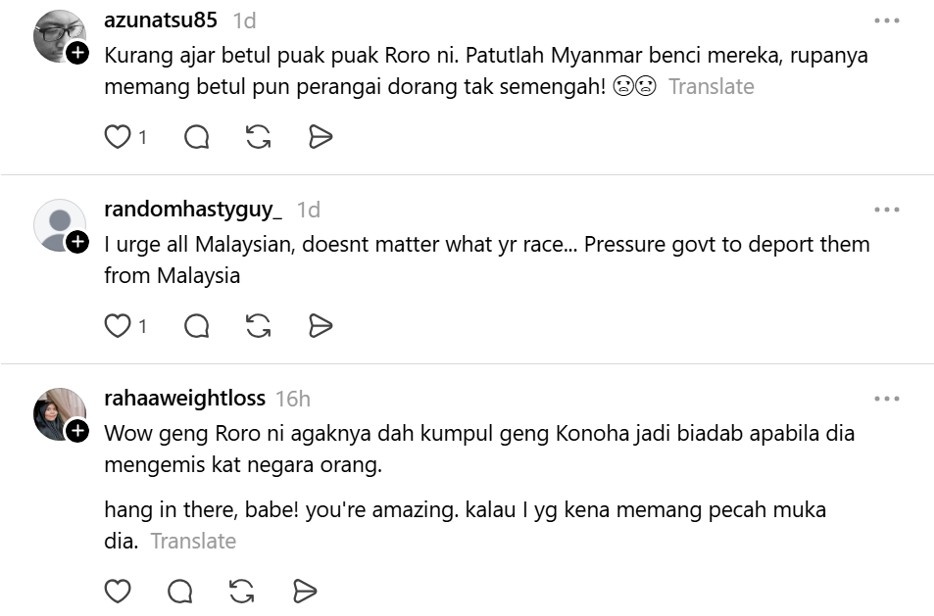
The sentiments were largely, if not overwhelmingly, negative towards the Rohingya in Malaysia.
Calls ranged from “deportation” to “smashing their face” underlined what many Malaysians are beginning to feel at the moment over the presence of the Rohingya in their midst.
No doubt the Rohingya refugee crisis is a complex issue and cannot be solved with knee-jerk reactions.
However, the plight of the Rohingya is not helped by incidents such as this where locals are made to feel like aliens in their own homeland.
Perhaps it would help if locals didn’t themselves provide bad examples of such racist behaviour for the Rohingya to emulate in the first place. – Oct 3, 2026
Main image credit: UNHCR