
AS Malaysia prepares for tomorrow’s (Oct 9) tabling 0f Budget 2027, the focus on sustaining investment, strengthening economic competitiveness and creating quality jobs is timely.
However, as the country enters its next phase of industrial growth, attention must also be given to the infrastructure and supporting ecosystem required to ensure these investments can deliver their full economic potential.
Malaysia has made significant progress in attracting manufacturing, logistics and other industrial investments.
The next challenge is ensuring that the country has the capacity to support this growth, not only through industrial parks and physical infrastructure but also through reliable utilities, connectivity, workforce facilities and sustainable development.
Malaysia’s low-skilled foreign workforce has grown to an estimated 2.5 million as of 2024 with industry data showing structured worker accommodation already running above 90% occupancy nationwide – a clear sign that supply is not keeping pace with industrial expansion.
‘Learn from Vietnam’
First and foremost, workforce infrastructure should be recognised as an important component of industrial planning. Industrial investment ultimately depends on having a stable and productive workforce.
Yet workers’ accommodation is often considered separately from industrial development.
A more integrated approach where Purpose-Built Workers’ Accommodation (PBWA) is planned alongside industrial developments can help ensure that businesses have access to suitable workforce facilities while reducing pressure on surrounding communities.
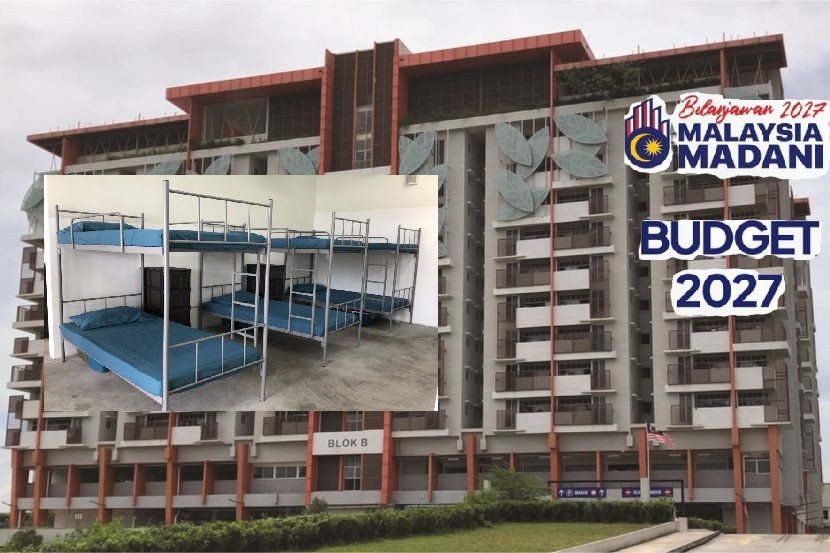
The scale of the gap is significant: when the Human Resources Ministry last assessed nationwide compliance, more than 90% of foreign worker accommodation fell short of the minimum standards under the Workers’ Minimum Standards of Housing and Amenities Act 1990.
In fact, a 2023 International Organization for Migration study documented cases of 30 to 40 workers sharing space designed for 10. This is a structural gap – not an enforcement gap alone – which will not close without deliberate planning.
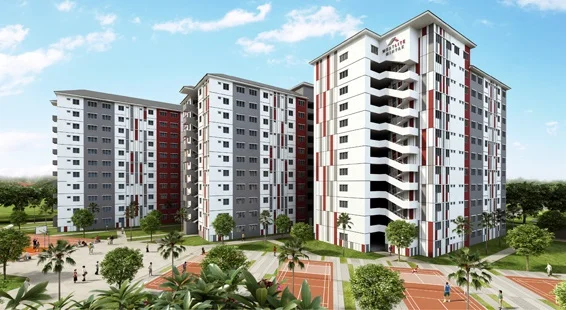
Secondly, Budget 2027 could encourage investment in quality and sustainable workers’ accommodation. The focus should not simply be on increasing accommodation capacity but on creating living environments that meet appropriate standards for safety, security, hygiene and well-being.
A two-tier incentive structure could accelerate this. In the near term, extending tax-deductibility to PBWA-related capital and operating expenditure – similar to how Vietnam already treats worker-accommodation rental costs as a deductible business expense for enterprises operating in industrial zones – would be a low-cost, fast-to-implement first step.
Encourage infrastructural investment
As a medium-term flagship measure, Malaysia could introduce a dedicated Investment Tax Allowance under MIDA for GreenRE-certified PBWA developments.
This can be benchmarked against Thailand’s Board of Investment incentive for affordable housing which grants a three-year corporate income tax exemption on infrastructure and common-area costs plus import duty exemption on related machinery for projects meeting defined quality and pricing conditions.
A similarly structured, certification-linked incentive would give Malaysia a comparable lever to shift the market from bare compliance toward certified quality.
Thirdly, Malaysia should encourage investment in infrastructure ahead of demand. As competition for regional investments intensifies, the ability to offer a ready and well-supported industrial ecosystem can become a competitive advantage.

Encouraging developers to invest proactively in industrial and supporting infrastructure would enable Malaysia to respond more quickly to new investment opportunities rather than addressing capacity constraints only after demand has emerged.
Johor illustrates the stakes: the Johor-Singapore Special Economic Zone (SEZ) is expected to draw substantial new industrial investment even as the state already registers one of the country’s largest gaps between worker housing supply and demand.
Faster delivery also depends on coordination, roads, utilities, public transport, digital connectivity and workforce accommodation developed in tandem with a single reference point between Federal and State authorities for PBWA approvals.
View this post on Instagram
It can emulate the spirit of how Singapore’s Manpower Ministry takes a direct hand in dormitory planning to reduce delays and improve planning certainty.
Budget 2027 is an opportunity to look beyond incentives and tax measures to the foundations of sustainable industrial growth.
Malaysia has already demonstrated its ability to attract investment; the next step is ensuring the supporting ecosystem, infrastructure, workforce housing and sustainable development is equally ready.
Ultimately, Malaysia’s next phase of industrial growth should be measured not only by the investment secured, but by the infrastructure, workforce ecosystem and sustainable foundations built to turn that investment into long-term economic value. – Oct 8, 2026
Datuk Wira Eric Ng is founder & group CEO OF ISP Group of Companies.
The views expressed are solely of the author and do not necessarily reflect those of Focus Malaysia.