

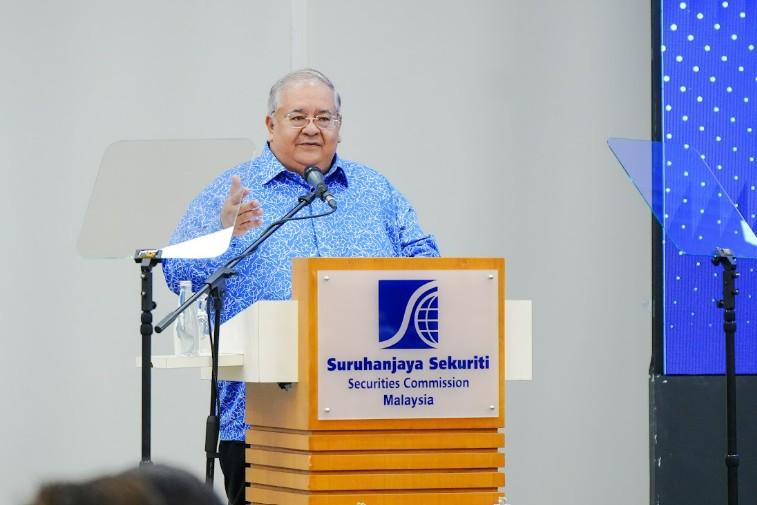
DATUK Mohammad Faiz Azmi, the Malaysian Accounting Standards Board (MASB) former chairman (2009-2015) is not one to mince his words. His questions are sharp enough to change the atmosphere in the room.
Anchored by an instinct he has followed throughout his career, this problem solver steps in when things turn uncomfortable, unclear or inconveniently complex.
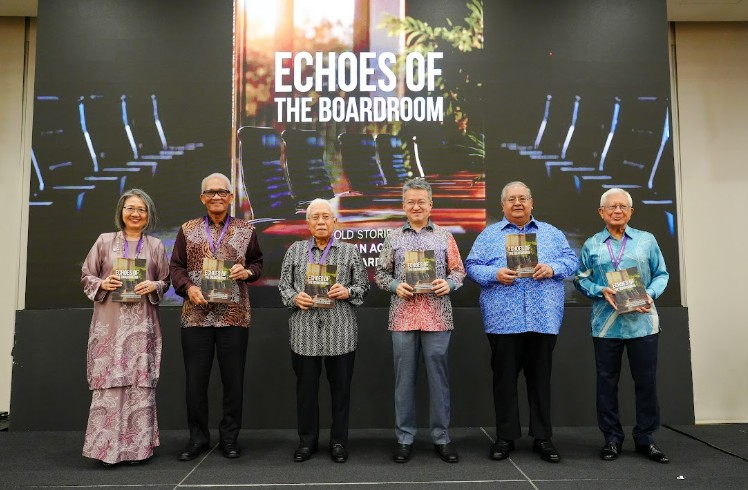
He is one who could never keep quiet when things didn’t make sense. “I was never interested in titles. I was interested in fixing things that didn’t work,” Faiz points out in an interview published in the recently launched Echoes of the Boardroom: Untold Stories of the Malaysian Accounting Standards Board book.
Faiz who is currently Securities Commission Malaysia (SC) executive chairman did not dominate discussions but dismantled assumptions. Under his MASB chairmanship, standards were adopted not by default but by design, tested against Malaysia’s economic and regulatory realities.
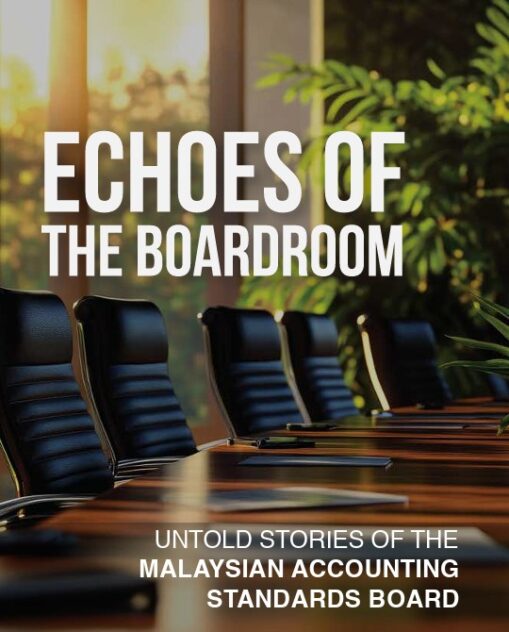
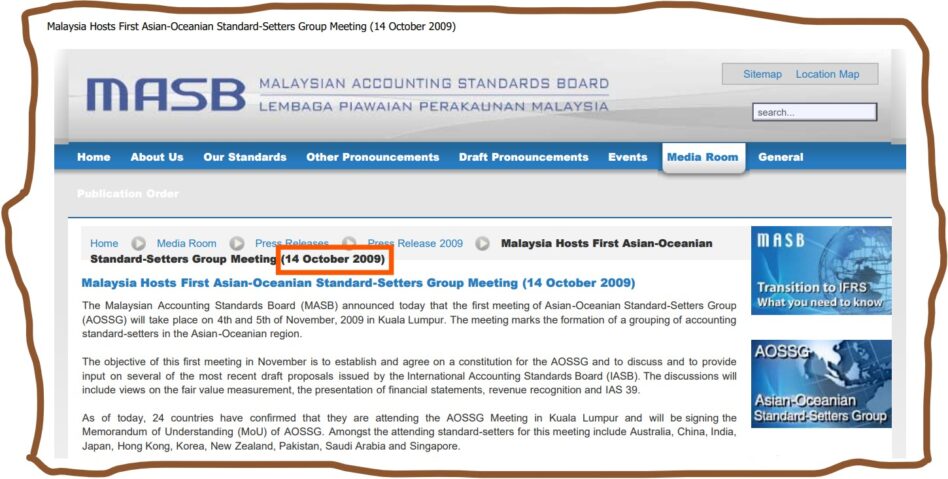
That same approach later carried him onto the international stage which culminated in Malaysia’s successful bid to become the first Asian-Oceanian Standard-Setters Group (AOSSG) chair in 2009.
Malaysia’s pitch was simple but strategic: an independent non-aligned chair acceptable to all.
“That was my first case of UN-style diplomacy. I learned a lot on how to negotiate different points of view and get consensus.
“But Malaysia won the Chair in the end. And because we were non-aligned, we were able to move things.”
Influence without force
Once Malaysia secured the Chair, the burden shifted from persuasion to performance.
As first Chair, expectations were lower but that space allowed Malaysia to shape AOSSG’s agenda and establish credibility with the International Accounting Standards Board (IASB) at a time when many Asian jurisdictions were undecided about adopting International Financial Reporting Standards (IFRS).
“That meant the IASB had to be nicer to us because we were representing this part of the world,” recalls Faiz.
Much like his ‘accidental’ chairmanship of AOSSG, Faiz didn’t set out to chair the MASB. In fact, he was convinced he was the wrong person for the job.
“You look at all the chairmen before me. Basically, the grey hairs go to the Financial Reporting Foundation (FRF), then you have the slightly less grey hairs and then there’s me.” The FRF is the oversight body of the MASB.
In 2009, he was still a line partner at PwC, running an active practice and deeply embedded in client work. MASB needed someone who knew the standards, knew the industries, knew the regulators and could absorb conflict without flinching.
“My job was problem-solving. Figure out who’s upset, why they are upset and how to fix it without breaking the system.”
A pain to the banks
MASB did not need a statesman. It needed a working accountant who could survive industry pushback, regulator anxiety and technical warfare simultaneously.
Faiz was the right fit. He grew up in manufacturing audit and moved into financial services when he became a manager. That’s when he realised he had an advantage.
That advantage was structural. He was trained in legal, technically fluent in accounting standards and embedded in complex financial engineering discussions with banks.
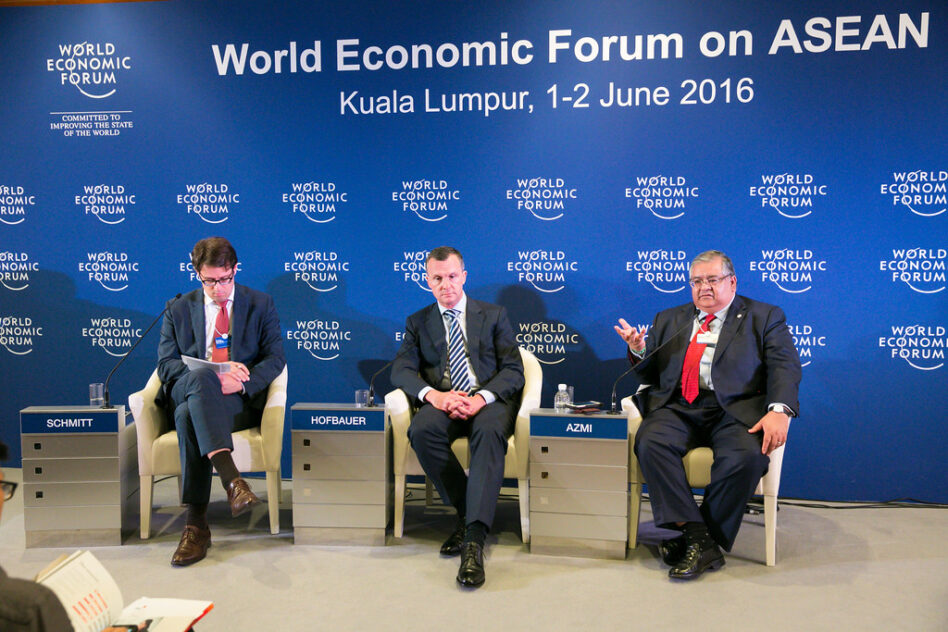
He was arguing with bankers about the structures they were doing. He could read the term sheets, understand the legal intent and translate that into accounting reality.
Those years trained him, in his own words, “to be a pain to the banks”.
Across banking, property, agriculture and Islamic finance, the common factor in Faiz’s approach was consistency. He did not reject global standards but he refused to let them override economic reality.
Each confrontation followed the same pattern: identify where theory breaks down, strip away weak arguments and redesign the pathway so the standards work as intended, not just as written.
A legacy measured in institutions
To Faiz, independence means intellectual honesty, not isolation. He believes regulators should listen broadly but think independently even when silence or compliance would be the easier path.
This grounding shaped MASB’s approach during his chairmanship. Consultation was not treated as a formality. Outreach sessions, industry dialogues and practitioner feedback were actively incorporated into deliberations.
Under his watch, MASB gained the confidence to engage globally, questioned accepted norms and asserted what worked or what did not for Malaysia.
Faiz’s legacy is not personal acclaim but a stronger, more assured institution guided by a simple principle he still stands by: “Don’t chase trends, chase clarity”. – Oct 13, 2026
Main image credit: Securities Commission Malaysia/Facebook