

THE automotive sector remains on track to meet its 2026 sales forecast despite a monthly decline in September, as consumers adopt a wait-and-see approach ahead of Budget 2027.
According to Kenanga, total industry volume (TIV) fell 3% month-on-month to 69,609 units in September 2026 but rose 19% year-on-year due to a lower base last year.
Cumulative sales reached 602,633 units in the first nine months, up 4% year-on-year and within expectations.
Kenanga maintained its 2026 TIV forecast at 800,000 units, representing a 3% annual decline, in line with the Malaysian Automotive Association’s projection.
Sales are expected to improve in October as automakers roll out year-end promotions.
However, the absence of specific automotive incentives in Budget 2027 means demand will likely depend on attractive discounts and new model launches, potentially squeezing industry margins.
National marques continued to dominate, accounting for 67% of the market in the first nine months.
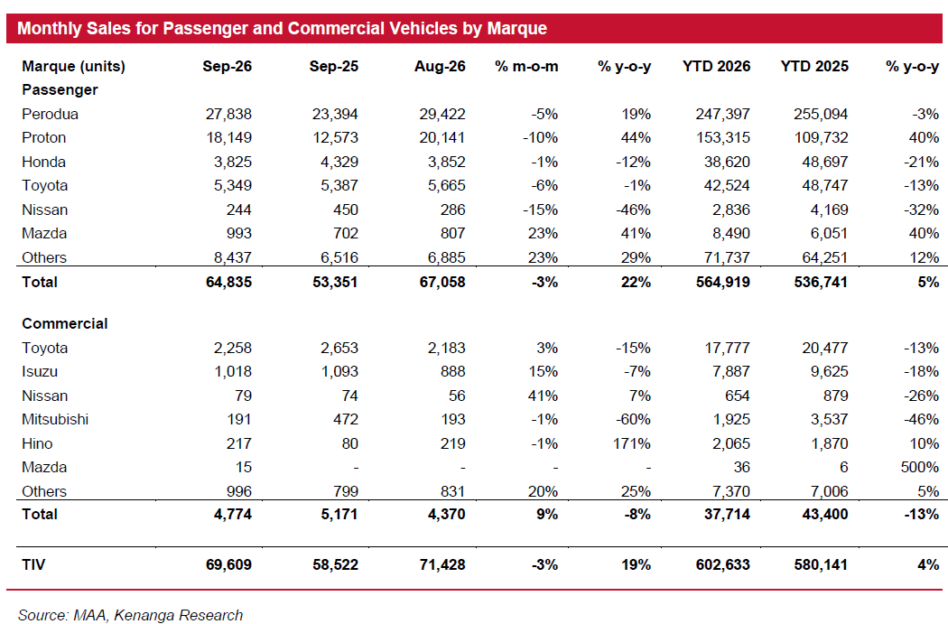
Proton’s sales rose 40% year-on-year, supported by new models including the e.MAS 5 electric vehicle (EV) and Saga, while Perodua remained the market leader with a 41% share.
Proton also recorded 50,000 outstanding orders, while Perodua had 40,000.
Mazda was the only major brand to record monthly growth in September, with sales increasing 23% month-on-month and 41% year-on-year, driven by deliveries of imported vehicles and strong demand for the Mazda 3 and CX-series models.
Conversely, Honda, Toyota and Nissan recorded monthly declines.
EV sales remained a key growth driver, reaching 53,537 units in the first nine months, up 99% year-on-year.
Nevertheless, Kenanga expects a gradual transition towards battery electric vehicles, with infrastructure limitations and subsidised fuel prices continuing to reduce incentives for consumers to switch from conventional vehicles.
The research house identified aggressive discounting, delayed implementation of new open-market-value excise duty regulations, rising localisation of Chinese vehicle production and demand for affordable models as key industry trends.
A booking backlog of 113,000 units at end-August also supports earnings visibility.
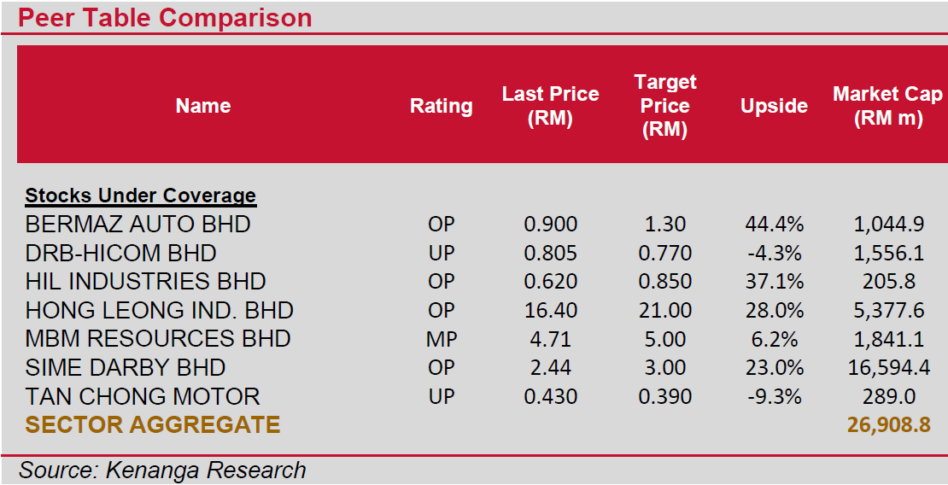
Kenanga maintained its “Neutral” sector rating, citing competitive pressures and potential margin erosion.—Oct 21, 2026
Main image: Risk & Insurance.com