
THE directive barring civil servants from using Waze while performing official duties raises questions beyond the choice of navigation app: who controls our movement data, and can Malaysia build a trustworthy domestic alternative?
The government has cited concerns about Waze’s data handling and its legal jurisdiction. Waze, founded in Israel and acquired by Google in 2013, has rejected allegations that it collects sensitive government information or allows users’ data to be exploited.
The restriction applies to civil servants conducting official duties, although the government has also encouraged the public to consider local alternatives.
These concerns deserve scrutiny based on evidence. The government should explain the specific risks it has identified, while service providers should clearly disclose what data they collect, how it is used, how long it is retained and who can access it.
Digital sovereignty is not established simply by putting a Malaysian name on an application.
Navigation depends on road databases, routing algorithms, traffic information, computing infrastructure and satellite-based positioning.
Waze does not own the satellites it relies on; it combines positioning data from users’ devices with traffic reports and other information to calculate routes.
Malaysia need not build every component from scratch. But it should understand which capabilities it controls, where it depends on external providers and what risks those dependencies create.
Why Waze is difficult to replace
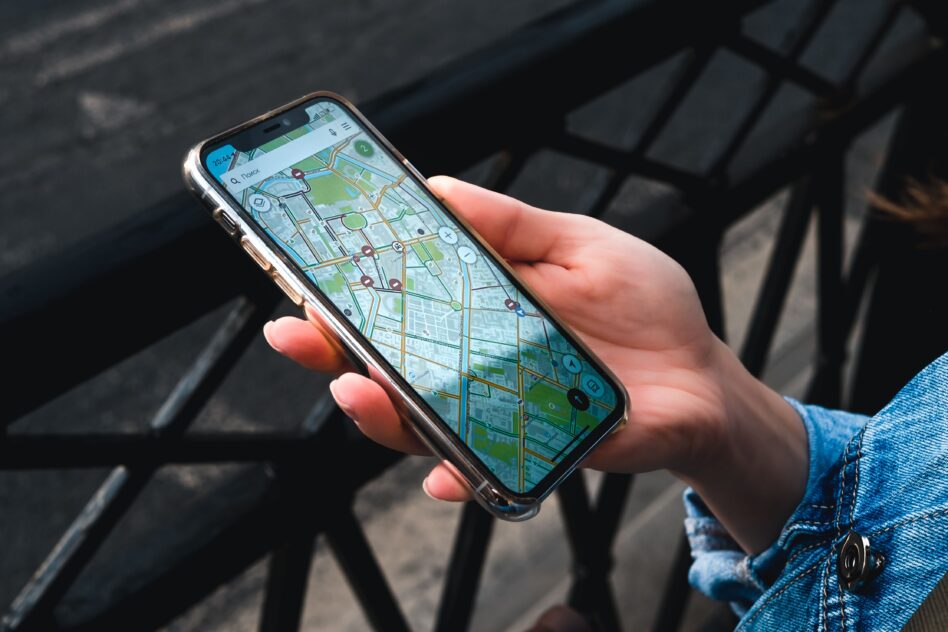
Waze’s competitive advantage lies in its community. Active users generate traffic information, report accidents and road hazards, and help keep maps updated. The application combines these inputs to estimate journey times and reroute drivers when conditions change.
This creates a network effect: more users can generate more useful information, which can attract more users. Newer applications cannot reproduce that advantage merely by launching with similar features.
That is the challenge facing TuJu and PINTAZ. A navigation app is not a finished product simply because it has maps, voice guidance and traffic alerts. It must continuously process reliable information, update road conditions and perform consistently as demand grows.
TuJu and PINTAZ must prove their value
TuJu was launched by the Malaysian Highway Authority (LLM) in November 2025 with Prosignal Consortium.
Its features include route guidance, toll information, traffic updates, highway CCTV access and emergency assistance. However, launch coverage reported that TuJu used Google’s mapping and points-of-interest data, illustrating that local development does not necessarily mean complete technological independence.
A surge in users following the government’s recommendation subsequently caused service disruptions. Restoring confidence requires more than apologies.
TuJu must demonstrate system stability, reliable estimated arrival times, accurate alternative routes and timely updates on incidents and closures.
PINTAZ, another Malaysian navigation app, advertises features including lane guidance, toll information, camera alerts, traffic reports and Bahasa Malaysia and English voice guidance.
These features offer potential, but advertised capabilities and download figures are not substitutes for independent testing under real driving conditions.
The opportunity is not simply to copy Waze. Local developers could build features tailored to Malaysian needs, including motorcycle-friendly routing, road-safety warnings based on reliable crash data, parking and toll-cost comparisons, and journey planning that integrates cars with public transport.
Such services could create opportunities in geospatial analytics, software engineering and intelligent mobility. But they require dependable public data, cooperation with transport operators and local authorities, and robust privacy safeguards.
Learn from MyTeksi, but do not assume success

MyTeksi began in Malaysia in June 2012 as a taxi-booking service founded by Anthony Tan and Tan Hooi Ling. It became GrabTaxi before the company rebranded as Grab in 2016 and expanded across Southeast Asia.
Its history shows how a local solution can grow into a regional business through investment, expertise and continuous improvement.
That success does not guarantee similar results for navigation apps. TuJu and PINTAZ must establish their own competitive advantages and earn users’ trust through performance.
The government can help by providing appropriate access to road and traffic data, supporting university-industry research and setting transparent performance targets. Public support should be tied to demonstrable improvements, not treated as an unconditional guarantee.
Rules governing information such as roadblocks and enforcement-camera locations should also be clear and consistent across navigation platforms, balancing useful travel information with legitimate operational security concerns.
Malaysia should not have to choose between data security and convenience. The Waze restriction could become an opportunity to strengthen local technology, but only if security claims are explained, dependencies are acknowledged and domestic alternatives are judged fairly.
Local technology does not need automatic praise. It needs the opportunity to prove its capabilities, and the courage to be judged by results. ‒ Oct 26, 2026
Shahrim Tamrin is a road safety advocate and sustainable transport advocate. He previously served on the Board of Directors of the Malaysian Institute of Road Safety Research (MIROS).
The views expressed are solely of the author and do not necessarily reflect those of Focus Malaysia.
Main image: Scoop.my