

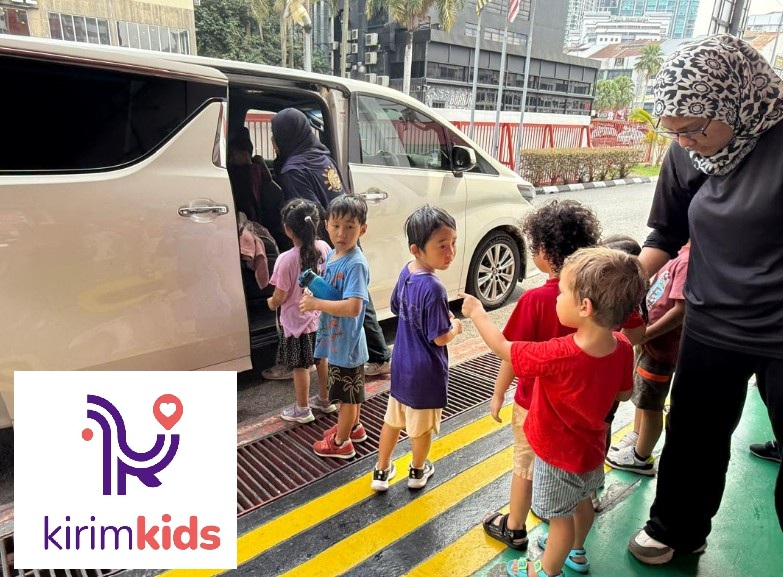
FOR KirimKids founder and CEO Adila Jamal, the idea for a child transportation platform did not begin with a business plan. It began with the questions she found herself asking as a mother.
Who was driving her children that day? Had they been picked up? Where were they? Had they arrived safely?
“What concerned me was the lack of visibility,” Adila told FocusM. “Once your child gets into someone else’s car, you’re placing a huge amount of trust in that person.”
That frustration eventually became KirimKids, a Klang Valley-based child transportation platform built around recurring journeys such as school runs, tuition classes and extracurricular activities.

Adila saw a gap between the options families already had. School buses and vans remain affordable but may involve long routes and limited visibility during a journey.
Private arrangements can offer more flexibility but often depend heavily on a single driver while relying on family members is not practical for many dual-income households.
“What’s missing is accountability: a screened driver, a consistent assigned person, live visibility and a back-up when something goes wrong,” she explained.
Demand is not the problem
The bigger challenge for KirimKids today is not convincing parents to use the service. It is finding enough suitable drivers or Kaptains to meet that demand.
Despite doing little active marketing, KirimKids receives around 15 to 20 new requests each month – largely through word of mouth – but currently has the capacity to onboard only two to three families monthly.
The company has completed more than 2,500 journeys to date and works with around 20 Kaptains.
But Adila said matching supply and demand is more complex than simply increasing the number of drivers.
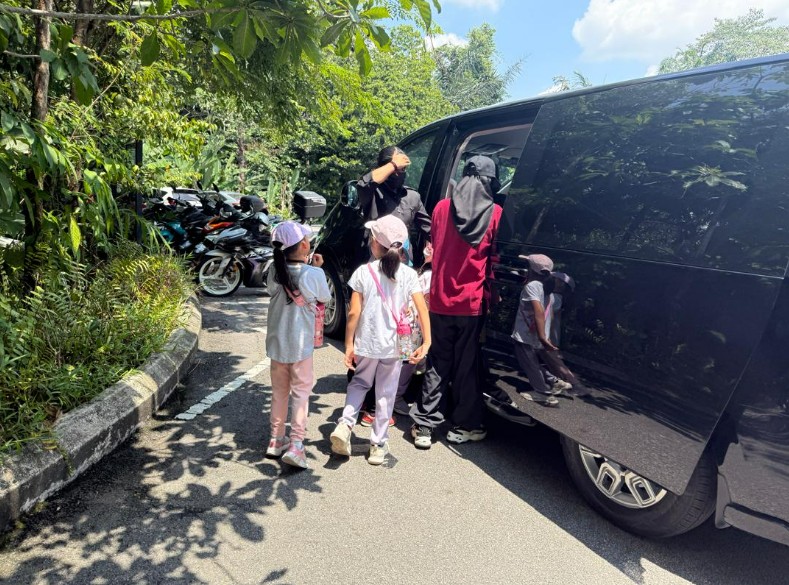
School runs take place within narrow windows, meaning a Kaptain must live near enough to the family and have a route and schedule that work. Demand is currently emerging in areas including Petaling Jaya, Shah Alam and Putrajaya.
“The constraint isn’t just the number of drivers. It’s having the right Kaptain in the right neighbourhood screened to our standard,” she stressed.
KirimKids aims to expand its network from 20 to 100 Kaptains within six months.
Creating another option for women
Notably, its Kaptain network consists of female drivers.
According to Adila, this reflects KirimKids’ dual ambition: providing greater confidence for families while creating a more structured form of flexible work for women, including mothers who may not be able to commit to full-time employment or late-night e-hailing.
A typical Kaptain works around school schedules with morning runs between approximately 7am and 9am, followed by afternoon pick-up windows.
Unlike conventional on-demand e-hailing, many KirimKids assignments involve transporting the same children along recurring routes.
Families pay monthly subscriptions of around RM350 to RM600 per child depending on distance, according to Adila. The Kaptain retains 85% of the fare while KirimKids takes 15%.
With a full route, Adila expects a Kaptain can earn around RM2,500 to RM3,000 per month.
For KirimKids, however, income alone is not the proposition.
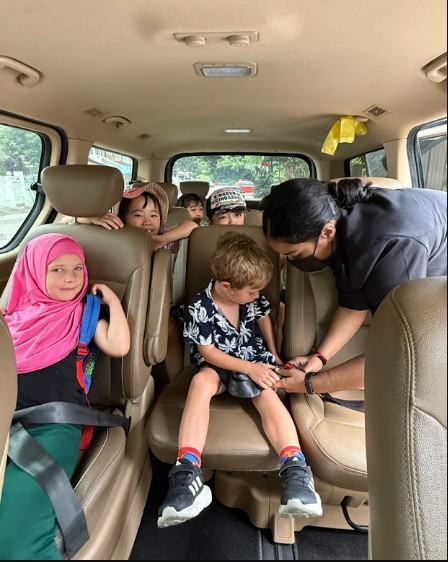
Adila believes predictable routes, daytime working hours and relationships with recurring families can make the work attractive to women who want more certainty over both their income and their schedules.
“Because it’s subscription-based, she knows what she’ll earn at the start of the month,” enthused Adila.
Scaling without lowering the bar
The challenge is growing that network without diluting the standards parents expect when their children are passengers.
Before joining the platform, Kaptains undergo identity verification as well as criminal and driving record checks through a third-party screening provider. Vehicles are also reviewed.
Parents can follow journeys live and receive alerts when their children are picked up and dropped off while each family is assigned a regular Kaptain where possible. If that person is unavailable, KirimKids can arrange a vetted replacement.
Adila said the company would rather reject business than bring someone onto the platform without sufficient confidence in the match.
“We would rather turn a family away than onboard someone we’re not confident in. That discipline costs us growth in the short term but it’s the reason parents trust us.”
That philosophy is also shaping how KirimKids approaches expansion.
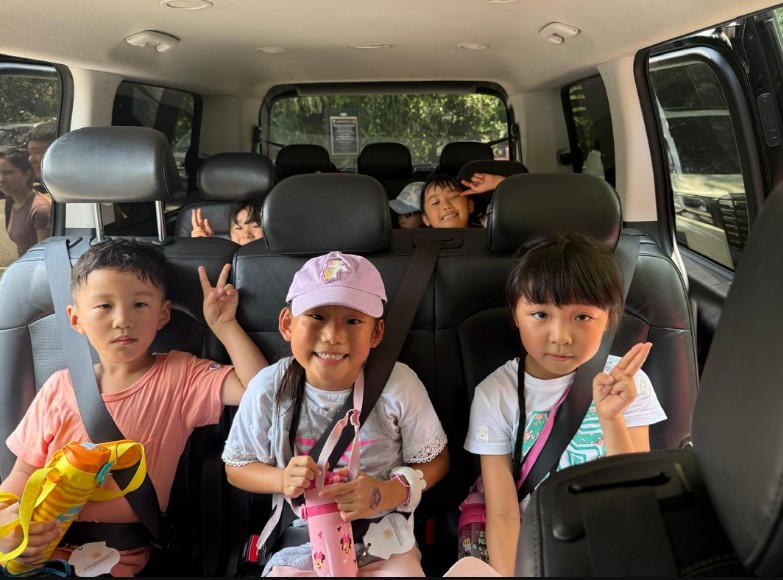
Rather than entering new areas simply because enquiries exist, it looks for clusters of families on compatible routes that can support a Kaptain’s morning and afternoon schedule.
School partnerships could accelerate that process by bringing together groups of families in one location. KirimKids has already started working directly with schools, including an international kindergarten.
The company is also backed by Hasan VC (venture capitalist) with funding being directed towards expanding and screening its Kaptain network, strengthening operations and developing technology including automated onboarding, parent-Kaptain matching and in-app communication.
For Adila, the longer-term ambition goes beyond operating a fleet of child-transport drivers.
She wants KirimKids to eventually become part of the infrastructure behind how children move – including providing technology that schools and independent bus and van operators could use for screening, tracking, scheduling and payments.
But she remains clear that expansion has to follow trust.
“Growth that brings in complaints isn’t growth we want,” she asserted.
And for a company that began with a mother simply wanting to know what was happening between pickup and drop-off, that may ultimately be the most important metric of all. – Nov 11, 2026