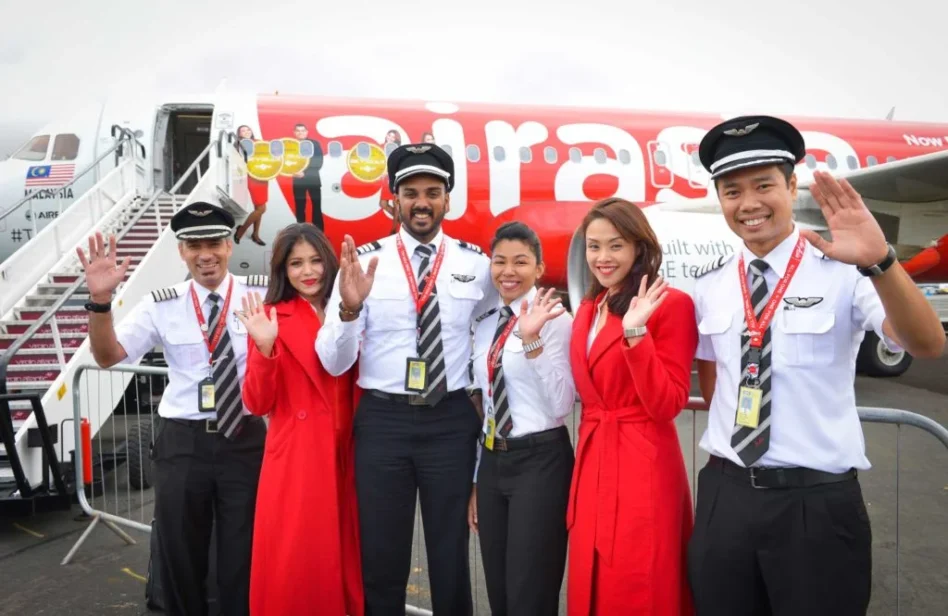

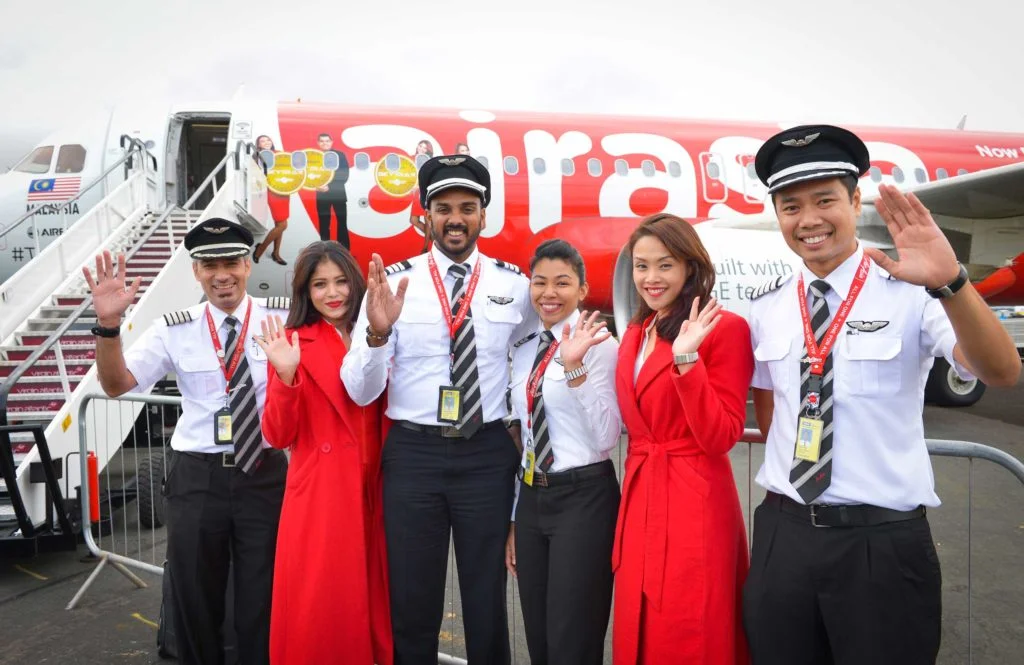
THERE could be a much larger chain effect looming for the Malaysian economy beyond moving payday to the “very month end” for “AirAsia Allstars” – the tagline founder Tan Sri Tony Fernandes coined for the budget carrier’s employees from pilots to cabin crew, engineers, ground staff and corporate team members.
Nevertheless, seeing red by being expected to bite the bullet is something that everyone has to go through in the span of their career – in AirAsia’s case, this could be something inevitable after the airline having reported three consecutive quarters of losses.
But at least they should be grateful – for now at least – that no Malaysian employees have been laid off (though AirAsia has announced layoffs at its Philippine subsidiary AirAsia Philippines).
This thorny subject has been addressed by finfluencer Jonathan Quek who has taken to Threads to address the A-to-Z from whether Putrajaya should use taxpayers’ money to save AirAsia to prospect of millions of Malaysians staring at fewer flights, higher fares and job losses should AirAsia falter.
View on Threads
Beyond the shift of payday to the 30th from November 2026 to March 2027 affecting the “AirAsia Allstars” fraternity, Quek listed down what is “really at stake” for Malaysians at large should AirAsia go bust.
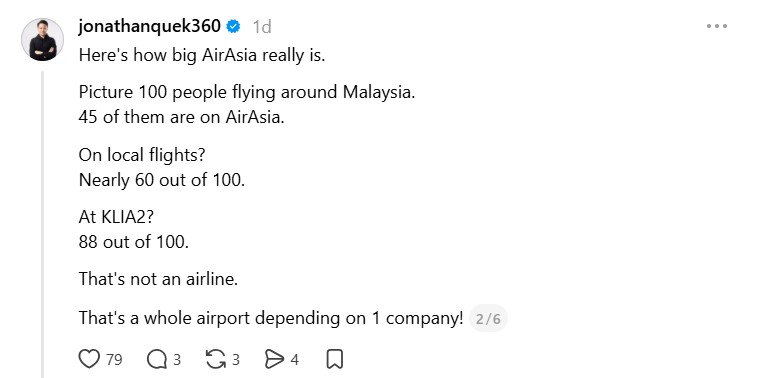
“Here’s how big AirAsia really is. Picture 100 people flying around Malaysia. 45 of them are on AirAsia. On local flights? Nearly 60 out of 100. At KLIA2? 88 out of 100,” penned the co-founder of Future Trends, a community-focused on AI, stocks and cryptocurrency research outfit.
“That’s not an airline. That’s a whole airport depending on one company!”
Should taxpayers bail out AirAsia?
For further clarity, the investor educator painted a picture of forging East Malaysia connectivity to gauge the impact of AirAsia to Malaysians:
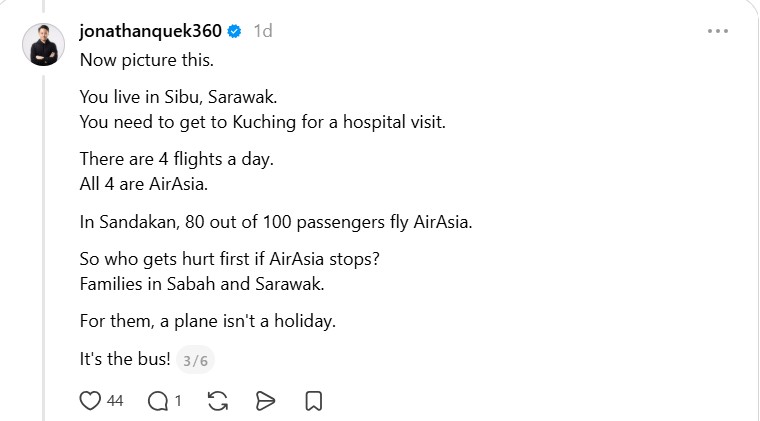
You live in Sibu, Sarawak. You need to get to Kuching for a hospital visit. There are four flights a day. All four are AirAsia.
In Sandakan, 80 out of 100 passengers fly AirAsia. So who gets hurt first if AirAsia stops? Families in Sabah and Sarawak. For them, a plane isn’t a holiday. It’s the bus!
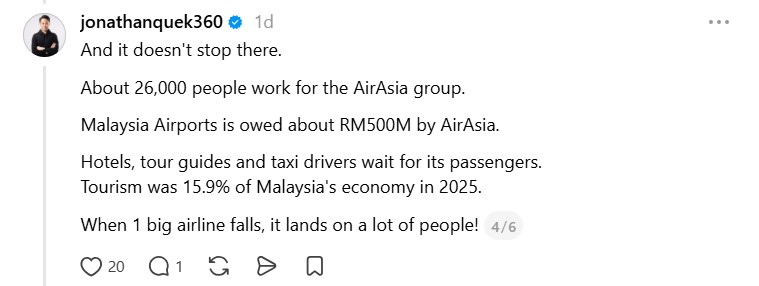
This is when the chain effect gets more extensive given not only does Malaysia sympathises with AirAsia’s 26,000 staffers but “Malaysia Airports (airport operator) is owed about RM500 mil by AirAsia”.
“Hotels, tour guides and taxi drivers wait for its passengers. Tourism was 15.9% of Malaysia’s economy in 2025. When one big airline falls, it lands on a lot of people!” asserted Quek who is an avid advocate of “Buy the Future. Not the Hype”.
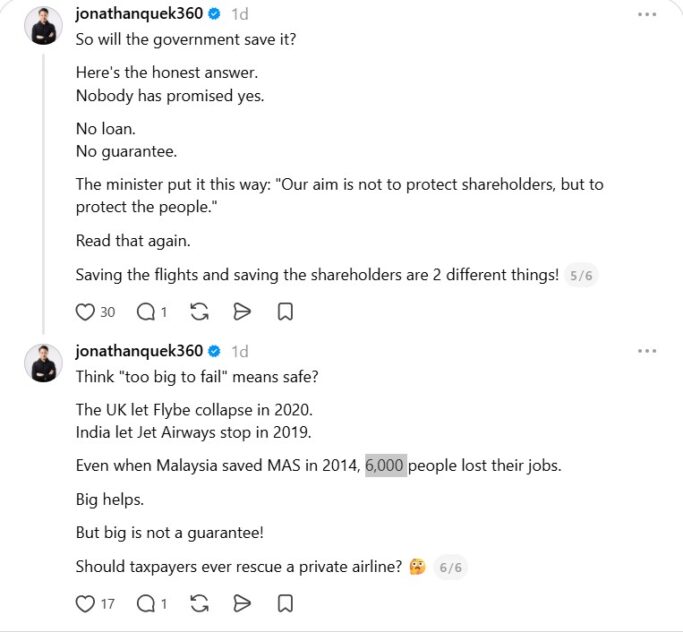
Arguing that “saving the flights and saving the shareholders are two different things!”, Quek highlighted one grim reminder of not assuming “think ‘too big to fail’ means safe”.
“The UK Let’s flybe collapsed in 2020. India let Jet Airways stop in 2019. Even when Malaysia saved MAS (Malaysia Airline) in 2014, 6,000 people lost their jobs,” he deduced.
“Big helps. But big is not a guarantee! Should taxpayers ever rescue a private airline? 🤔 “
Taking Quek’s argument a step further is self-proclaimed travel entrepreneur @ayihhakim who viewed “AirAsia beyond “just an airline” with a manpower of 26,000 employees, 229 flight routes and more than 150 destinations.
“Behind every plane taking off, there are travel agents, tour guides, tour guides, hotel operators, restaurants and thousands of families who depend on this industry,” he envisages.
“AirAsia is also one of the companies that has opened opportunities for many Malaysians to see the world at a more affordable cost. Many dreams have come true because of the slogan Now Everyone Can Fly. – Nov 29, 2026
View on Threads