
IT’S BEEN a brief period of time since our gentle giants arrived at Osaka’s Tennoji Zoo amidst much fanfare.
But we can all agree that the hot, humid tropical jungles of Boleh Land are quite different from the climate here in Japan. So how are our elephants, Dara, Amoi and Kelat, doing there?
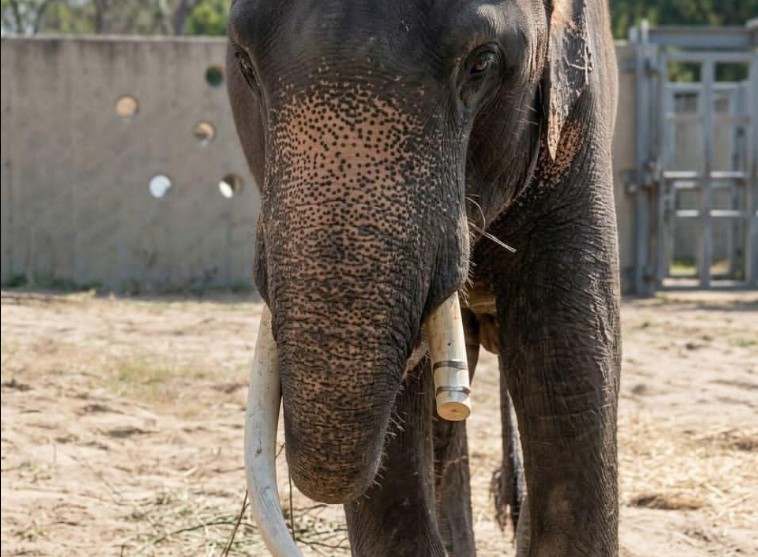
Apparently not so well according to netizen @dilladontdodat who pointed out how Kelat already damaged its right tusk.
The post has since opened a floodgate of criticisms from alarmed netizens, with some of them pointing out the lack of care in the Japanese zoo.
Tak sampai sebulan gajah kita di zoo tennoji jepun, gading si Kelat dah patah sebelah.
Teruknya penjagaan kat sana. Kesian gajah2 kita. https://t.co/8j4PXjCK5i https://t.co/JNJ8lvAhNk pic.twitter.com/b2enc0og1w
— Dilla | Human Art (@dilladontdodat) March 31, 2026
Netizen @ainzvr wondered what would happen if the animals stayed there for one year, further tagging the Ministry of Foreign Affairs and demanding that they be taken home.

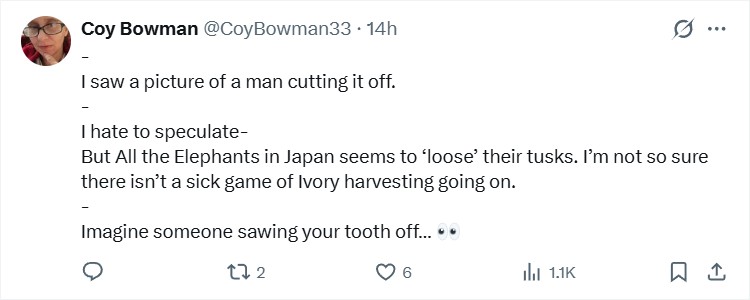
Another netizen alleged that the zoos in Japan might be harvesting the poor animal’s ivory, although this story is implausible.
Perhaps the best comment went to @4Sarcaustik who said that the Japanese don’t even have the time to make babies, so how are they supposed to care for the elephants?

Note that Dara (14-year old female), Amoi (9-year old female), and Kelat (20-year old male), came from Zoo Taiping and Night Safari.
The six-hour flight to Japan followed months of training, during which the elephants familiarised themselves with transit crates.
The elephants’ transfer is part of a decade-long conservation initiative aimed at supporting breeding efforts through global collaboration and the sharing of expertise and technology, said Natural Resources and Environmental Sustainability Minister Datuk Seri Arthur Joseph Kurup.
Meanwhile, Tennoji Zoo has addressed concerns surrounding Kelat’s chipped tusk, describing the incident as alarming.
The zoo explained that Malaysian mahouts were brought in to carefully file down the uneven edge to prevent further deterioration, while a metal ring was installed to reinforce the crack.
Despite the damage, Kelat is said to be largely unaffected, with caretakers choosing to allow the tusk to heal and regrow naturally. —Apr 1, 2026
Main image: @dilladontdodat (X)