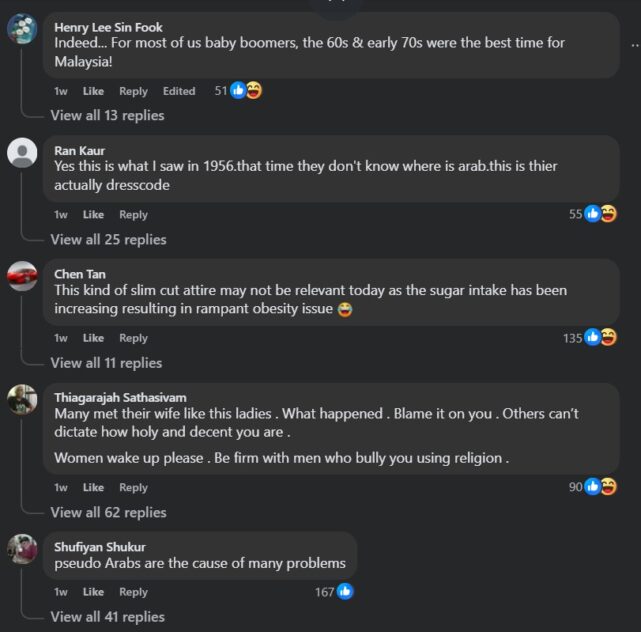

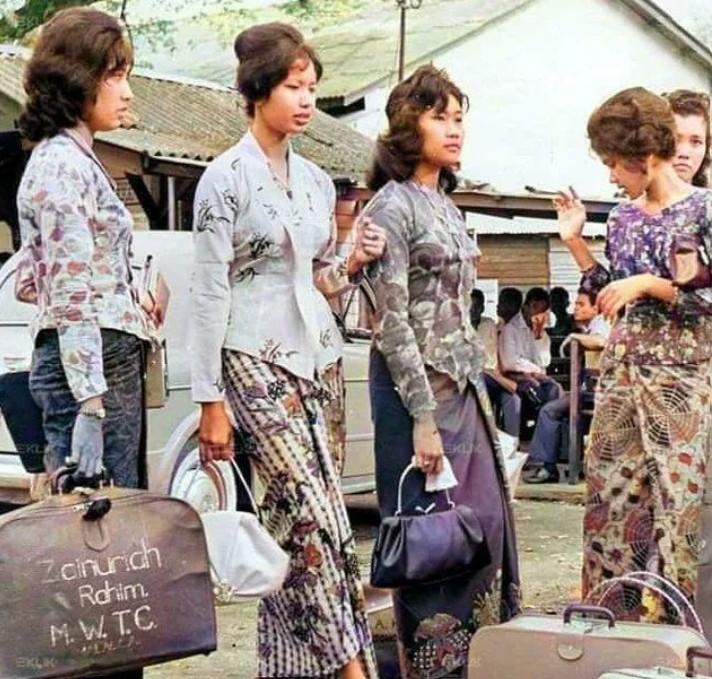
ABSENCE makes the heart grow fonder. This seems to be the prevailing sentiment in a Facebook post by ALIRAN co-editor Sarajun Hoda Abdul Hassan who lamented the disappearance of the intricately embroidered, figure hugging baju kebaya from wardrobe of Malay ladies.
Perhaps viewing the past through rose tinted specs, the former BERSIH (Coalition for Clean and Fair Elections) deputy chairman blamed this change in fashion taste squarely at the more conservative elements of Malaysian society, declaring: “Remembering the glorious days before pseudo-Arabs engulfed the country.”
It is an obvious reference to days gone by when it was common to see Malay women go sans tudung and yes, don these figure-hugging costumes without having certain quarters pass judgement with snide remarks or disapproving frowns; the insinuation is clear – Malaysian society has regressed and is poorer for it.
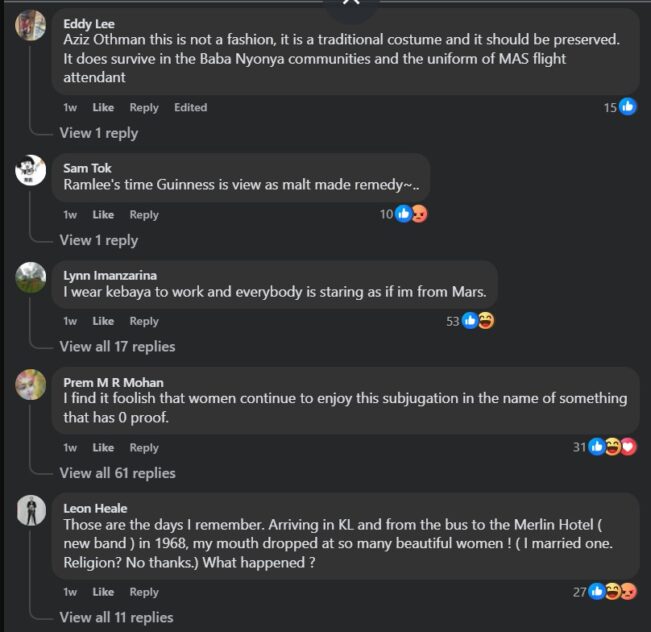
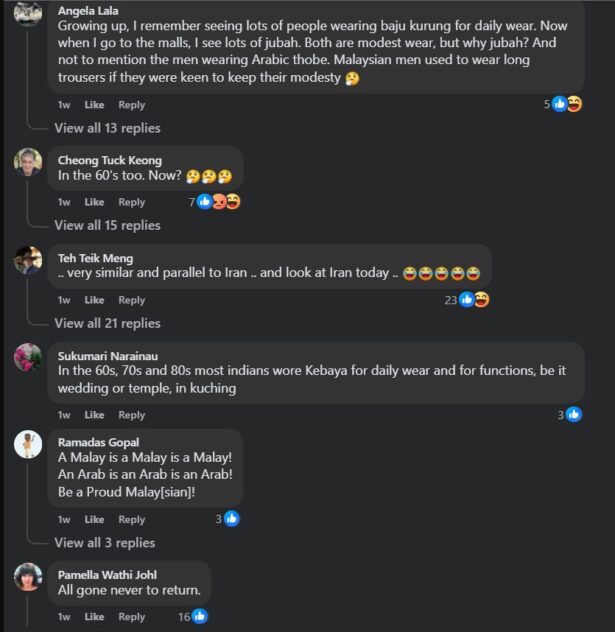
The post has generated 3.3K likes, 2.2K comments and 320 shares with plenty of commenters keen to share their viewpoint on acceptable dressing for Muslim women.
Not everyone was in agreement with the poster as they argued that it is very much a matter of choice.
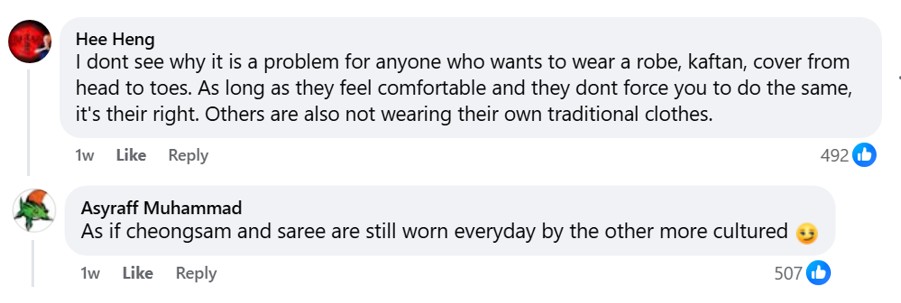
There is no coercion involved and it is well within the rights of Muslim women to dress conservatively. – whether “to wear a robe, kaftan or cover from head to toes”. It was also pointed out that other races also do NOT wear their traditional costumes regularly.
Quite a few echoed the sentiment that it was a matter of choice, hence the poster has no right imposing his fashion sense on others.
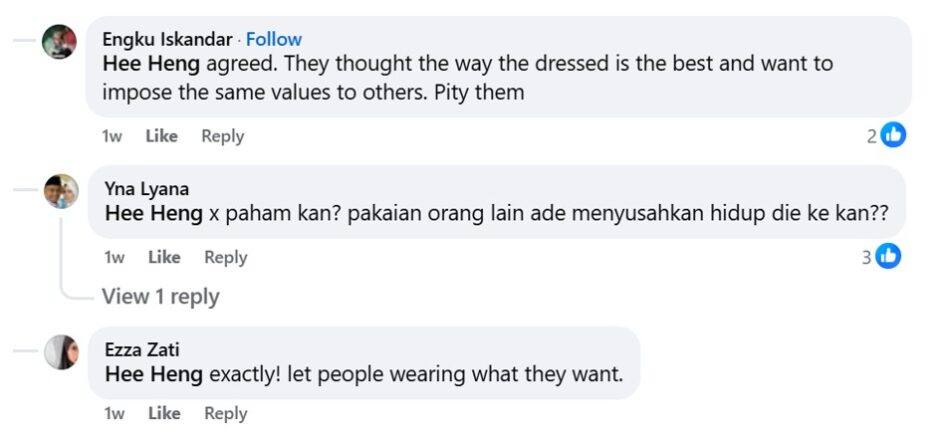
A Malay lady claimed she still dons a kebaya but ultimately it boils down to the choice of her sisters whether “to wear abaya, jubah or niqab”.
“I wear this (kebaya) every Raya or when I attend wedding etc. But for certain events like funeral or mosque-related functions, there’s a need to put on the tudung. That’s religious part,” justified the commenter.
“Same like you guys not wearing jeans when going to temple for ladies or wearing sexy shirts to attend funeral, etc.”
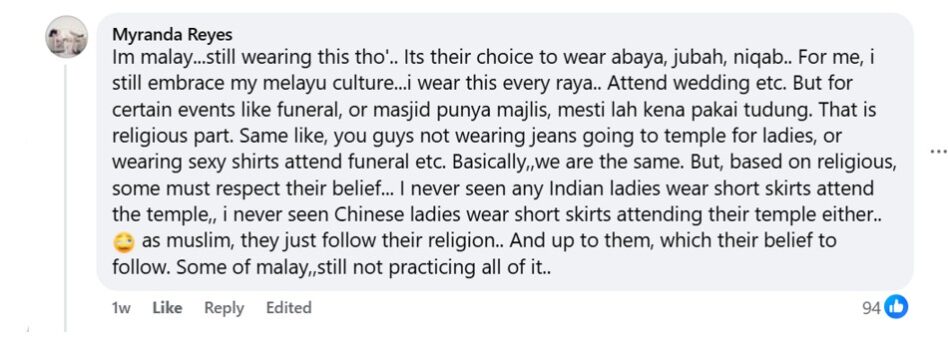
It was also countered that this shift in cultural identity was not limited to the Malays. One commenter contended that other races also experienced a similar shift to a more globalised identity with the result that traditional costumes such as cheong sam and sarees are ditched in favour of western-type dressing.
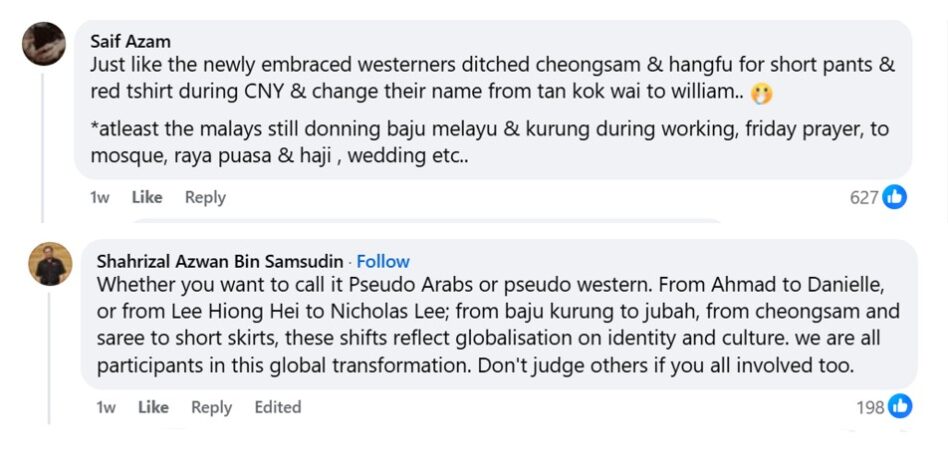
However, such view was quickly rubbished as nonsense as many pointed out that colourful sarees and elegant cheong sam are regularly seen at formal functions, weddings and even used as daily work wear.
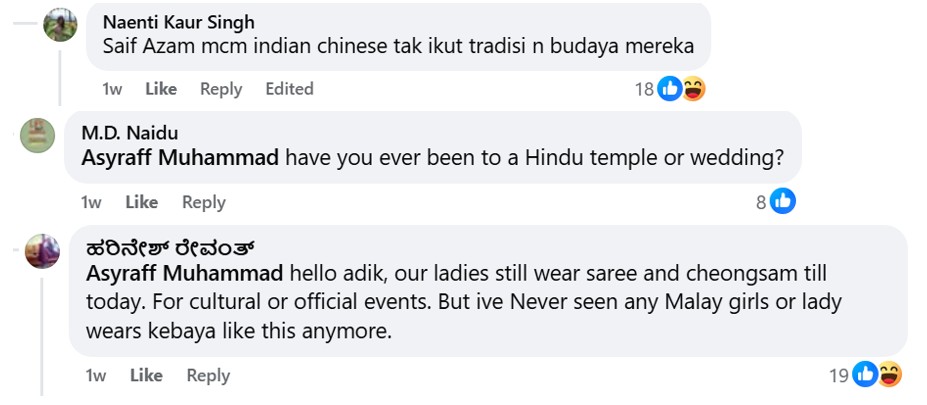
Hitting the nail on the head was the observation by one commenter about the lack of peer pressure regarding non-Muslim women’s choice of clothing. This allowed them to freely celebrate their original culture.
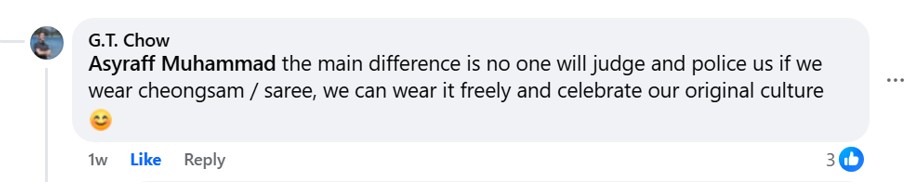
As many commenters had pointed out, choice of clothing is very much a matter of personal choice and the poster has NO right to impose his views on others.
But perhaps these detractors are missing the point somewhat. The poster is insinuating that this growing conservatism is due to peer pressure from “pseudo-Arabs” that he claims are engulfing the country and setting the narrative.
As one commenter succinctly expressed, respect and tolerance should go both ways. Nobody has the right to impose their world view on others.

Fashion rights aside, it is undeniable that many baby boomers – both men and women – do miss their good old sights of Malay ladies clad in figure-hugging kebaya. How nostalgic! – Feb 6, 2026