

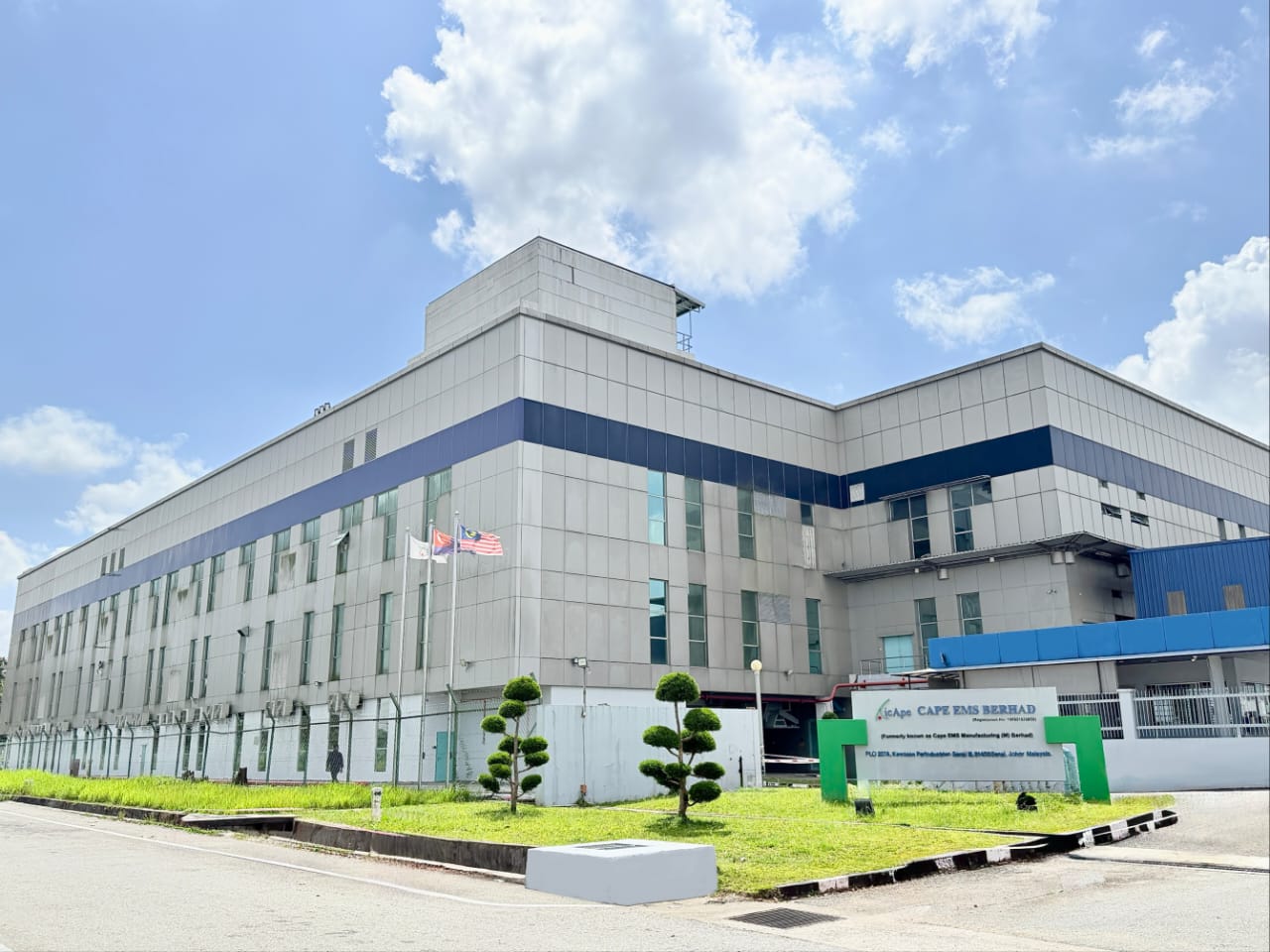
MAIN Market-listed electronic manufacturing services (EMS) solutions provider with global presence, Cape EMS Bhd, has unveiled an aggressive expansion of its renewable energy (RE) platform to capture emerging infrastructure opportunities across Southeast Asia’s energy transition.
The expansion through its wholly owned subsidiary, Cape Renewables Sdn Bhd, will serve as a core pillar of the group’s “CEB 2.0” transformation strategy which pivots Cape EMS beyond traditional electronics manufacturing and into higher-value infrastructure sectors.
Moving forward, Cape Renewables will deliver fully integrated energy solutions combining solar photovoltaic (PV) generation, battery energy storage systems (BESS) and smart energy management platforms.
These micro-grid and hybrid systems are architected specifically to help industrial operators lower utility costs, secure power reliability and transition to low-carbon operations.
“The energy transition is no longer a corporate option; it is an inevitable direction for industrial development,” commented Cape EMS’ managing director Christina Tee Kim Chin.

“We aim to help industries drastically lower energy costs while reducing their reliance on traditional fossil fuels. RE, battery storage and EV charging infrastructure represent the most important industrial growth opportunities over the next decade.”
Added Tee: “Cape EMS is fully committed to building a smarter, cleaner and more resilient energy ecosystem across Malaysia and Southeast Asia.”
The urgency for industrial energy transition has been heavily accelerated by global supply chain vulnerabilities.
Recent escalating tensions in the Middle East and the looming threat of disruptions to the Strait of Hormuz – one of the world’s most critical oil shipping routes – have triggered renewed volatility in global fuel markets.
Mitigating fossil fuel price shocks
Domestically, the squeeze of rising fuel costs continues to impact broad sectors of the economy, particularly the aviation and logistics industries, as recently highlighted by Transport Minister Anthony Loke Siew Fook.
Moreover, the broader government push for operational cost optimisation as echoed by public sector leadership underscores the necessity of energy independence.
Against this macro backdrop, Cape EMS’s renewable and BESS technologies are positioned as critical infrastructure that directly insulates commercial operators from external fossil fuel price shocks.
To execute this technical expansion, Cape EMS is leveraging its March 2025 strategic collaboration agreement with Aerospace Industrial Development Corporation (AIDC Taiwan).

This partnership provides the group with the advanced technological framework required to deploy sustainable, industrial-grade energy solutions.
Beyond industrial micro-grids, Cape Renewables is actively advancing Malaysia’s electric mobility ecosystem in alignment with the National Energy Transition Roadmap (NETR).
The subsidiary is currently developing a nationwide EV charging infrastructure mapping platform to identify highly optimised deployment locations across highways, industrial parks and urban corridors.
By integrating RE generation and BESS directly into these charging nodes, the platform will alleviate pressure on the national power grid while accelerating the rollout of a sustainable charging network.
At 3.36pm, Cape EMS was down 0.5 sen or 1.64% to 30 sen with 2.18 million shares traded, thus valuing the company at RM298 mil. – March 16, 2026