DEBATES over “No pork, no lard” signage occasionally resurface in Malaysia, attracting public attention and complaints. Yet these controversies often overshadow far more serious issues affecting food safety and public health.
The signage simply informs customers that pork and lard are not used in food preparation. It serves diners of all backgrounds, including non-Muslims who choose not to consume pork but do not necessarily require halal certification.
Many popular local dishes, including Hokkien mee, bee hoon and kway teow, can be prepared without pork or lard while still delivering excellent flavour.
Factors such as cooking technique, fresh ingredients and the prized Cantonese concept of wok hei, the smoky aroma produced by high-temperature stir-frying, often have a greater influence on taste than the choice of cooking oil.
Promoting halal practices is important, but enforcement should be consistent and evidence-based. Criticism should not focus solely on eateries displaying “No pork, no lard” signs while overlooking broader food safety concerns.
Halal certification, like any regulatory system, requires regular monitoring to ensure compliance with established standards. Effective enforcement depends on continuous inspections rather than assumptions.
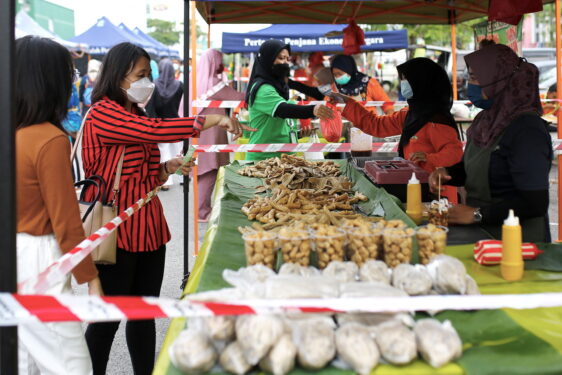
More importantly, food hygiene remains a persistent concern. It is not uncommon to see roadside stalls and night market vendors handling food under unhygienic conditions or displaying seafood without adequate refrigeration.
Such practices present genuine public health risks and deserve at least as much attention as signage displayed at restaurant entrances.
If the authorities are serious about protecting consumers, efforts should focus on improving food handling standards, educating traders and conducting regular inspections across all food outlets.
Public concern should likewise be directed towards issues that have a direct impact on health and safety.
The tendency to focus on minor controversies while overlooking larger problems is well captured by the Malay proverb, Gajah di pelupuk mata tak tampak, kuman di seberang lautan tampak.
The saying literally means an elephant on one’s own eyelid cannot be seen, while a tiny germ across the ocean is easily spotted.
It reminds us of a common human failing: noticing the small faults of others while ignoring more significant shortcomings closer to home.
Public debate plays an important role in improving standards, but it should remain proportionate.
Addressing visible food hygiene issues and ensuring consistent regulatory enforcement will do far more to protect consumers than becoming distracted by symbolic controversies.
If we truly care about public welfare, we should focus on the elephants before us rather than the germs in the distance. ‒ July 29, 2026
YS Chan is a tourism, transport and training consultant.
The views expressed are solely of the author and do not necessarily reflect those of Focus Malaysia.
Main image: Unsplash/Jason Jarrach