

WHEN two figures as seasoned as Tun Musa Hitam and Nazir Razak speak up about the New Economic Policy (NEP), it’s worth pausing to listen, not to pick sides, but to reflect.
These aren’t outsiders throwing stones. They’re insiders who have lived through Malaysia’s ups and downs, and they’re asking whether a policy designed for 1971 still fits the Malaysia of today.
Their argument isn’t that the NEP was wrong. It’s that a policy created as a temporary remedy may have remained in its original form for too long. When a safety net stays unchanged for decades, it can start to feel less like a springboard and more like a crutch.
The NEP had noble goals: eradicating poverty and restructuring society so race no longer determined economic roles. It was intended as a 20-year policy.
More than half a century later, however, it’s reasonable to ask whether we’re still relying on the same tools for a problem that has evolved.
Nazir warned of a deeply ingrained tongkat culture, where politically connected contracts and share ownership schemes can sometimes reward connections over competence.
Tun Musa similarly acknowledged that while the NEP achieved important successes, it also fostered unintended dependence on government assistance.
These aren’t comfortable observations. But meaningful reform rarely begins with comfortable conversations.
This isn’t about abandoning Malays or dismantling affirmative action overnight. That would be both unfair and unrealistic. The real question is far more constructive: how do we turn protection into genuine empowerment?
The answer begins with education.
Rather than placing disproportionate emphasis on shares, licences and contracts, Malaysia should invest more heavily in early childhood education, quality schools, STEM, TVET, digital skills, entrepreneurship, and strong proficiency in both Bahasa Melayu and English.
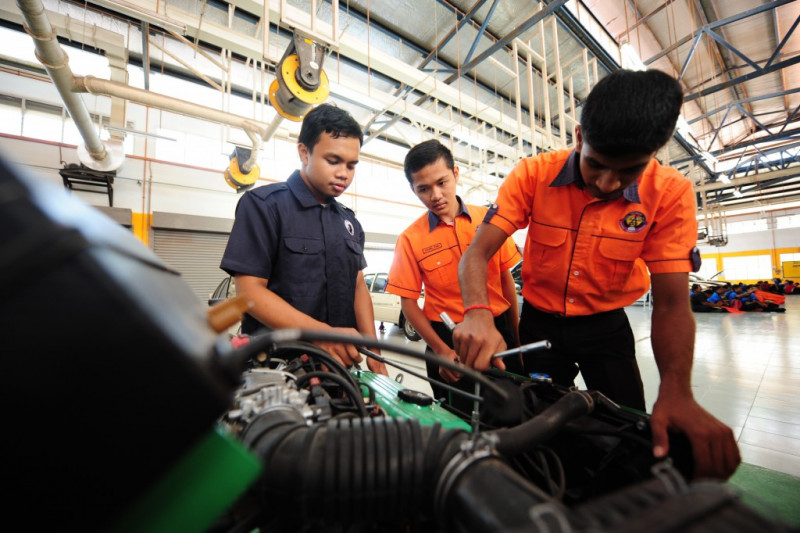
A child doesn’t choose where they’re born, but the state can ensure a difficult start doesn’t become a lifelong disadvantage.
Bumiputera business support also deserves recalibration. Helping entrepreneurs build capacity is worthwhile. But government procurement should increasingly reward innovation, quality, productivity and job creation rather than political patronage.
A Malay entrepreneur who succeeds because they’re the best is a national asset. One who survives only through connections reflects a system that has failed both them and the country.
Perhaps it’s time to replace the tongkat with a launchpad.
A launchpad still provides assistance through financing, mentoring, education and market access, but it’s designed to help people become independent. Every assistance programme should have a clear graduation pathway.
Success shouldn’t be measured simply by how much money is spent, but by how many businesses become self-sustaining and how many families permanently escape poverty.
Support should also become more precisely targeted.
A poor Malay family deserves help. So does a poor Chinese, Indian, Orang Asli, or family in Sabah and Sarawak.
Recognising genuine disadvantage doesn’t erase Malaysia’s historical inequalities. It simply makes affirmative action more effective by directing resources where they’ll produce the greatest impact.
Malaysia should also focus on producing wealth creators rather than contract hunters.
Our future competitiveness will depend less on companies relying on government projects and more on businesses competing globally in semiconductors, artificial intelligence, biotechnology, fintech, renewable energy and professional services.
There’s also a psychological dimension we shouldn’t ignore. When assistance continues across generations, it’s natural for people to begin seeing it as an entitlement rather than temporary support.
The message shouldn’t be, “The government will stop helping you.”
It should be, “The government will help you become strong enough not to need help anymore.”
That’s a far more empowering social contract.
The Malays shouldn’t be viewed as permanent passengers in Malaysia’s development journey. They are, and should increasingly become, partners, producers, innovators and wealth creators.
Expecting them to compete successfully at the highest level isn’t anti-Malay. It’s a vote of confidence in their potential.
Perhaps that’s what an NEP 2.0 should look like: protect the vulnerable, build capability, encourage competition, reward productivity and help people graduate from assistance to independence.
The ultimate test of success isn’t whether preferential treatment survives another decade. It’s whether young Malaysians can compete confidently in the global economy, whether Bumiputera companies can win on merit, and whether entrepreneurs create prosperity that benefits the nation as a whole.
The greatest tribute we can pay the architects of the NEP isn’t preserving every tool they created in 1971.
It’s building a Malaysia where those tools are eventually no longer needed because people have the education, skills, confidence and opportunities to succeed on their own strength, and lift the country with them. ‒ Sept 9, 2026
KT Maran is a Focus Malaysia reader.
The views expressed are solely of the author and do not necessarily reflect those of Focus Malaysia.
Main image: Pexels/Caspian King