

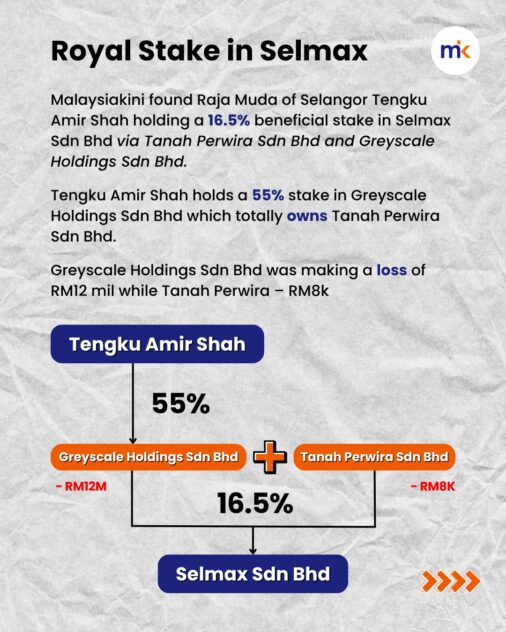
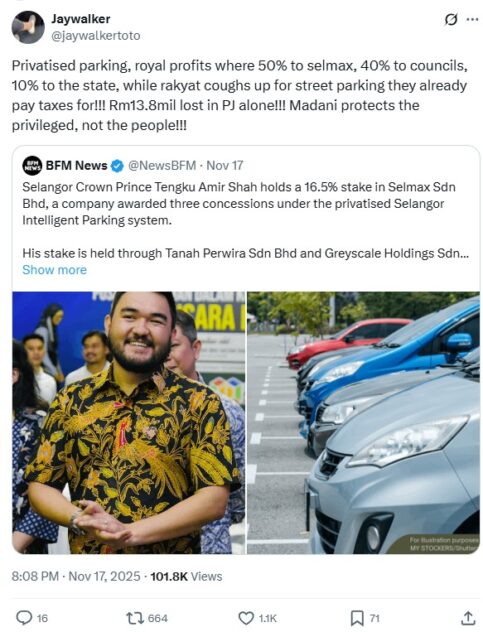
THE Centre to Combat Corruption & Cronyism (C4 Centre) has expressed deep concern over controversy surrounding the Selangor Intelligent Parking (SIP) initiative following revelation of Selangor Crown Prince Tengku Amir Shah holding a beneficial 16.5% stake in Selmax Sdn Bhd – the company awarded multiple SIP concessions.
Despite the significant public backlash surrounding the SIP initiative since July 2025, the Selangor state government has yet to provide a coherent and transparent explanation for the shifting concession structure, according to the graft buster NGO.
“This sequence of events raises more questions than answers, particularly regarding the integrity of the procurement process, the management of conflicts of interest and the use of secrecy provisions to suppress essential information,” observed C4 Centre in a media statement.
Chief among them are:
- Why was Selmax (a subsidiary of Bursa Malaysia Main Marke-listed o ITMAX System Bhd) brought into the concession structure despite the initial plan placing operational responsibilities solely on a state-linked company?
- Were beneficial ownership interests – especially those involving members of the royal household – properly declared and evaluated?
- How can the public trust a procurement process where key documents are hidden by the Official Secrets Act 1972 (OSA 1972)?
- How were bidders assessed and were all bidders competing on equal footing given the influence of powerful individuals?
- Why has the state government not publicly justified the significant differences between its July announcements and Selmax’s subsequent Bursa filing?
Obscurity aplenty
In C4 Centre’s contention, revelation of the 35-year-old Raja Muda Tengku Amir Shah who is heir to the Selangor state throne holding a 16.5% beneficial stake in Selmax places the entire SIP concession in ethically sensitive territory while raising fundamental questions about the safeguards protecting Selangor’s procurement system.
“The concern here is not about the individual but about the process – public procurement must be structured in a way that prevents even the perception that influence, access or status could shape commercial outcomes,” stressed the NGO.
“In any public infrastructure concession – especially one involving long-term revenue streams, enforcement powers and widespread public impact – the participation of politically influential or constitutionally recognised figures requires stricter safeguards, not looser ones.”
In the case of SIP, these protections appear to have failed on several levels, according to C4 Centre.

Topping the list is that the stake held by Tengku Amir Shah was not disclosed by the Selangor state government despite its direct relevance to public trust and the integrity of the tendering process.
“Whether the state was aware of this beneficial ownership and chose not to reveal it – or was unaware due to insufficient verification – both scenarios point to serious governance gaps,” lamented the C4 Centre.
“Moreover, the presence of royalty-linked interests creates an unavoidable perception that the playing field was not level even if the request for proposal (RFP) process was followed and that public institutions may (inevitably) have been placed under undue pressure, whether intentionally or otherwise.”
All in all, C4 Centre pointed out that this is not the first procurement process under the Selangor government that has raised questions.
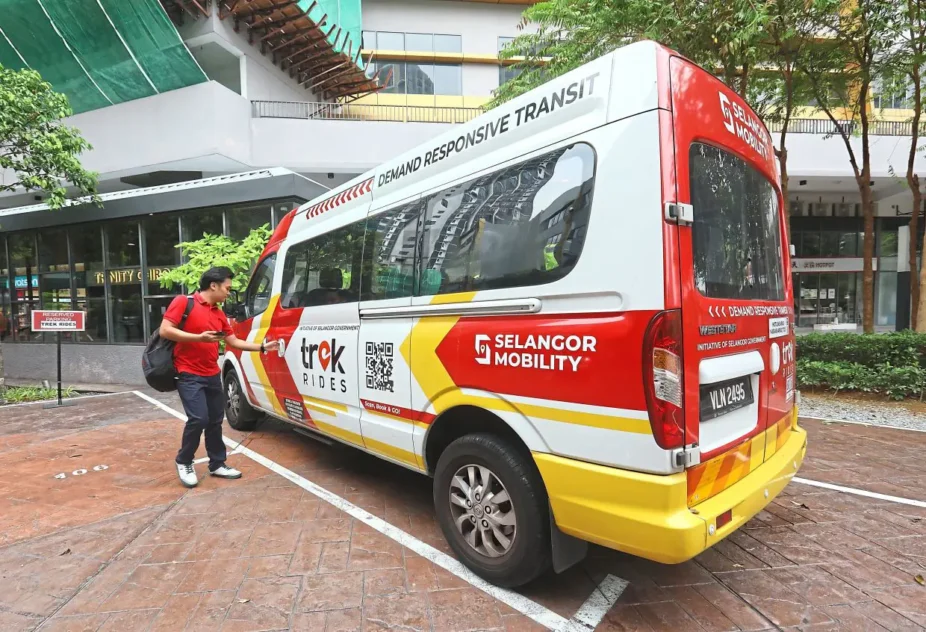
Just last year, public trust was eroded by similarly opaque and questionable processes in the appointment of Asia Mobility Technologies Sdn Bhd (which is linked to Youth and Sports Minister Hannah Yeoh’s husband Ramachandran Muniandy) as a service provider for Selangor Mobility’s Demand Responsive Transit (DRT).
Hence, C4 Center strongly urges the Selangor state government to:
- Revert the SIP initiative concession to the contracting stage and issue new requests for proposals, seeing as the process of appointing Selmax has been insufficiently thorough at mitigating corruption risks and adhering to standards of public disclosure;
- Implement contracting processes that prioritise public disclosure regarding concession details and conflicts of interests, and that also prioritise access to information.
“Furthermore, we strongly urge the Federal government to amend OSA 1972 to remove broad discretionary and non-reviewable powers while aligning it with the proposed Freedom of Information Bill,” added the anti-graft MGO. – Nov 19, 2025