
THE proverb ‘one man’s meat is another man’s poison’ means that what is pleasant, beneficial or enjoyable to one person may be unpleasant, distasteful or harmful to another.
It is often used to emphasise that people have unique preferences and individual viewpoints.
That seems to be the gist of a post on Threads by self-described “lazy programmer” Narpati Wisjnu Ari Pradana (@kunderemp_apathy) when observing how non-Muslims choose between halal and non-halal options.
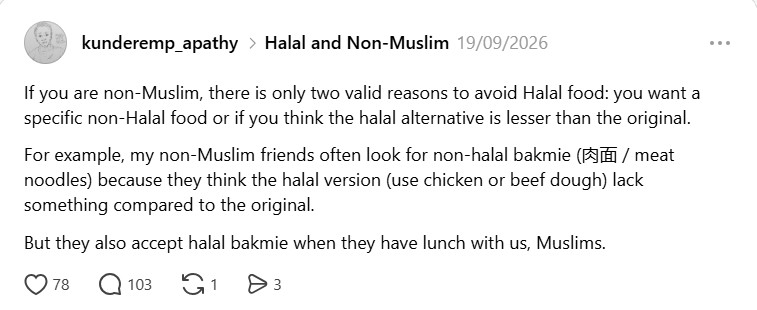
It was noted that non-Muslims only have “two valid reasons to avoid halal food: either you want a specific non-halal food or if you think the halal alternative is lesser than the original”.
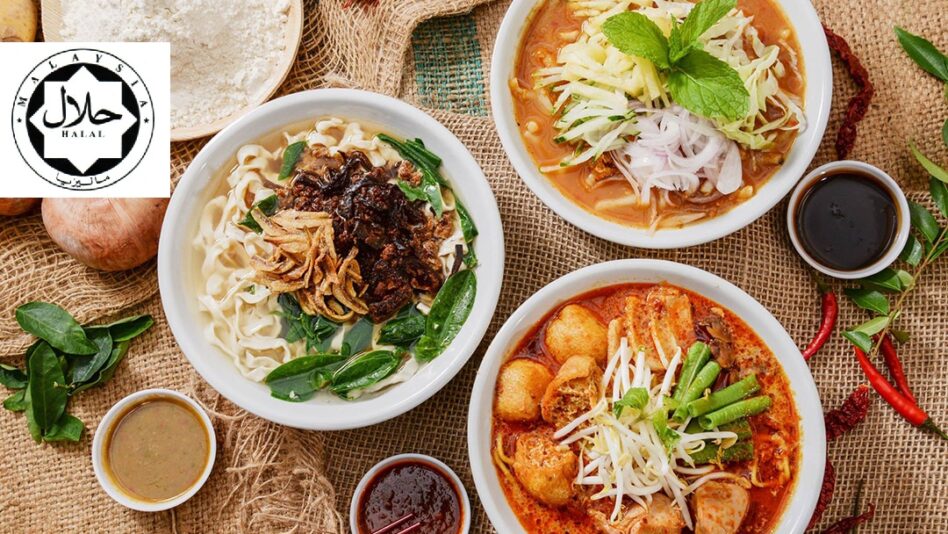
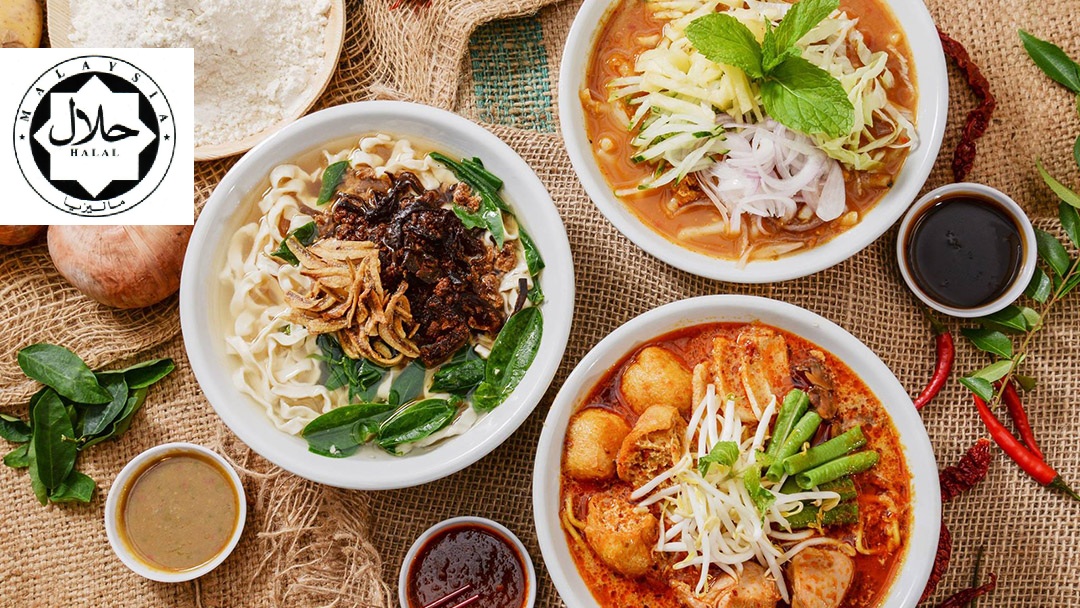
Using non-halal pork noodles a.k.a. bak mie as an example to illustrate the latter point, it was observed that though non-Muslims have no issues eating the halal version when with their Muslim brethren, they will opt for the original version given a choice as it is perceived to be better.
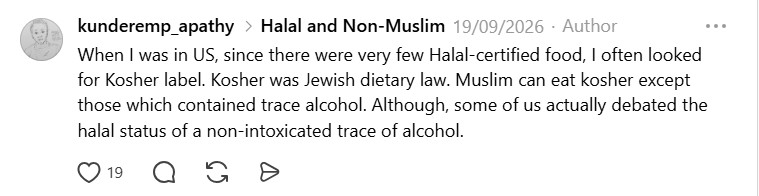
Adding his own experiences while in the US, the poster often looked for kosher alternatives when halal items were not readily available.
To his understanding, these kosher items follow Jewish dietary rules whereby Muslims are permitted to consume except those containing traces of alcohol.
This post on that most essential of Malaysian topics – food – elicited interesting responses with discerning foodies keen to share the reasons behind their dietary choices.
All I want is good food!’
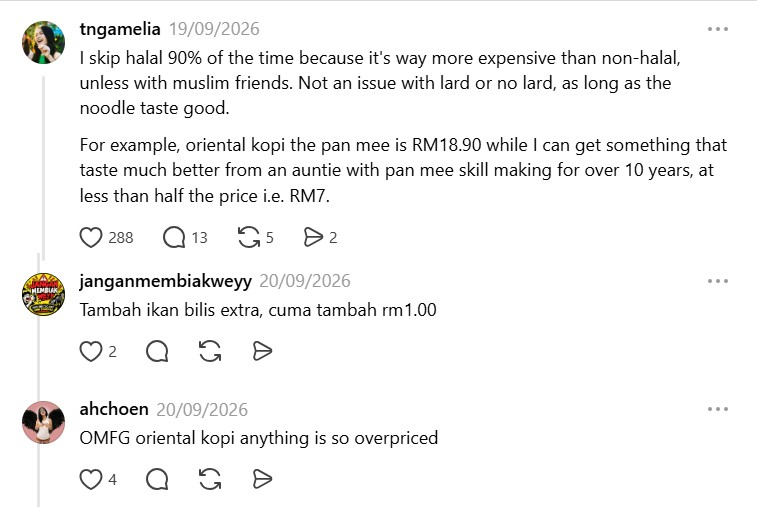
Price was a big factor with more than one Malaysian pointing out the disparity between halal and non-halal versions of the same dish.
One economically-challenged netizen glibly announced his reason as poverty, pure and simple. “Usually halal food is more expensive” he surmised.
It wasn’t an issue of lard or no lard but whether if the food tastes good, surmised another price-sensitive commenter who remarked that halal options almost always carried a premium.
Why pay more when cheaper non-halal options were available and being made by skilled veteran cooks as well?

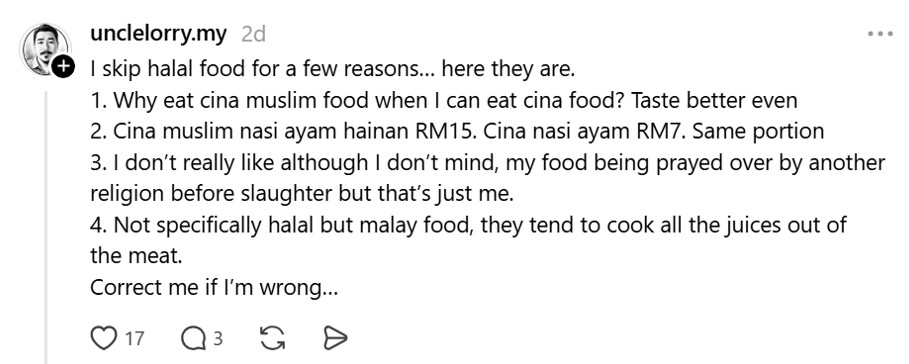
A Chinese commenter outlined his reasons for avoiding halal options with pricing being one of the determining factors.
It was also remarked that he was slightly uncomfortable (though he doesn’t mind) that his food had been “prayed over by another religion before slaughter”.
Citing personal preferences, it was also noted that Malay food tend “to cook all the juices out of the meat” leading this foodie to dine at non-halal Chinese stalls which he opined “tastes even better”.
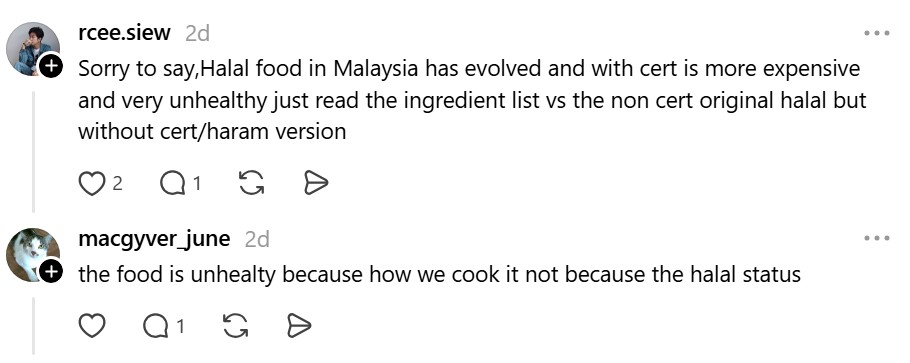
It was also argued that aside from being more costly, halal options were also increasingly unhealthy. However, that contention was corrected by another eagle-eyed commenter who rightly remarked that the halal status referred to the ingredients, not the cooking style.
One netizen though took umbrage at the poster’s attempt at asking Malaysians to validate their dietary choices. “Why? It doesn’t concern your liberty?” it was quite rightly pointed out.

As far as this food connoisseur was concerned, the question was moot. It had nothing to do with halal status or otherwise.
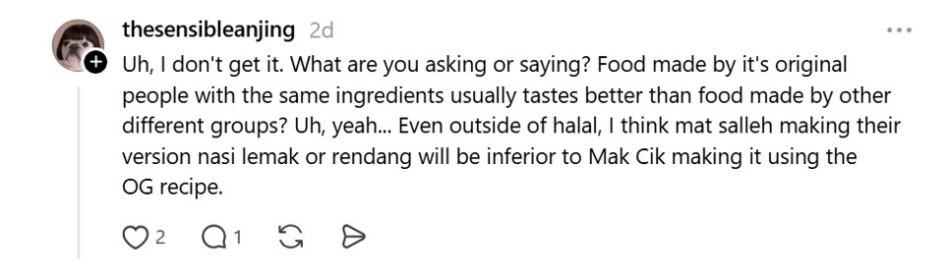
Food usually tastes better when prepared by the original group even when using the exact same ingredients. Would a Mat Salleh version of nasi lemak or rendang beat the roadside aunty’s “OG” recipe?
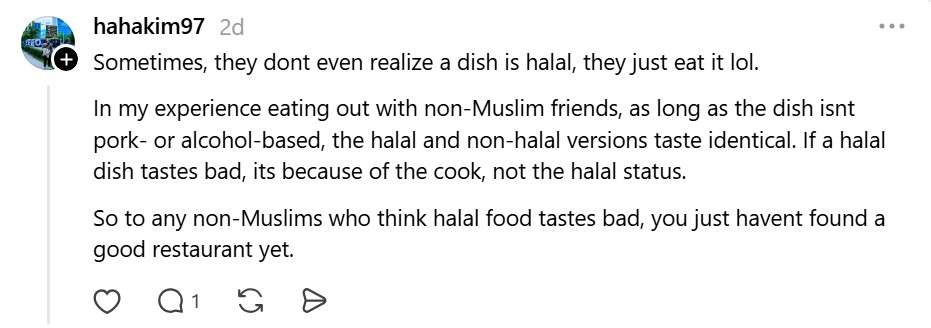
Echoing this sentiment was a Muslim diner who argued that “if a halal dish tastes bad, it’s because of the cook, not because of the halal status”.
Non-Muslim diners who have negative perception about halal food were urged to go in search of good restaurants.
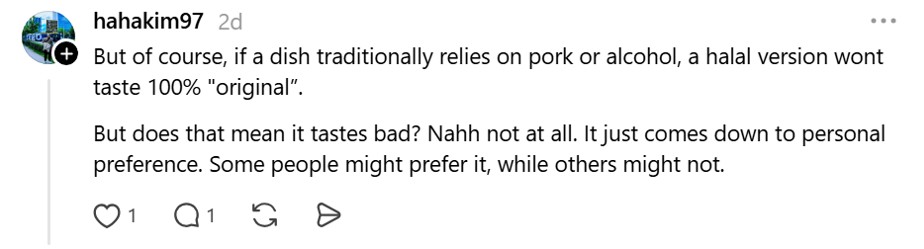
However, there was the added proviso that if the original dish featured non-halal ingredients, then the halal options would then not be the same but that doesn’t mean it tastes bad. It was just a matter of individual preferences.
Amid all the differing perspectives, one hungry non-Muslim Malaysian put it best. It was not about avoiding halal items as “good food is all I want”. – Sept 28, 2026