
MBSB Research has reaffirmed its BUY call on Inari, keeping its target price unchanged at RM2.95.
The research house believes the company’s radio frequency (RF) business is well-positioned to resume earnings growth from 2027, supported by a long-term supply agreement between Inari’s direct customer and the end customer.
The agreement provides greater earnings visibility and reinforces the stability of Inari’s core RF operations over the medium to long term.
Based on the commitment to continue sourcing RF chips under the multi-year contract, the end customer is not expected to alter its existing supply chain in the foreseeable future.
Beyond its traditional RF segment, MBSB Research expects Inari’s optoelectronics business to become an increasingly important growth engine.
In particular, the photonics interconnect segment is poised to benefit from rising demand for AI-driven optical communications.
Over time, the research house believes the optoelectronics division could grow to rival the size and contribution of the group’s RF business.
Inari is also expanding its exposure to artificial intelligence through its power module segment.
However, while this business offers long-term potential, MBSB Research expects any meaningful earnings contribution to materialise only over a longer time horizon rather than in the near term.
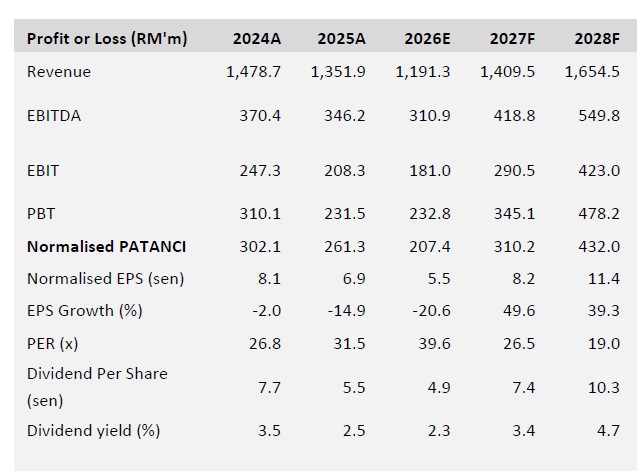
Moreover, new smartphone model rollout would carry higher content value . This will be made available by moving from Single Sided Mold to Double Sided mold.
The evolution will enable more components in small areas and better RF module integration which act as a bridge toward advanced packaging. “Taking these into consideration, we should expect a notable rebound in RF’s loading volume from 2027 onwards,” said MBSB.
The group’s opto business has been showing lackluster performance in light of muted demand. However, there is a strong revival in demand, driven by AI-driven optical communications.
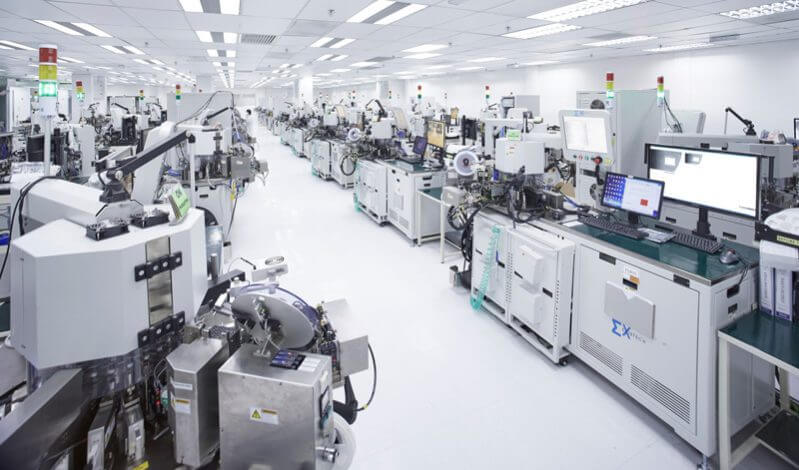
Inari is strategically positioned within the semiconductor supply chain to provide outsourced semiconductor assembly and test (OSAT) services for optical transceiver module chips.
According to management, production volumes are expected to accelerate significantly beginning in 2027.
The group is also advancing its packaging capabilities by transitioning from conventional laser chip and photonics packaging to photonic interconnect technology.
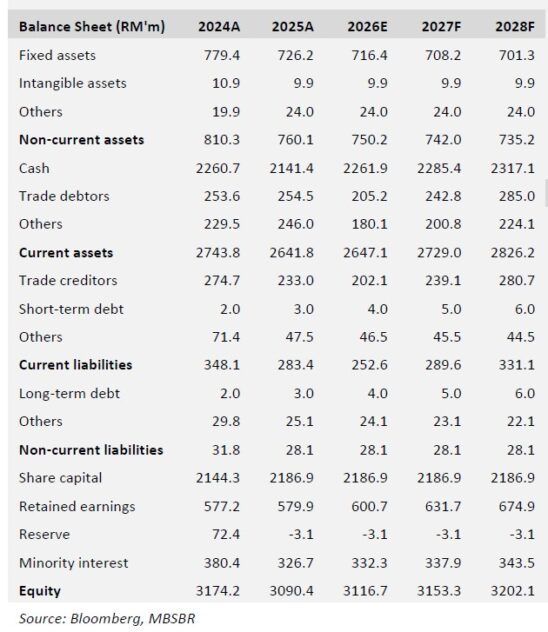
Photonic interconnects use light rather than electrical signals to transfer data between chips, processors and systems, enabling faster data transmission, improved bandwidth, lower power consumption and reduced heat generation.
Separately, Inari has established a presence in the power module segment through its System-on-Module solutions, including DC-DC converters and voltage regulators.
Both products are designed to reduce incoming voltage levels, with the key difference being that voltage regulators provide a stable output while DC-DC converters can deliver adjustable voltage depending on application requirements.
In the immediate term, the group is focusing on the power regulation to support AI applications which have been showing good momentum, with the pilot line commencing in August 2026. MBSB views that meaningful contribution can only been seen from 2028 onwards.—July 20, 2026
Main image: inari amerton