

ACCORDING to Hong Leong Investment Bank (HLIB), there are plenty of news about JSSEZ in Johor as well as developments near to RTS Bukit Chagar in JB that it seems all the hype about JSSEZ is centred in Johor.
But what about the other end of the causeway in Singapore?
During the annual National Day Rally speech on Sunday (17 Aug), we get a glimpse of what Singapore is doing on its side as Singapore PM Lawrence Wong unveiled long-term development plans for the northern region of Singapore (Woodlands, Kranji and Sembawang) over the next 10-15 years.
To support the JS-SEZ, the Woodlands checkpoint of the Johor–Singapore Causeway will be redeveloped in phases over the next decade, expanding to five times its current size.
Redevelopment works are slated to begin in 2025, with the revamped checkpoint designed to cut average clearance time from one hour to just 15 minutes during peak periods.
“This transformation aims to deliver shorter waiting times, smoother traffic flow and more efficient yet secure clearance procedures,” said HLIB.
On top of transport efficiency, the RTS station in Woodlands will connect directly to Woodlands North MRT station on the Thomson–East Coast Line, enabling seamless transfers between the RTS and Singapore’s MRT network.
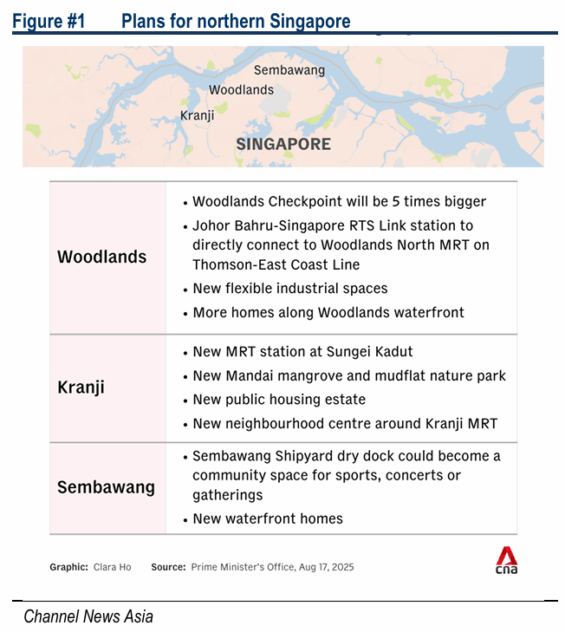
Around the RTS Link station, Singapore will introduce new “flexible” industrial spaces targeted at businesses seeking to tap into the SEZ.
Complementing this are new public housing projects, including 4,000 flats near Admiralty Park and additional residential developments along the Woodlands waterfront.
Beyond Woodlands, Singapore also has plans to rejuvenate adjacent areas such as Kranji and Sembawang. Together, the three districts will anchor a vibrant new northern waterfront destination, reshaping the economic and social profile of Singapore’s northern gateway.
These large-scale plans underscore that the JS-SEZ is not a one-sided initiative. Singapore is also investing heavily in its northern frontier to create a stronger, better-integrated cross-border ecosystem. For Johor, this carries several implications:
Residential upside
With faster checkpoint clearance and direct RTS–MRT integration, daily commuting for workers who work in Singapore and stay in Johor becomes more practical.
This strengthens Johor’s appeal as a lower-cost housing base and should, in turn, drive property value uplift around RTS Bukit Chagar and nearby areas.
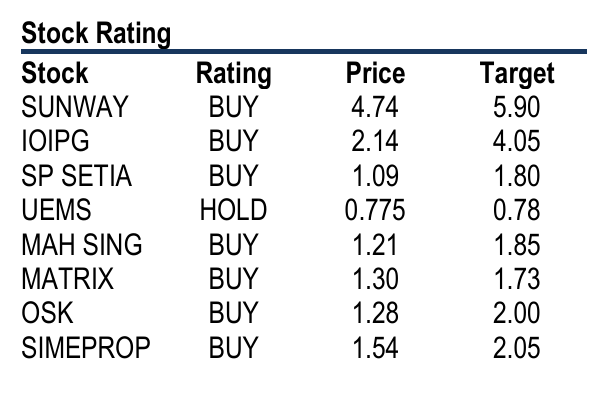
Listed developers with exposure near the RTS Bukit Chagar station include Sunway (RTS TOD project and Sunway Majestic), Mah Sing (M Grand Minori), UOA Development and Crescendo (Senyum Residence).
Industrial spillover
The development of “flexible” industrial spaces near RTS Woodlands should enhance the feasibility and convenience of businesses to set up complementary industries in Johor, capitalising on its lower cost advantage, particularly logistics, warehousing, and manufacturing functions that require scale.
Developers with significant Johor industrial exposure include IOIPG (1.1k acres land in Kulai), SP Setia (307 acres in Tanjung Kupang) and UEMS (1.1k acres under its revised masterplan pending approval).
Uplift in retail and tourism demand
As northern Singapore urbanises into a lifestyle and waterfront hub, Johor stands to benefit from spillover in retail, hospitality, and tourism demand, where Johor can provide more affordable and larger-format offerings.
Key beneficiaries include Sunway (RTS TOD project with mall and hotel components, retail mall component in Sunway Majestic and the upcoming redevelopment of Sunway Big Box Mall), IGB Reit (Southkey Mall), Paradigm REIT (Paradigm Mall JB).
In short, northern Singapore’s redevelopment raises the overall profile of the JS-SEZ corridor. Given Singapore’s inherent land and cost constraints, Johor is positioned as the natural “overflow valve” absorbing demand for housing, larger-scale commercial space, and cost-sensitive industries, thereby reinforcing the integrated growth story of the JS-SEZ.
“We maintain our OVERWEIGHT rating on the property sector,” said HLIB. —Aug 19, 2025
Main image: Gloria Jeans Coffee