
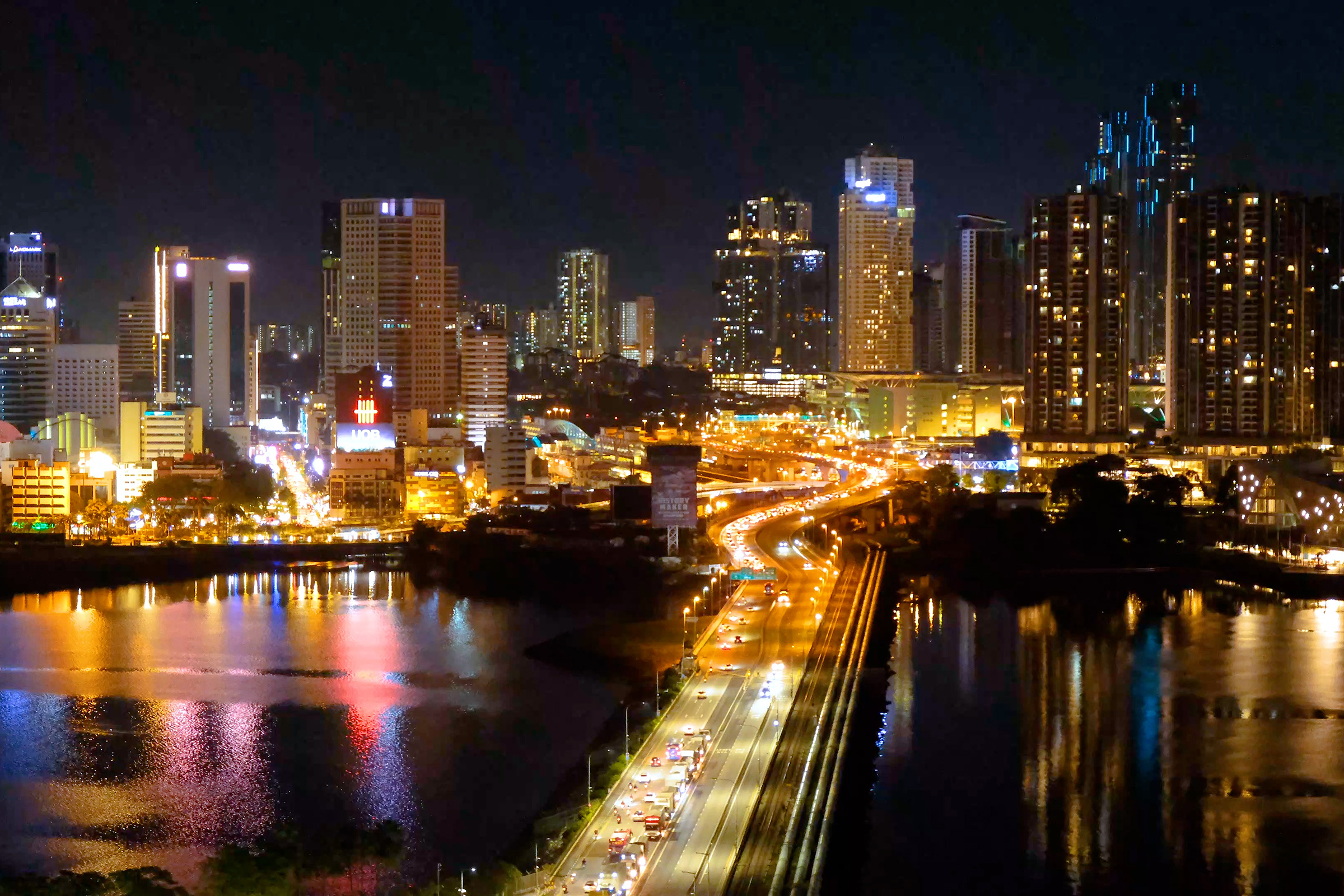
THE Draft Johor Bahru Local Plan 2035 (RTJB 2035) was recently released by the Southern Zone Project Office in collaboration with the Johor Bahru City Council and the Department of Town and Country Planning Johor.
Notably, RTJB 2035 provides fresh insights into the proposed Elevated Autonomous Rapid Transit (E-ART) system for JB.
“The E-ART is envisioned as an automated rapid-transit network utilising driverless, rubber-wheeled vehicles running on dedicated elevated guideways, which can handle between 5,000–12,000 passengers per hour per direction,” said Hong Leong Investment Bank (HLIB).
Under the RTJB 2035 framework, four primary E-ART corridors are proposed, covering JB’s major growth axes: Skudai, Tebrau, Iskandar Puteri, and Pasir Gudang.
The Bukit Chagar (JB Sentral) station in the city centre will function as the main interchange hub, seamlessly integrating the E-ART network with the RTS Link and Johor Bahru’s broader transit ecosystem.
The RTJB 2035 does not specify a precise implementation timeline for the E-ART project. We note that a Request for Proposal was reportedly issued in March 2025, and route alignments were being finalised by August 2025. The state targets to award the project concession by the end of 2025.
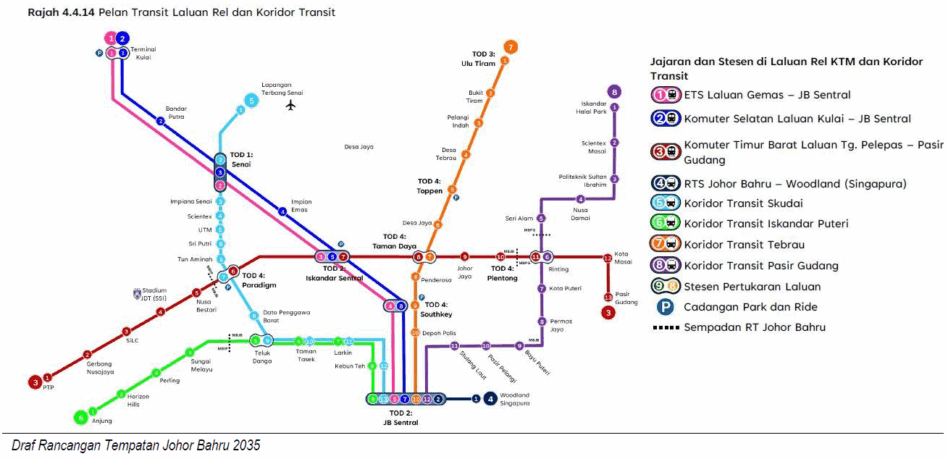
“It is our view that construction will likely be rolled out in phases, with individual segments gradually becoming operational and ultimately culminating in full system integration,” said HLIB.
Based on HLIB’s estimate, if construction commences in 2026: A first, limited operational segment could be launched in 2029-2030, assuming a 3-4 year construction period.
A multi-line phase, covering core corridors, may be completed by 2031-2032. Full integration, including an entire ecosystem of interchanges, park-and-rides and supporting infrastructure, is likely achievable by 2035.
The E-ART system is a crucial component of JB’s integrated transport network, serving as the dispersal network for commuters arriving via the RTS, which is expected to begin operations by early-2027.
The E-ART is expected to deliver a broad uplift in land and real estate values across Johor, especially for areas surrounding the proposed stations.
Lands located near E-ART stations are anticipated to enjoy higher permissible densities and plot ratios.
The designated TOD zones as identified in the RTJB 2035 which act as key interchanges, are expected to see the strongest value appreciation, supported by concentrated infrastructure and commercial developments.
With the completion of both the RTS and E-ART, Singaporean visitors and investors will gain easier access to new inland areas, enhancing the appeal of residential, retail, and tourism destinations that were previously less connected.
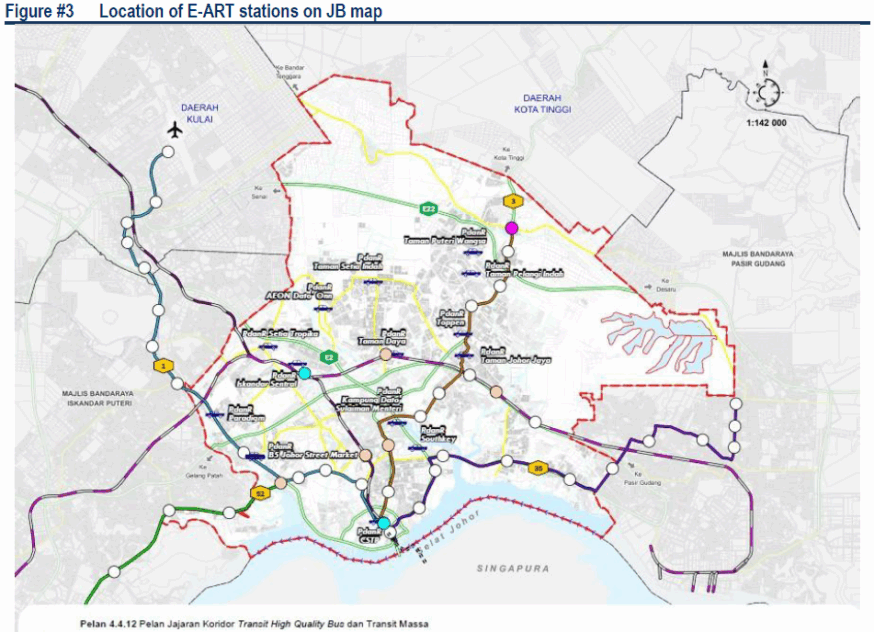
For industrial and logistics assets, improved linkages between RTS Bukit Chagar, Senai Airport, and Port of Tanjung Pelepas (PTP) will strengthen cross-border mobility and reinforce Johor’s role as a southern manufacturing and logistics hub.
The Draft RTJB 2035 outlines a clear vision to guide JB’s evolution into an international, sustainable, and well-connected city.
Central to this transformation is the E-ART network, which together with the RTS Link will reshape mobility patterns, support higher-density development, and unlock new economic clusters.
By improving connectivity across residential, commercial, and industrial zones, the E-ART is set to drive broad-based real estate appreciation and attract greater private investment.
Developers with strategic exposure near E-ART stations, particularly within designated TOD zones, stand to benefit the most as Johor strengthens its position as a southern growth and cross-border economic hub.
“We maintain our Overweight rating on the property sector,” said HLIB. —Oct 27, 2025
Main image: Cathay