
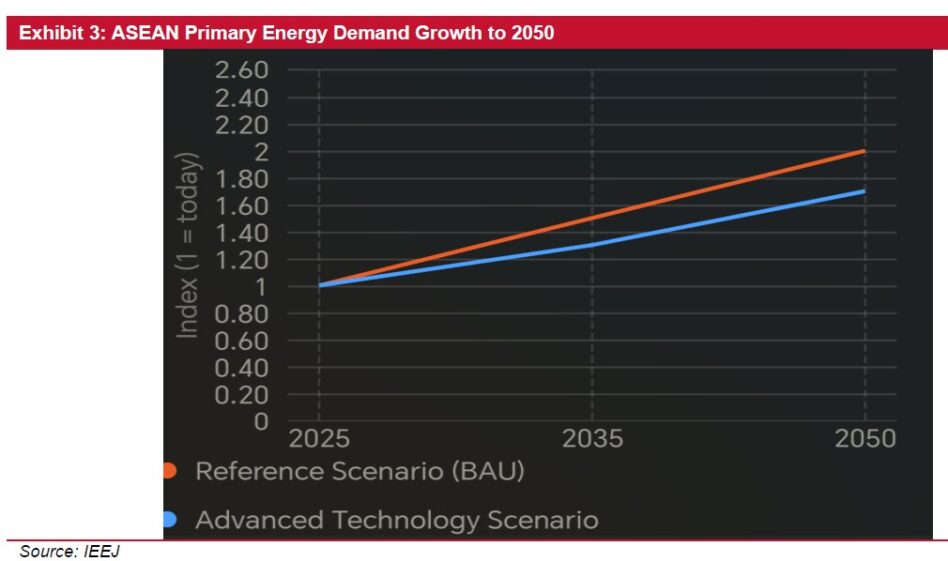
ENERGY security will remain as a persisting secular theme for the whole energy sector in the foreseeable future amid increasing volatilities and uncertainty in geopolitics.
Hence, multiple subsegments within the energy sector will benefit albeit to different extents and in different timelines.
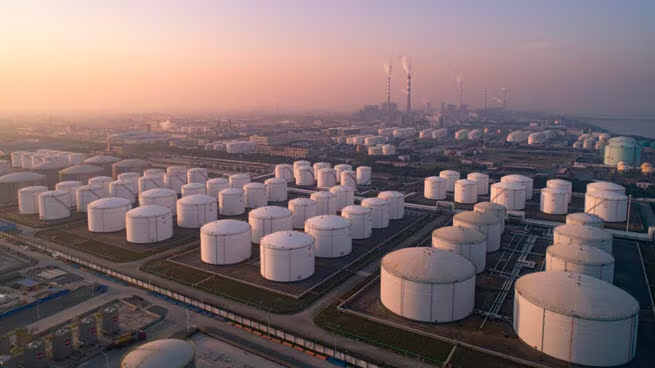
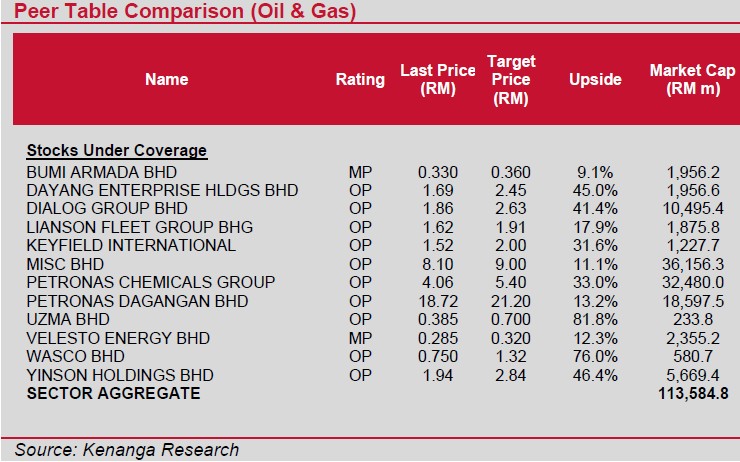
“Within the oil and gas space, we believe that the most attractive play will be in upstream services as oil prices while staying elevated, will not likely break to a new all-time high in the near to medium term,” said Kenanga.
Upstream services companies will act as proxies in the medium to long term for the energy security theme as Petronas and other oil and gas producers are expected to increase their capex budget in 2027 and 2028 to boost production in order to buffer for supply resilience.
Within the utilities space, Kenanga breaks it down into several subcategories namely power generation & transmission, renewables and mechanical, electrical and plumbing (MEP) respectively.
While overall, the energy security theme will benefit all subcategories, they believe that these categories will benefit from it to different extents due to the business nature as well as the progress of the cycle in energy spending.
Massive increase in demand for power has benefited power generators like TENAGA and MALAKOFF with their share prices already going up by 30-50% since 2022.
Currently, the next major capex cycle in the energy industry is in transmission & distribution now which involves mainly TENAGA through RP4 as the grid needs significant investment to keep up with upcoming power generation capacities in order to handle upcoming data centre buildouts in the nation.
“We believe that there is still a leg in the cycle as power demand still outstrips supply in the coming years,” said Kenanga.
As for the solar sector, while demand is still expected to be structurally strong due to it being the most scalable renewable energy source, solar panel prices are still elevated but PPA tariff rates remain depressed, hence EPCC margins could be under pressure if PPA tariff rates do not improve in the near to medium term for new LSS6 bids.
“We continue to prefer the MEP subsector as the demand for contractors still significantly exceed the supply of contractors with capability in building out the power transmission system in Malaysia in conjunction with TENAGA’s RP4 capex,” said Kenanga.
While cost of material remains a near-term concern for earnings , for upcoming jobs we think that the contractors could secured better pricing from TENAGA and the MEP subsector remains as the sector with highest earnings leverage to TENAGA capex upcycle in the foreseeable future.
KEEMING is well positioned to capture this upcycle, benefiting from direct solar sector exposure via its SLVEST associate relationship (24% stake) while actively pursuing TENAGA-related opportunities through JVs with existing panel contractors, having submitted five HV tenders averaging RM40 mil-50 mil each.
Nuclear energy remains at a nascent stage of development in Malaysia. However, should the technology achieve commercial viability over the coming years, TENAGA would be well positioned to participate, potentially through generation asset ownership and associated transmission and distribution connectivity.
This would be supported by its scale, system relevance, and established execution track record in the domestic power sector.
That said, project economics remains uncertain at this stage, and greater visibility on regulatory framework, funding structure, and tariff mechanism would be required before assessing whether nuclear development could be NPV-accretive for TENAGA. —June 24, 2026
Main image: PwC Hong Kong