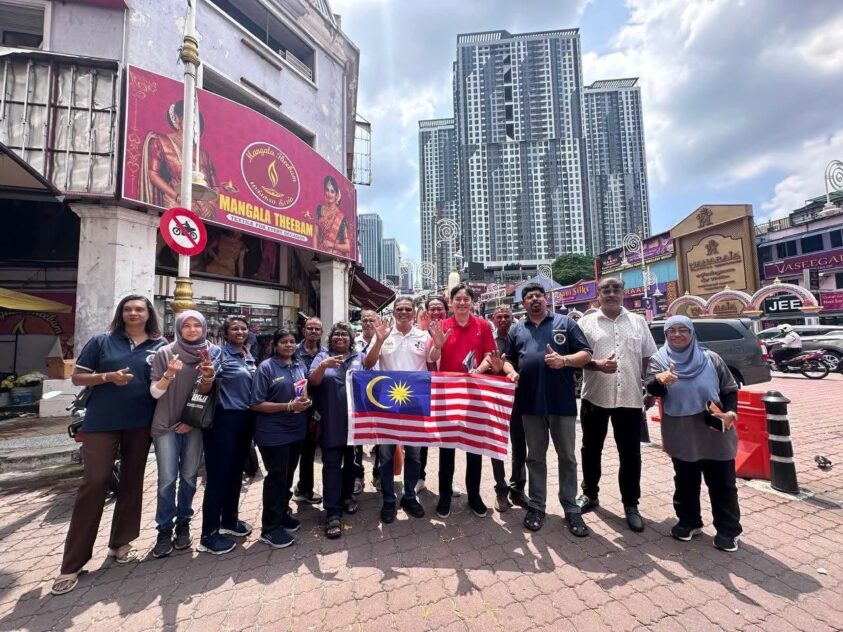

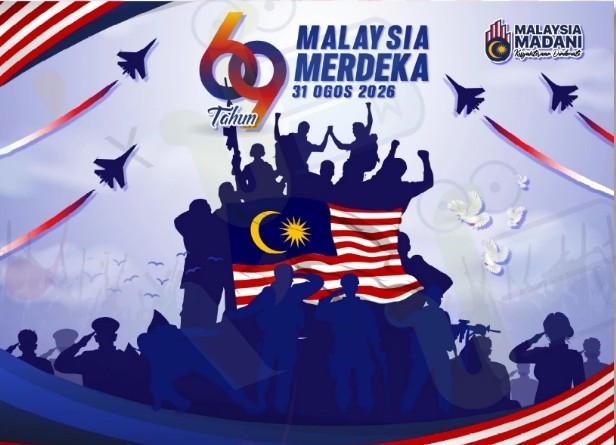
MALAYA (a reference to Peninsular Malaysia) turns 69 tomorrow (Aug 31) with the anniversary feel like a sombre reckoning rather than a celebration.
Malaysia marks two independence dates: (i) 1957 when Malaya left British colonial rule; and (ii) 1963 when the Malaysia federation was established.
Once prided itself on managing ethnic and religious diversity through delicate compromise, Malaysia is now more fractured than at any point since 1957.
Beneath the surface lies a deepening polarisation driven by the resurgence of political Islam and the consolidation of Malay-centric power blocs.
Opportunistic alliances have hardened into a potent force ahead of the next general election due by 2027 but likely to be held much earlier.
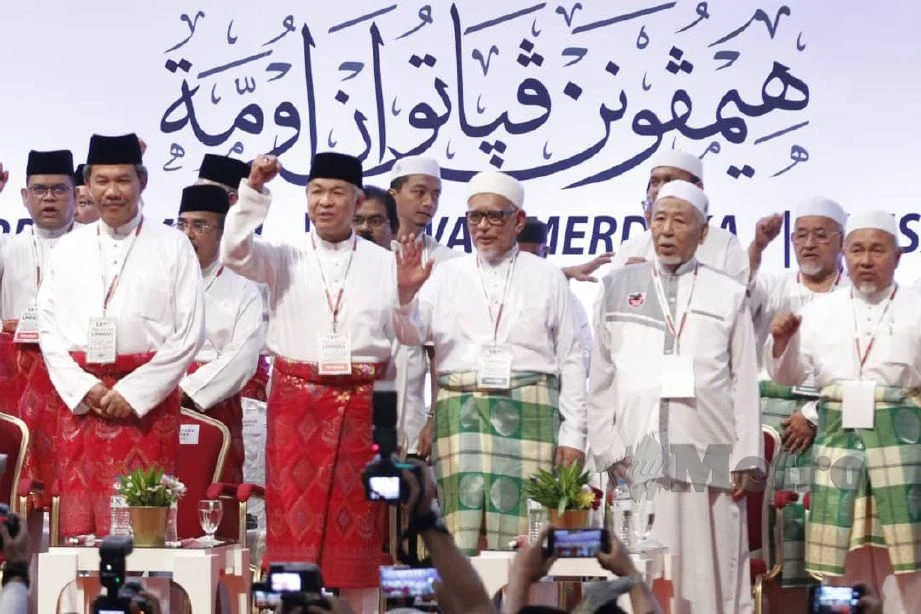
The engine of this political shift is the formal alliance between UMNO and PAS. Once bitter rivals for the Malay vote, these two parties have found common cause. This has left Prime Minister Datuk Seri Anwar Ibrahim and his Pakatan Harapan (PH) ruling coalition on the back foot.

As UMNO grows more confident through successive state wins, the incentive to remain a junior partner diminishes.
The nation’s oldest political party wants to be back in the Prime Minister’s Office in a UMNO/PAS- led coalition government after the 16th geberal election (GE16).
This “Malay Tsunami” which has shown its electoral power in Johor and Negri Sembilan (N9) will likely to be repeated in Melaka.
PH backpedalling
In Johor’s July state election, PAS directed its supporters to back candidates from Barisan Nasional (BN) – a coalition of which UMNO serves as the backbone – in seats it chose not to contest.
The result was a decisive victory which enables BN to expand its control to 48 of 56 seats. That momentum was carried into N9 on Aug 1 whereby the UMNO-PAS electoral pact reduced PH to opposition status as the ruling coalition lost every Malay representative in the process.
UMNO-PAS have already signalled that this “Malay Tsunami” will next roll into Melaka which will likely hold the state election by November.
What looks like a pragmatic electoral pact is – in reality – the early architecture of a broader Malay unity project designed to dominate rural heartlands where the combined UMNO and PAS vote remain virtually unbeatable.
Electoral data from the 2022 national polls suggests the combined UMNO-PAS vote will win up to 105 constituencies in Malaysia’s 222-seat parliament, close to the 112 seats needed to form a federal government.
As it is, Anwar’s unity government has always rested on a fragile balance: complete non-Malay urban support for PH combined with UMNO’s Malay votes.
Rural Malay seats form the numerical backbone of any parliamentary majority. 118 of Peninsular Malaysia’s 165 Dewan Rakyat seats are Malay-majority (Malay voters over 50%).
If the UMNO-PAS combination can hold until the next general election, Anwar’s PH-led ruling coalition will be swept aside.
Malaysia’s Chinese and Indian communities are watching these developments with mounting anxiety.
Many fear that a prospective government dominated by UMNO-PAS would leave little institutional space for minority voices, thus reducing them to perpetual spectators in a system that will double down on Malay–Muslim primacy above all else.
‘Most fractured Malaysia’
The ethnic tensions have been amplified by a cohort of vocal Muslim converts who have used social media to inflame communal sensitivities.
Figures such as Firdaus Wong Wai Hung, Ridhuan Tee Abdullah and Zamri Vinoth Kalimuthu have repeatedly centred their activism on the issue of “kuil haram” and how the non-Muslims are challenging the hegemony of Islam.

“Kuil Haram” are Hindu temples allegedly built without proper land titles. Framing these structures as illegal and religiously offensive turns colonial-era land disputes into symbols of Hindu encroachment.
Their videos and posts often cross into hate speech. The effect is corrosive: ordinary Malaysians who once coexisted with relative ease now find themselves viewing Hindus through a lens of suspicion.
Anwar’s handling of these provocations has only worsened the perception of double standards. When non-Muslims face accusations of religious insult, enforcement can be swift.
Yet complaints against these preachers for allegedly demeaning other faiths have frequently stalled, eventually classified as requiring no further action or disappeared into prolonged investigations.
The message received by minority communities is clear: hate speech towards non-Islamic religions enjoys greater protection than others.
This selective application of the law does more than undermine public trust; it emboldens further polarisation and hands political actors a ready-made narrative of grievance.
The consequences extend beyond the peninsula. Sabahans and Sarawakians have long viewed the toxic race-and-religion politics of Malaya with detachment, if not outright disdain.
While not free of ethnic tensions, the Borneo states operate under different historical bargains known as MA63 (Malaysia Agreement 1963) and demographic realities. It is widely acknowledged that ethnic and religious tensions are far lower than the peninsula.

As the volume of communal rhetoric rises in the west, East Malaysia grows more protective of its autonomy and more sceptical of federal arrangements that appear to prioritise peninsular Malay interests.
The risk is a gradual emotional and institutional distancing – a divide already separated by the South China Sea.
There is no exit from this dangerous trajectory while the government declines to confront the sources of divisions with consistent resolve. Malay political leaders calculate that short-term electoral gains from Malay consolidation outweigh the long-term costs of national cohesion.
Social media algorithms reward outrage. Enforcement agencies hesitate when powerful religious narratives are involved.
Ordinary citizens – exhausted by decades of identity politics – are increasingly retreating into ethnic silos.
Malaya at 69 has the institutions, the resources and the demographic complexity to choose a different path.
Without decisive action against hate speech, without equal application of the law and without a genuine commitment to inclusive governance that goes beyond electoral arithmetic, the country risks commemorating future anniversaries in an atmosphere of permanent, self-inflicted fracture. – Aug 30, 2026
James Chin is professor of Asian Studies at the University of Tasmania and an adjunct professor at the Monash University. This view was originally published as “Malaysia’s Malay Unity Muddle”.
The views expressed are solely of the author and do not necessarily reflect those of Focus Malaysia.
Main image credit: Shopee Malaysia’s 69th Merdeka Day backdrop