


MALAYSIA’S economic growth has long been supported by export-oriented manufacturing, construction and plantation agriculture.
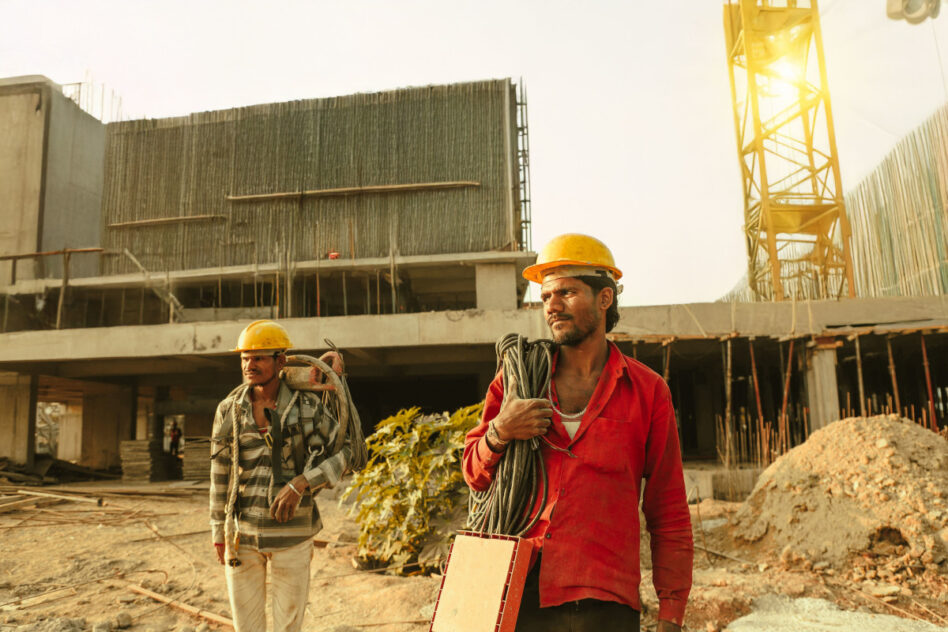
Behind these industries is another key driver: a large migrant workforce that has helped businesses remain competitive by keeping labour costs low.
However, this dependence has also created long-term challenges, including stagnant wages for many Malaysians, slower adoption of automation, a growing informal labour market and billions of ringgit in annual remittances flowing overseas.
The COVID-19 pandemic exposed these vulnerabilities. Border closures disrupted labour supply, leaving factories short of workers, delaying construction projects and affecting plantation output.
The question is no longer whether Malaysia should reduce its reliance on low-cost foreign labour, but how.
A sudden crackdown through mass deportations or an abrupt freeze on foreign worker recruitment would severely disrupt key industries. Equally, maintaining the status quo is not sustainable.
What Malaysia needs is a carefully managed transition over the next decade that raises productivity while protecting economic growth.
The first step is reforming the foreign worker recruitment system.
The current work permit framework has encouraged businesses to depend on low-cost labour rather than invest in automation.

A single, transparent digital work permit linked directly to an employer’s audited business licence would reduce reliance on intermediaries, improve accountability and strengthen worker protection.
At the same time, foreign worker levies should be increased gradually over several years, with the additional revenue channelled into automation grants for small and medium-sized enterprises (SMEs) and wage support for Malaysians employed in so-called 3D (dirty, dangerous and difficult) jobs.
The objective should not be to penalise businesses, but to create stronger incentives for investment in productivity-enhancing technologies.
Malaysia must also address the issue of undocumented migrant workers.
A carefully managed regularisation programme would bring more workers into the formal economy, allowing labour laws, minimum wage regulations and workplace protections to be enforced more effectively while reducing exploitation.
Businesses also need to rethink long-standing operating models.
Many labour-intensive industries continue to rely on manual processes despite technological alternatives.
Construction companies, for example, can reduce labour requirements through greater use of prefabrication and modular building systems.
In agriculture, mechanisation has already demonstrated its ability to improve productivity in many operations.
Where automation is not practical, employers should improve wages, working conditions and career prospects to make these jobs more attractive to Malaysians.
The common argument that Malaysians are unwilling to work in factories or plantations deserves closer examination. In many cases, concerns over low wages, unpredictable working hours and poor working conditions are equally important factors.
Improving workplace standards would not only attract more local workers but also help businesses retain experienced employees.
The transition will not be without cost. Some products and services may become more expensive as businesses adjust to higher labour costs and greater investment in automation.
However, these adjustments should be viewed as investments in a more productive and resilient economy rather than short-term economic setbacks.
The government has already introduced measures such as the Progressive Wage Policy and higher foreign worker levies.
These are positive first steps, but they should form part of a broader National Labour Transition Strategy with clear targets to reduce dependence on migrant labour while raising productivity and wages for Malaysian workers.
This is not about blaming migrant workers. They have made significant contributions to Malaysia’s development and deserve fair treatment and decent working conditions.
Rather, it is about building an economy that depends less on low-cost labour and more on innovation, productivity and higher-skilled employment.
If Malaysia is serious about becoming a high-income nation, reducing its dependence on cheap foreign labour must become a long-term national priority. ‒ July 9, 2026
The author is affiliated with the Tan Sri Omar Centre for STI Policy Studies at UCSI University and is an Adjunct Professor at the Ungku Aziz Centre for Development Studies, Universiti Malaya.
The views expressed are solely of the author and do not necessarily reflect those of Focus Malaysia.
Main image: HR Asia