

MALAYSIANS wake up to a history morning, one that stretches back 69 years ago when Tunku Abdul Rahman declared the independence of Malaya.
But look out of the window and into the milky Kuala Lumpur skyline and we can groan and wonder whether Malaysia will ever Merdeka from the haze originating from Indonesia.
And what are the authorities in Indonesia doing about it? Just recently, there was news that the Indonesians are researching for new ways to fight the raging flames.
Among them was the use of cassava flour to smother the flames, aka “Ubi Bombing.”
In other words, planes can be used to drop cassava flour instead of water. How effective is that?
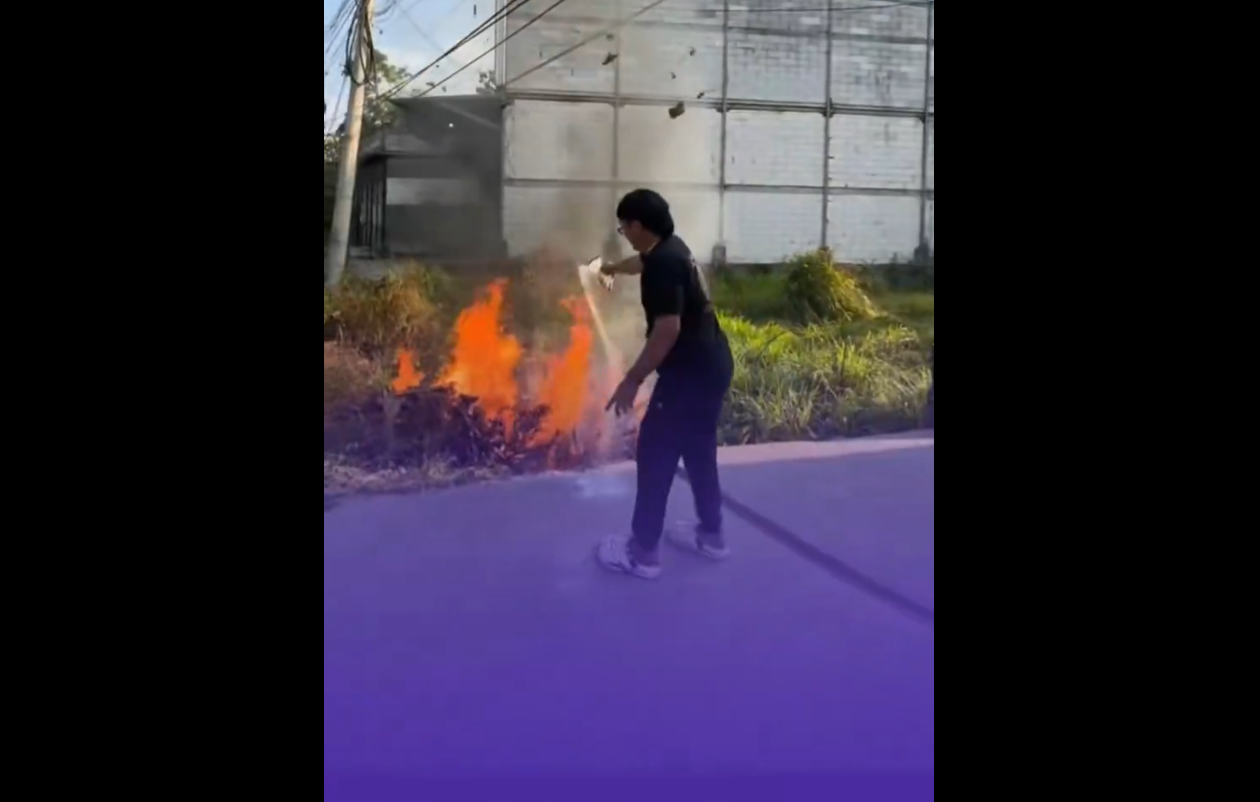
Thankfully, the internet already has a volunteer demonstrating the “power” of cassava flour in combating the fire.
It appears the claim was true if the video post on X is to be trusted.
Tips memadamkan api oleh netizen Indonesia menggunakan tepung ubi. 😲 pic.twitter.com/iqhnGmvYws
— MadaniNomics 🇲🇾 (@MadaniNomics) August 30, 2026
Regardless, our local netizens have much to say about this novel technique.
“If 100 acres of the forest is burning, the flour mill cannot manage the supply,” pointed out @Callmegrey_7799.
“I want to ask. If we scatter it near a burning banana tree, will we get fried bananas?” @Geckoandfly joked.
Then there was @randy_khoo who thought that all carbohydrate based items are bad to put out the fires.
Also, @Yulcandothis claims that this is a conspiracy so that some flour companies could get a new tender for the sake of “putting out the fire.”

The best comment probably came from @StratCommX who believed that prevention is better than cure.

On another note, a good number of websites and blogs on the world wide web warned that flour is not a good substance to combat fire.
In fact, flour is a combustible material, and it rapidly burns, which is another word for explosion.
“Yes, flour is flammable because of the fine particles and starch it contains. Starch makes up most of the flour and is a carbohydrate that burns easily,” said the blog preparedhero.com.
“When flour is ground into a fine powder, its surface area gets bigger. As a result, more starch is exposed to oxygen. This makes it burn faster than larger pieces of flour,” it added.
But thankfully, the Indonesians are not using just flour in their attempt to stop the flames.
BRIN Molecular Chemistry researcher Julinton said that in the technology being developed, cassava starch is not used on its own, but is combined with ammonium polyphosphate (APP), water and a low-concentration wetting agent.
“The President’s statement regarding the use of cassava-based materials to support fire suppression has a strong scientific basis. However, its formulation, effectiveness, safety and environmental impact must still be validated through controlled laboratory and field testing,” he said.
Modified cassava starch functions to improve adhesion and retain liquid on vegetation for longer, while the wetting agent helps the liquid spread and penetrate the vegetation fuel.
Water absorbs heat, while APP provides a retardant effect when exposed to heat. said Julinton.—Aug 31, 2026
Main image: @MadaniNomics