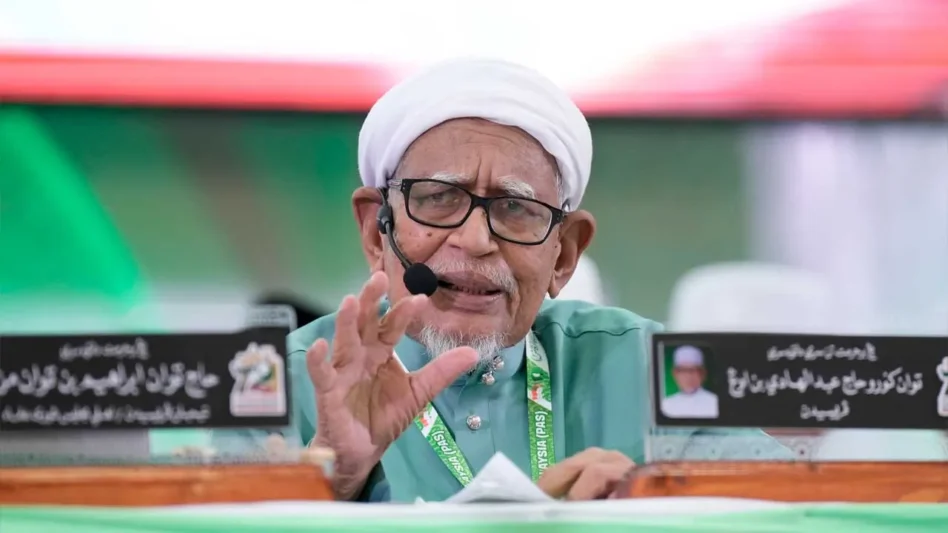

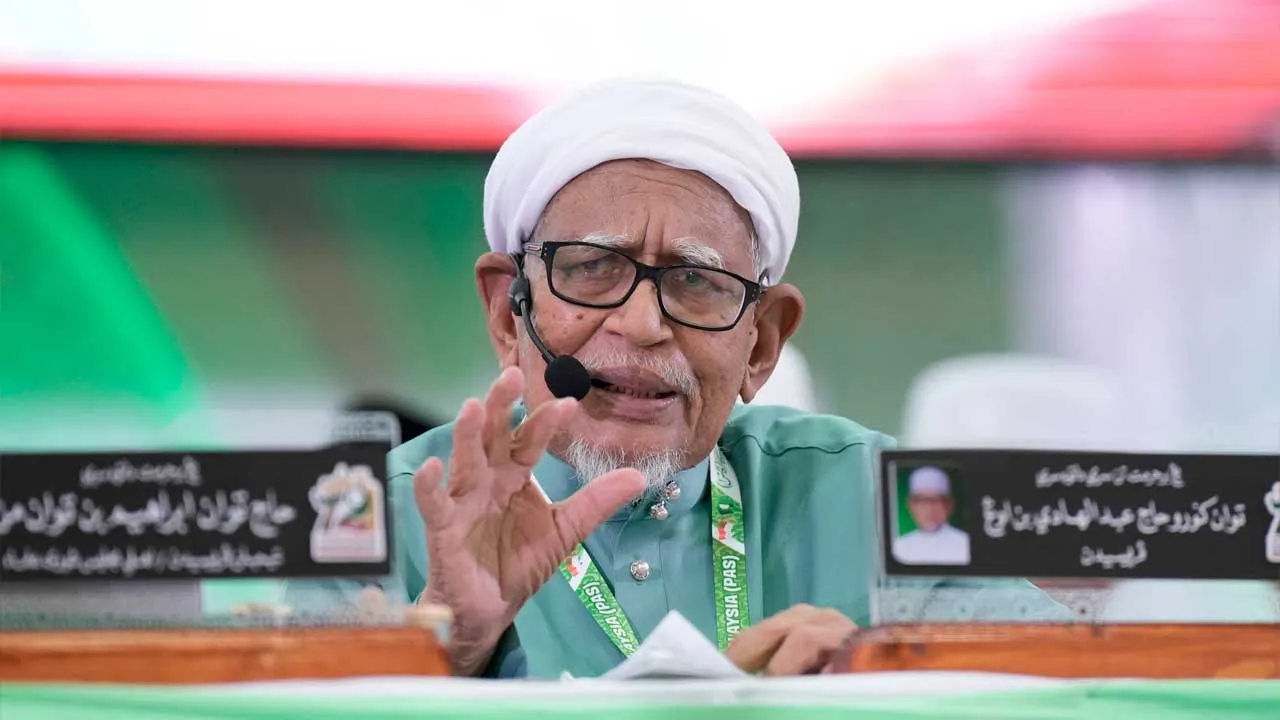
PAS president Tan Sri Abdul Hadi Awang’s recent proposal that non-Muslims may serve as ministers but should be confined to implementing government policies, while Muslims retain responsibility for policy formulation, deserves careful constitutional scrutiny.
Malaysia is a multi-racial and multi-religious nation founded on a constitutional system in which citizenship, democratic representation and the rule of law determine a person’s right to participate in the governance of the country.
Our system of government is built upon parliamentary democracy and a long tradition of power sharing.
Malaysians elect their representatives, Parliament is constituted through that democratic process, and the Federal Cabinet is formed in accordance with the Federal Constitution.
At no point does the Constitution impose a religious test on whether a Malaysian may serve as a Cabinet minister.
This principle is fundamental.
It would be inconsistent with the constitutional framework to suggest that citizens may vote, contest elections, become Members of Parliament and serve the nation, yet be excluded from certain positions of governmental authority because of their faith. There should never be a religious ceiling on a Malaysian’s right to serve the country.
For decades, governments have been formed through coalitions representing Malaysians from different ethnic and religious backgrounds.
Power sharing has been embedded in Malaysia’s political development since independence, reflecting the country’s diversity rather than treating it as an obstacle to governance.
The implications of limiting Cabinet roles according to religion extend beyond a single political proposal.
Such ideas risk creating two categories of citizenship: one whose members are presumed to possess a greater entitlement to govern, and another whose members may vote, pay taxes, contribute to society and serve in Parliament, yet still face limits on how far they may rise in public office.
That proposition should concern every Malaysian.
Once citizenship rights begin to be qualified by religious identity, an important constitutional boundary has been crossed. Today the discussion concerns Cabinet portfolios.
Tomorrow similar arguments could be extended to the civil service or other positions of public responsibility. Malaysia should not move in that direction.
The proper test for public leadership should instead be straightforward. Is the individual competent? Do they uphold the Constitution? Can they discharge their responsibilities fairly and with integrity? These are the standards that should determine leadership. Religion should not become a substitute for them.
There is also a broader national interest at stake.
Malaysia seeks to attract investment, retain talented citizens, reverse brain drain and present itself as a stable, moderate and forward-looking country. What message does it send if citizens are told that, regardless of merit or democratic mandate, their religion determines the limits of their political future?
Such perceptions can weaken confidence in the country’s commitment to fairness, inclusivity and institutional stability.
Political leaders have a responsibility to strengthen national cohesion rather than deepen divisions. Yet too much political energy continues to be consumed by debates over race and religion while pressing issues affecting Malaysians’ daily lives demand greater attention.
Ultimately, leadership in Malaysia should be determined by democratic legitimacy, constitutional principles, competence and integrity.
No Malaysian should face a religious ceiling on serving the nation. ‒ Sept 10, 2026
Darshan Singh is a Focus Malaysia reader.
The views expressed are solely of the author and do not necessarily reflect those of Focus Malaysia.
Main image: Astro Awani