
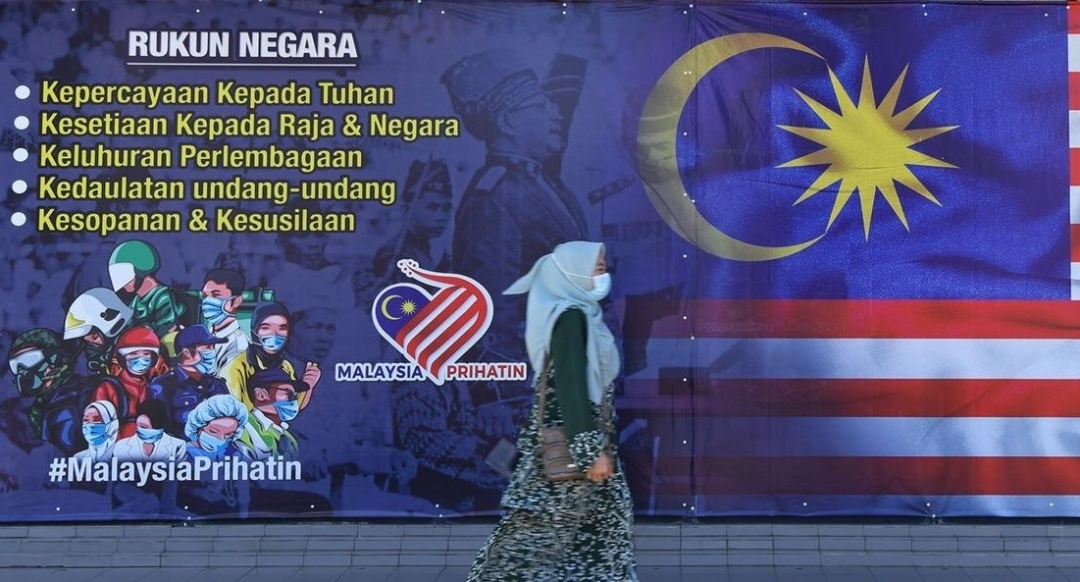
THERE is a lesson from India’s experience that Malaysia would be foolish to ignore: when religion stops being a source of personal meaning and becomes a political weapon for deciding who is “in” and who is “out”, things can become dangerous.
Malaysia is not India. Our histories, Constitution and demographic composition are different.
But the underlying question is similar: in a country where faith plays an important role in public life, how do we ensure that the majority’s religion does not become a tool for sidelining minorities?
Muslims are the majority in Malaysia, and Islam has a special constitutional position. Article 3 establishes Islam as the religion of the Federation while providing that other religions may be practised in peace and harmony. Article 11 also protects freedom of religion, subject to the Constitution’s provisions.
These principles have to work together.
The real trouble starts when “majority” gets confused with “ownership”.
Democracy is not simply about the biggest group getting its way on everything. Majority rule must operate within constitutional limits and alongside protections for citizens who belong to smaller communities.
That does not mean Muslim voices should matter less. They should have a central place in national debate, just as the concerns of Christians, Buddhists, Hindus, Sikhs, Taoists, Baha’is, indigenous communities and those without a religious affiliation should also be heard.
The national agenda cannot become the monopoly of one religious group. It must be shaped by the Constitution, public interest and a genuine sense of the common good.
This is where India’s experience offers a useful warning.
Religious and cultural identities are rarely as simple or isolated as politics sometimes makes them appear. Malaysia itself is living proof of that.
Our cultural landscape has been shaped by indigenous traditions, centuries of interaction with Hindu-Buddhist cultures, the spread of Islam, Chinese and Indian migration, colonial rule and the long process of building a modern nation.
We see that history every day.
Our food, languages, architecture, music, festivals and commercial traditions reflect centuries of communities influencing one another. That is not a dilution of identity. It is part of how Malaysia came to be.
There is a big difference between preserving faith and politicising it.
Muslims should be free to practise their religion deeply and proudly. Non-Muslims should have the same freedom within the law. The problem begins when one group’s religious preferences become a measure of another citizen’s belonging.
A confident majority does not need to fear diversity.
Malaysia’s Islamic tradition contains rich ideas of justice, compassion, human dignity and responsibility. Those values need not conflict with an inclusive Malaysian identity. They can be part of its foundation.
We therefore need to move beyond the idea that unity means uniformity.
Unity is not everyone thinking alike. It is people who disagree on many things agreeing on the basic principles that allow them to live together.
Our Rukun Negara provides that common ground. Its five principles include belief in God, loyalty to King and country, supremacy of the Constitution, rule of law, and courtesy and morality.
It was introduced following the May 13, 1969 events and proclaimed on Aug 31, 1970, with the objective of strengthening national unity.

The Constitution, therefore, has to remain the referee, not religion, ethnicity or whoever happens to be the loudest voice that day.
When a policy affects the whole country, its justification should be grounded in public interest, justice, constitutional principles and social harmony, rather than simply “because the majority supports it”.
We must also distinguish genuine religious guidance from the political manipulation of religion. Faith can enrich public life by encouraging integrity, compassion and responsibility.
It becomes dangerous when politicians exploit religious identity to create fear, win votes or portray minorities as threats.
The real challenge in Malaysia is not diversity itself.
It is our failure to turn that diversity into a shared national strength.
Look around us. Mosques, temples, churches and gurdwaras are not competing claims to the country. They are evidence of the communities that have built their lives here, invested their hopes, made sacrifices and contributed to Malaysia’s story.
A mature Malaysian identity has to be bigger than any single religious identity.
Muslims do not have to become less Muslim. Non-Muslims do not have to become less faithful. What we need is a stronger sense of shared citizenship, rooted in the understanding that every community has a genuine stake in this country.
The majority has the right to be heard.
It does not have the right to make everyone else feel that they belong less.
Malaysia’s future depends on how we understand Islam’s role in this country. Is it a source of justice and social responsibility, or does it become a boundary separating “us” from “them”?
One path strengthens us. The other slowly weakens the unity it claims to protect.
Our shared future should rest not on religious uniformity, but on constitutional principles, mutual respect and the simple recognition that Malaysia belongs to all its citizens. ‒ Aug 19, 2026
KT Maran is a Focus Malaysia viewer.
The views expressed are solely of the author and do not necessarily reflect those of Focus Malaysia.
Main image: Borneo Post Online