
AN MCA leader has called for greater clarity over the investigation into Mandiri Development Centre Sdn Bhd under the Anti-Money Laundering, Anti-Terrorism Financing and Proceeds of Unlawful Activities Act 2001 (AMLA), saying enforcement action must not discourage legitimate civil society activity.
The party’s Civil Society Movement Coordination Bureau chairman Saw Yee Fung said the bureau was not arguing that non-governmental organisations (NGOs) should be exempt from the law, but that the use of AMLA powers should be supported by clear justification and due process.
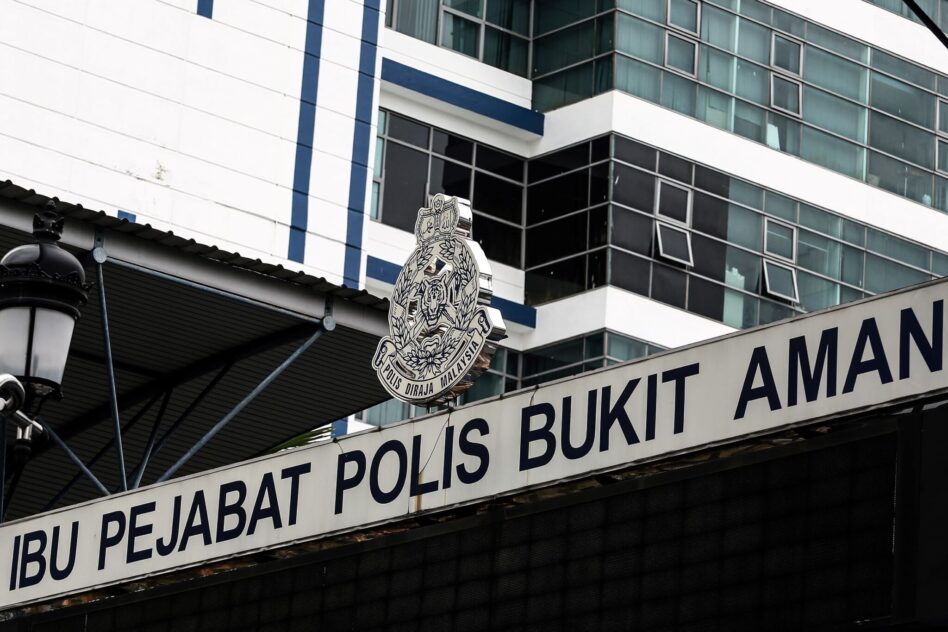
The comments follow the arrest of Mandiri executive director Amir Hariri Abdul Hadi and finance director Dobby Chew on Sept 22. The two were subsequently remanded for three days to assist in a police investigation under AMLA before being released.
Police have said the investigation concerns allegations that Mandiri received funds suspected to be proceeds of unlawful activities between 2024 and 2026.
Five bank accounts linked to parties under investigation have since been frozen, while further individuals are expected to be called for questioning.
The investigation follows allegations raised by then PKR Youth chief Muhammad Kamil Abdul Munim in May that Mandiri had received more than RM1.5 mil from the US-based Tides Foundation.
Kamil called for authorities to investigate the alleged use of the funds in political activities. Mandiri has denied wrongdoing and disputed the allegations.
Saw said the authorities should clarify the specific alleged unlawful activity underlying the AMLA investigation and explain the basis for the enforcement action.
“The MCA Civil Society Movement Coordination Bureau is not saying NGOs are above the law. Where there is credible evidence of wrongdoing, the authorities must investigate,” she said.
“But AMLA is a serious law meant for serious crimes. Using it against civil society leaders demands a clear justification.”
Saw also questioned whether the three-day remand period was necessary and proportionate, and called for clarification over whether a complaint or allegations raised by a political party leader played a role in triggering the investigation.
She said the case also raised broader questions about the relationship between civil society and government.
“NGOs are not political enemies. They are part of the checks and balances that keep any government honest,” she stressed.
“Criticism and scrutiny are not threats to good governance. They are part of it.”
Saw said concerns over foreign funding for political advocacy should instead be addressed through clearer disclosure and regulatory frameworks, including parliamentary debate where appropriate.
“If there is genuine concern over foreign funding in political advocacy, the answer is a clear disclosure framework, debated openly in Parliament. Not money laundering investigations,” she stated.
The comments come amid wider scrutiny of Mandiri’s financial activities. Police previously raided premises shared by Mandiri and another NGO, Hayat, in Petaling Jaya on Sept 18, with financial records, audit documents, tax records, payroll information and digital storage devices handed over to investigators.
Authorities have also frozen personal and organisational accounts and imposed travel restrictions on the two individuals.
Saw said the issue should also be viewed in the context of political change and the treatment of civil society organisations under successive administrations.
“Many of today’s leaders built their names defending civil society against state pressure. That principle must hold for every government, whoever holds power,” she remarked.
“Reform is not measured by what was promised in opposition. It is measured by how power is used once it is held.” ‒ Sept 30, 2026
Main image: Kosmo