
EVERY August and September, Malaysians return to all things quintessentially Malaysian, including our national language, Bahasa Melayu.
We speak of freedom, unity and belonging, raise the Jalur Gemilang, and remember the events that made independence and the formation of Malaysia possible. These commemorations also invite a deeper question: what does it mean for a country to truly know itself?
Independence is not complete simply because a nation governs its own territory. It also requires the confidence and capacity to understand its history, explain its institutions and shape its future. For that reason, Bahasa Melayu remains central to Malaysia’s nation-building story.
Too often, the language is discussed mainly through rules: where it must be used, how it should be taught and whether Malaysians speak it well enough. That can make it sound like an obligation imposed from above.
A national language becomes more meaningful when citizens recognise themselves within it.
Bahasa Melayu provides Malaysians with a shared medium through which formal and everyday conversations can take place across different communities and social settings.
Laws are debated, public concerns are expressed, stories are told and even casual conversations unfold in both its standard and vernacular forms.

Its importance lies not only in its official status, but also in the access it provides. Citizens who understand the language of government, education and public debate are better equipped to participate in national life. Strengthening Bahasa Melayu should therefore widen participation rather than narrow it.
The language itself has a history that stretches far beyond the modern Malaysian state.
Earlier inscriptions, manuscripts, poetry and religious writings reveal a language that repeatedly adapted to new political realities, intellectual traditions and social needs.
That history survives in stone, tree bark and copper, from the Kedukan Bukit inscription and the Tanjung Tanah manuscript to the Laguna Copperplate Inscription.
Even the Old Malay inscription discovered in a cave in Lembah Kinta, Perak, late last year, bearing the words “sahutku-di-bhāṭāra-īśvara-ya(ṁ)-dṅan prārthana”, loosely translated as “I respond to Lord Shiva with prayer”, reminds us that literacy in the Malay world has deep roots.
This history should not become an argument for freezing the language in time.
Bahasa Melayu has endured precisely because it has adapted. A living language protects its identity not by rejecting new ideas, but by finding ways to express them.
Political independence allows us to govern ourselves. Intellectual independence requires us to understand and describe ourselves on our own terms.
That is why Malaysia should have the confidence and scholarly capacity to study the history of its own national language.
This does not mean rejecting international scholarship or the languages through which knowledge has long circulated. It means ensuring that Malaysians can decide which questions deserve attention, which sources should be preserved and how our linguistic heritage should be interpreted.
The continued development of Bahasa Melayu is part of the unfinished work of independence.
A national language cannot fulfil its purpose if it is confined to ceremonies, administration or classrooms. It must remain capable of expressing the realities of modern life, from science and technology to law and culture.
Expanding its vocabulary and intellectual reach does not require linguistic isolation or rigid purism. Its long history shows that growth has always come through contact, adaptation and the creativity of its speakers.
Hari Malaysia adds another dimension to this conversation.
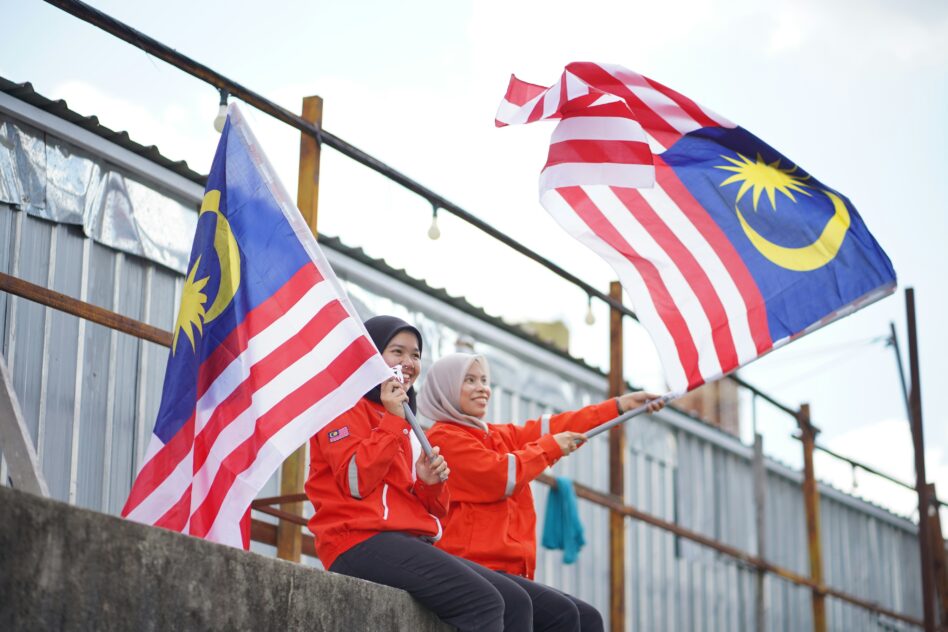
Malaysia was formed as a multilingual federation, and that diversity is not a temporary problem waiting to be solved. It is part of the country’s character.
The national role of Bahasa Melayu need not diminish Iban, Kadazandusun, Bidayuh, the languages of the Orang Asli or the many other languages spoken across Malaysia.
Each carries family histories, environmental knowledge and distinctive ways of understanding the world.
A confident national language can provide common ground while allowing these inheritances to flourish. Unity does not require every Malaysian to sound the same. It requires us to remain intelligible to one another while respecting the histories each community brings into the national conversation.
Hari Merdeka gave us the freedom to shape our future. Knowing our languages, in both their history and diversity, helps us better understand the nation whose future we are shaping.
As we celebrate both Merdeka and Malaysia Day, perhaps the deeper question is not simply what we inherited, but what intellectual and linguistic legacy we will leave for the generations that follow. ‒ Sept 18, 2026
The author is a Senior Lecturer at the Department of Malaysian Languages and Applied Linguistics, Faculty of Languages and Linguistics, Universiti Malaya.
The views expressed are solely of the author and do not necessarily reflect those of Focus Malaysia.
Main image: Pexels/Ihsanaditya