
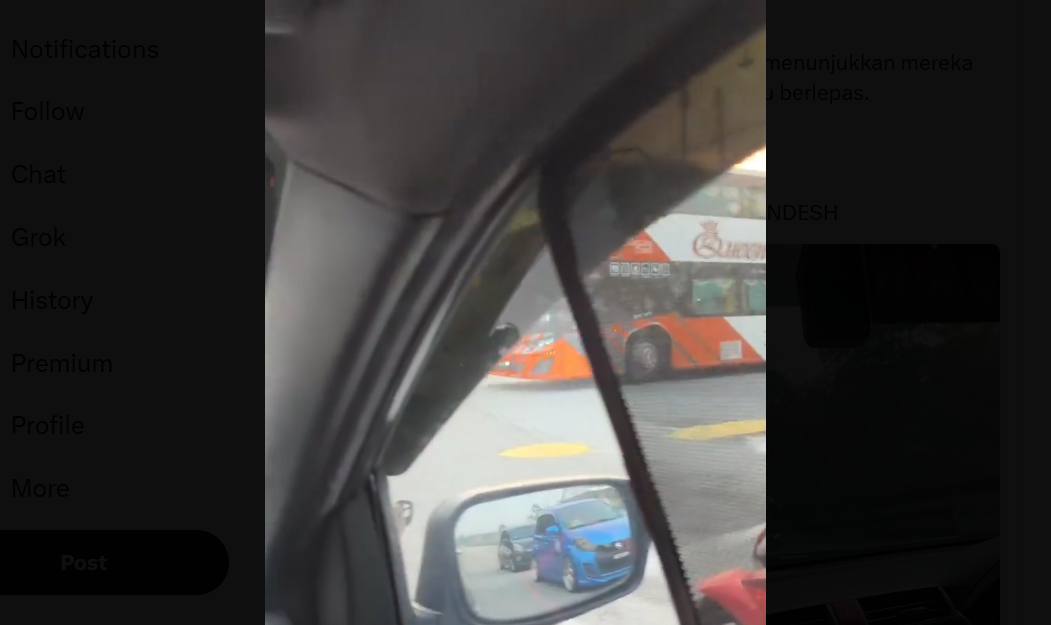
A VIDEO showing several buses carrying Myanmar nationals has drawn attention online, with some Malaysians claiming the vehicles were being used to send Rohingya refugees back to Myanmar.
However, it remains unclear whether the people shown in the video were really Rohingya.
The footage emerged as Malaysia began its first repatriation operation involving 1,476 Myanmar nationals on Sept 29.
According to reports, the group comprised 1,370 men, 79 women, 20 boys and seven girls, who were transported to Lumut before being sent back to Myanmar aboard three naval vessels.
The operation is part of a wider arrangement that could eventually see up to 5,000 Myanmar nationals returned.
UNHCR said it was not involved in the repatriation process. The comments accompanying the video further reflected the differing views surrounding the issue.
Ada berapa biji bas hantar Rohingya balik Myanmar. Baguslah balik menyemak je kat Malaysia ni
TAPI
Kami perlukan seseorg untuk merakam video yg menunjukkan mereka semua menaiki pesawat/Bot dan pesawat/bot itu berlepas.
NEXT
MAINLAND INDIA, MAINLAND CHINA DAN INDONDESH pic.twitter.com/6zIiNJmbMV
— MALAYSIA PROBLEM (@MALAYSIAPROBLM) September 29, 2026
One commenter asked how many buses were involved, adding that it was good if the Rohingya were “going back” to Myanmar.
Another was more sceptical, saying Malaysians should see footage of the passengers actually boarding the ships or aircraft and departing the country.
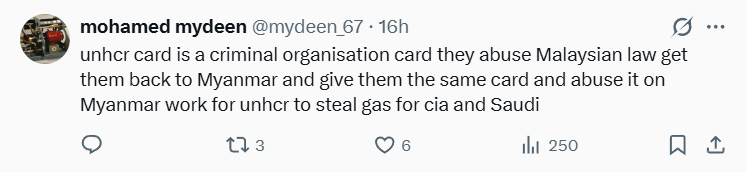
Some commenters also called for repatriation efforts involving nationals from other countries, while another demanded the UNHCR offices in Malaysia be closed.

The footage has nevertheless prompted discussion about Malaysia’s sizeable Rohingya population.
UNHCR recorded 215,600 refugees and asylum-seekers in Malaysia as of February 2026, including 193,824 from Myanmar.
Of these, 126,144 were Rohingya, making them the largest refugee group in the country.
The repatriation programme has also raised concerns from UN agencies and rights groups over the safety of returning people to Myanmar, which remains affected by armed conflict.
But the issue also highlights a reality that is often lost in online discussions, that dealing with migrant and refugee issues is not as simple as putting people on buses and sending them home.
There are questions of documentation, nationality, safety, legal status and, in the case of refugees, whether they can actually return safely to their country of origin.
For Malaysia, repatriation may be one part of the solution, but deciding who can be sent back, where they can go and what happens after they arrive is a far more complicated challenge.
In other words, the buses may be easy to see. The problem waiting at the end of the journey is considerably harder to solve.—Sept 30, 2026
Main image: @MALAYSIAPROBLM (X)