


THE GLOBAL semiconductor race is no longer being driven solely by faster chips or smarter algorithms. Increasingly, it is about power — specifically, how to deliver enormous amounts of electricity efficiently to the artificial intelligence (AI) data centres reshaping the digital economy.
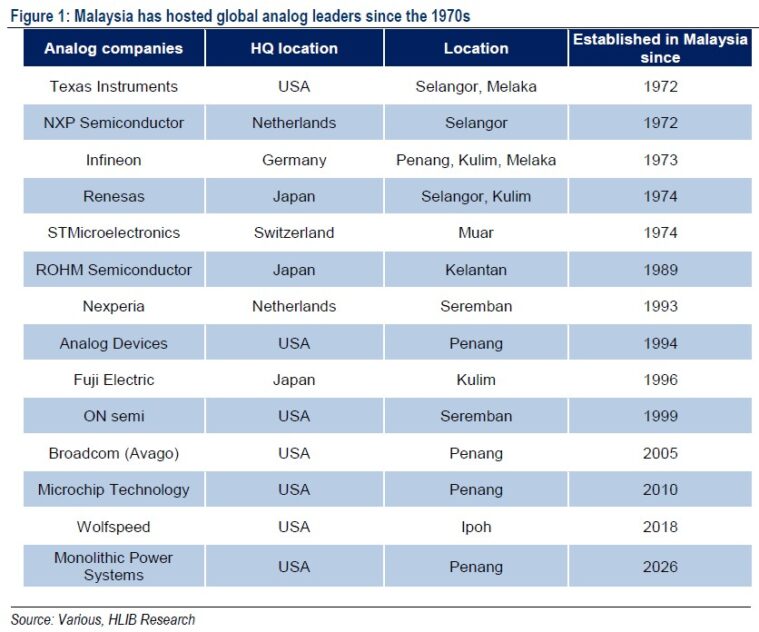
For years, Malaysia’s outsourced semiconductor assembly and test (OSAT) players found themselves on the sidelines of the AI boom, weighed down by a sluggish analog semiconductor cycle and weak demand from the automotive and industrial sectors.
While AI-linked technology counters elsewhere surged, local semiconductor firms largely moved in tandem with the industry’s prolonged post-pandemic inventory correction.
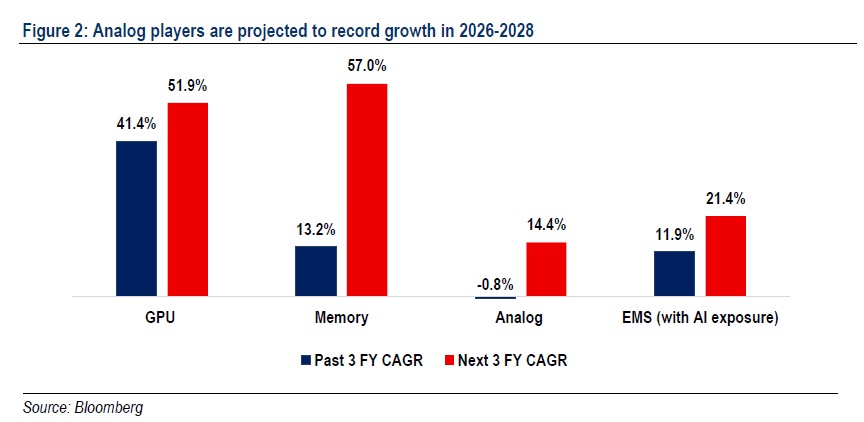
Malaysia’s OSATs largely sat out the first leg of the AI upcycle in 2024-2025, tracking instead the protracted analog downcycle as post-pandemic inventory correction weighed on soft auto/industrial demand.
Hong Leong Investment Bank (HLIB) sees 2026 as the changing point. As AI DC buildout accelerates, high-performance power management chips are emerging as the new demand driver for analog suppliers, therefore offering a new growth vector for Malaysia OSATs as well.
NVIDIA is leading the transition toward 800VDC architecture for AI DC deployment starting in 2027.
“We flagged Unisem and MPI as primary beneficiaries of AI DC power semi content expansion in our sector outlook at the start of the year,” said HLIB.
The thesis has played out faster than anticipated. Supply tightness in analog semi is already emerging, with multiple IDMs announcing price increases over the past one to two months.
Despite the strong performance, HLIB does not think either stock fully reflects the earnings revision potential embedded in the 800VDC transition and broader VPD adoption through 2027–28 yet.
An additional tailwind to this is the accelerating China+1 diversification, further benefiting Malaysian players.
The four structural themes HLIB outlined at the start of the year are playing out as anticipated:
1) OSATs benefitting from accelerating China+1 relocation.
2) Deeper localisation of global semicap players supporting the domestic supply chain.
3) Rising optical and power semi content driven by AI DC buildouts.
4) Intel’s resurgence.
Current 415VAC architecture is already hitting physical limits and cannot support the step-change in rack power requirements.
Adding to this, wide-bandgap materials will gain more usage given their superior efficiency in high-voltage workloads.
Wider adoption of vertical power delivery (VPD), placing the VRM directly beneath the AI chips helps to shrink transmission distance and reduce thermal load.
“Our top picks for the sector are UWC, Frontken, and Unisem.
Separately, we also like ITMAX as a domestic-centric growth name, underpinned by strong earnings visibility from its CCTV deployment pipeline,” said HLIB. —May 20, 2026
Main image: highspring.com