
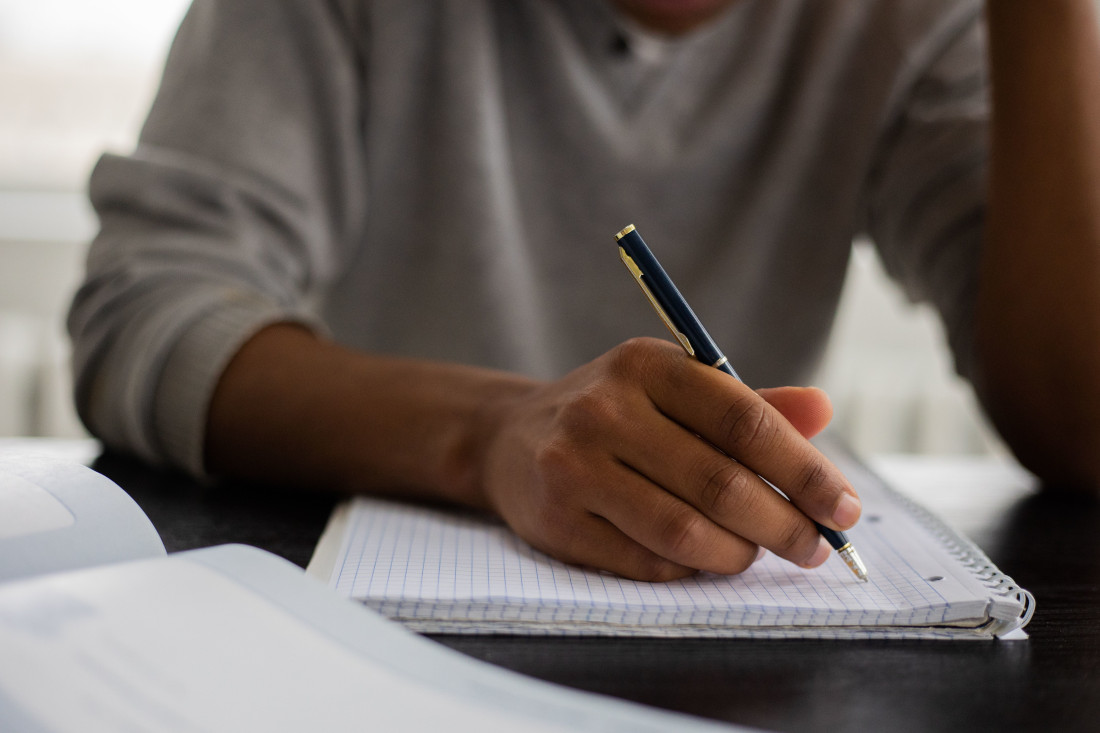
“IF you could bring your textbook into an exam, would you still study?” This is one of the biggest misconceptions about open-book examinations (OBEs).
Many people think they are easier because students can refer to textbooks, lecture notes or learning materials during the exam.
But here’s the surprising truth. Having access to information does not mean the exam is easier. In many cases, it can actually be more challenging.
One of the biggest misunderstandings about OBEs is that the answers are “already in the book”. In reality, the book only contains information but it doesn’t do the thinking for you.
A textbook can explain a concept, describe a disease, or list different treatment options.
What it cannot do is to decide which information is most relevant, combine ideas from different topics, or explain how they should be applied in a particular situation.
A well-designed OBEs therefore asks more than “What do you know?”. It asks, “Can you understand the information, think critically about it, and use it to solve a problem?”
These are the same skills expected of professionals in the real world, where making good decisions is often more important than simply remembering facts.
So… do students need to study less?
Another common myth is that students don’t need to prepare because everything is in the book. Unfortunately, many students discover that this strategy doesn’t work.
Imagine spending ten minutes searching through your notes for one piece of information. Then another five minutes checking another chapter.
Before you realise it, half the examination time is gone and you haven’t even started answering the question properly. OBEs are usually time-limited. There simply isn’t enough time to search for every answer.
Students who rely entirely on their notes often struggle because they spend more time looking for information than thinking about the question.
On the other hand, students who understand the subject well use their notes very differently. They already know the concepts. They only refer to their resources to confirm a detail, check a guideline, or make sure they haven’t missed anything important.
In other words, the book becomes a reference, not a replacement for learning.
The purpose of an examination is not simply to test how much a student can memorise. It is to find out whether students can use what they have learned.
In today’s world, information is everywhere. Doctors, dentists, pharmacists, engineers even lawyers regularly consult guidelines, manuals and trusted references while working.
What matters is not remembering every single fact. What matters is knowing where to find reliable information, how to decide whether it is trustworthy and how to use it to solve a problem. These are skills that professionals use every day.
How is dentistry changing?
Dentistry today is very different from what it was twenty years ago. New research is published every day. Treatment guidelines are updated regularly.
New materials, digital technology and even artificial intelligence (AI) are changing the way dentists diagnose and treat patients. Because of this, no dentist can remember everything.
Even experienced dentists check the latest guidelines before prescribing certain medications, review scientific evidence before trying new treatments, or seek advice from colleagues when managing difficult cases.
Looking up reliable information isn’t a sign that someone lacks knowledge. It is a sign that they want to provide the safest and best care for their patients.
Some knowledge must still be remembered. For example, healthcare professionals should immediately recognise medical emergencies, know basic anatomy, understand infection control and remember life-saving procedures without having to search through a book.
These are situations where quick thinking can save lives. One of the greatest strengths of OBEs is that they encourage students to think rather than simply memorise.
Instead of asking “What do you remember?”. They ask “How would you use what you know?”. This is much closer to what happens in real professional practice.
Whether someone becomes a dentist, doctor, pharmacist, engineer, or scientist, their career will involve solving problems, not answering multiple-choice questions from memory.
Are open-book examinations relevant?
When properly designed, OBEs are far from a shortcut for students, they are a vital bridge to real-world practice that relies on asking higher-order questions rather than simply allowing textbooks into the exam hall.
Their true value lies not in testing rote memorisation, but in training future practitioners to locate, evaluate, and apply evidence when it matters most.
While OBEs are not a magic bullet and must be balanced with traditional testing for foundational recall, an intentional assessment strategy effectively matches the right testing method to the right skill.
Ultimately, the primary goal of modern education is not to produce graduates who can recite textbooks by heart, but to nurture adaptable, reflective professionals who possess the critical thinking and decision-making skills needed to navigate an ever-evolving world long after they leave the classroom.—Aug 9, 2026
Dr Muhammad Aliff Ikram Noor Zari and Dr Nurul Liyana Aminuddin are from the Department of Restorative Dentistry, Faculty of Dentistry, Universiti Malaya
The views expressed are solely of the author and do not necessarily reflect those of Focus Malaysia.
Main image: Pexel